
Updated November 13, 2026
Quick answer
If you're breastfeeding and a wisdom tooth starts causing trouble, the question that usually comes first isn't about the tooth at all. It's about the baby. Can you have the tooth out? Will the anaesthetic get into your milk? Will the painkillers be safe? Do you need to stop breastfeeding, pump and dump, or stockpile …
If you’re breastfeeding and a wisdom tooth starts causing trouble, the question that usually comes first isn’t about the tooth at all. It’s about the baby. Can you have the tooth out? Will the anaesthetic get into your milk? Will the painkillers be safe? Do you need to stop breastfeeding, pump and dump, or stockpile milk in advance?
The Short Answer
Wisdom teeth removal while breastfeeding is generally considered safe. Local anaesthetic — the numbing injection most extractions use — passes into breast milk in only tiny amounts, and it is considered compatible with breastfeeding. The pain relief most commonly used after extractions, paracetamol (also known as acetaminophen or Tylenol), is also considered compatible. Antibiotics, if they’re needed at all, can usually be chosen from options that are safe while breastfeeding.
Tell your dentist you’re breastfeeding before the procedure, not after — it takes five seconds and it changes which medicines get picked.
There are a couple of situations where the plan gets more complicated. If you need sedation or a general anaesthetic, the medicines involved are different, and your dentist or anaesthetist will talk you through what that means for feeding — usually a short pause rather than stopping altogether. If you need a specific antibiotic that isn’t ideal while breastfeeding, your dentist will either pick a different one or talk through the timing.
Anaesthesia and Breastfeeding
Most wisdom teeth come out under local anaesthetic: an injection that numbs the area while you stay awake. The anaesthetic works locally, in the tissues around the tooth, and very little of it reaches your bloodstream — and from there, only a trace reaches breast milk.
If your extraction needs sedation — medicine that makes you drowsy or relaxed — the picture is slightly different, but still usually manageable. Sedation medicines clear from your body over a few hours. Your dentist or anaesthetist will tell you how long to wait before breastfeeding again, and in many cases you can feed once you’re fully awake and alert.
A general anaesthetic, where you’re fully asleep, is less common for wisdom teeth but does happen for complex cases. The same principle applies: the medicines clear over hours, and you can usually resume breastfeeding once you’re awake, alert, and able to hold your baby safely. Your anaesthetist will give you a specific time — write it down, because you’ll be groggy afterwards and groggy people forget things.
Pain Relief After the Extraction
Pain relief is where breastfeeding mothers most often get conflicting advice — sometimes from well-meaning friends and family rather than from a clinician. So here are the basics.
Paracetamol is the pain reliever most commonly used while breastfeeding. Only a small amount passes into breast milk, and it is widely considered compatible. It also has the advantage of not affecting bleeding, which matters after an extraction.
Anti-inflammatory painkillers, such as ibuprofen, are also generally considered compatible with breastfeeding in the short term, because very little passes into milk. But they do affect bleeding slightly, so your dentist may or may not want you to use them right after an extraction. Our guide to ibuprofen and Tylenol for wisdom tooth pain explains how the two work and when each is used.
What you should not do is take someone else’s prescription painkillers, or anything stronger that was prescribed for a different person or a different procedure. Stronger pain medicines pass into breast milk in larger amounts and can make a baby drowsy or affect their breathing. If your pain isn’t controlled by the medicines your dentist recommended, call the practice and say so — don’t improvise.
Antibiotics While Breastfeeding
Not everyone needs antibiotics after a wisdom tooth extraction, and if you do need them, your dentist will choose one that’s compatible with breastfeeding. Several commonly used antibiotics pass into breast milk only in small amounts and are considered acceptable. If the best antibiotic for your infection isn’t ideal while breastfeeding, your dentist has options: a different antibiotic, or timing your doses around feeds.
The important thing is not to refuse an antibiotic you genuinely need because of a vague worry about the baby. An untreated infection is a risk to you, and a mother in pain with a spreading infection can’t look after a baby well. Tell your dentist you’re breastfeeding, let them choose the right antibiotic, and take it exactly as prescribed.
A short course of antibiotics can sometimes cause mild effects in a breastfed baby — looser stools, for instance, or a bit of fussiness. These are usually mild and pass quickly. If your baby develops a rash, persistent diarrhoea, or seems unusually sleepy while you’re on an antibiotic, mention it to your doctor or your baby’s doctor promptly.
Planning the Day: Practical Tips
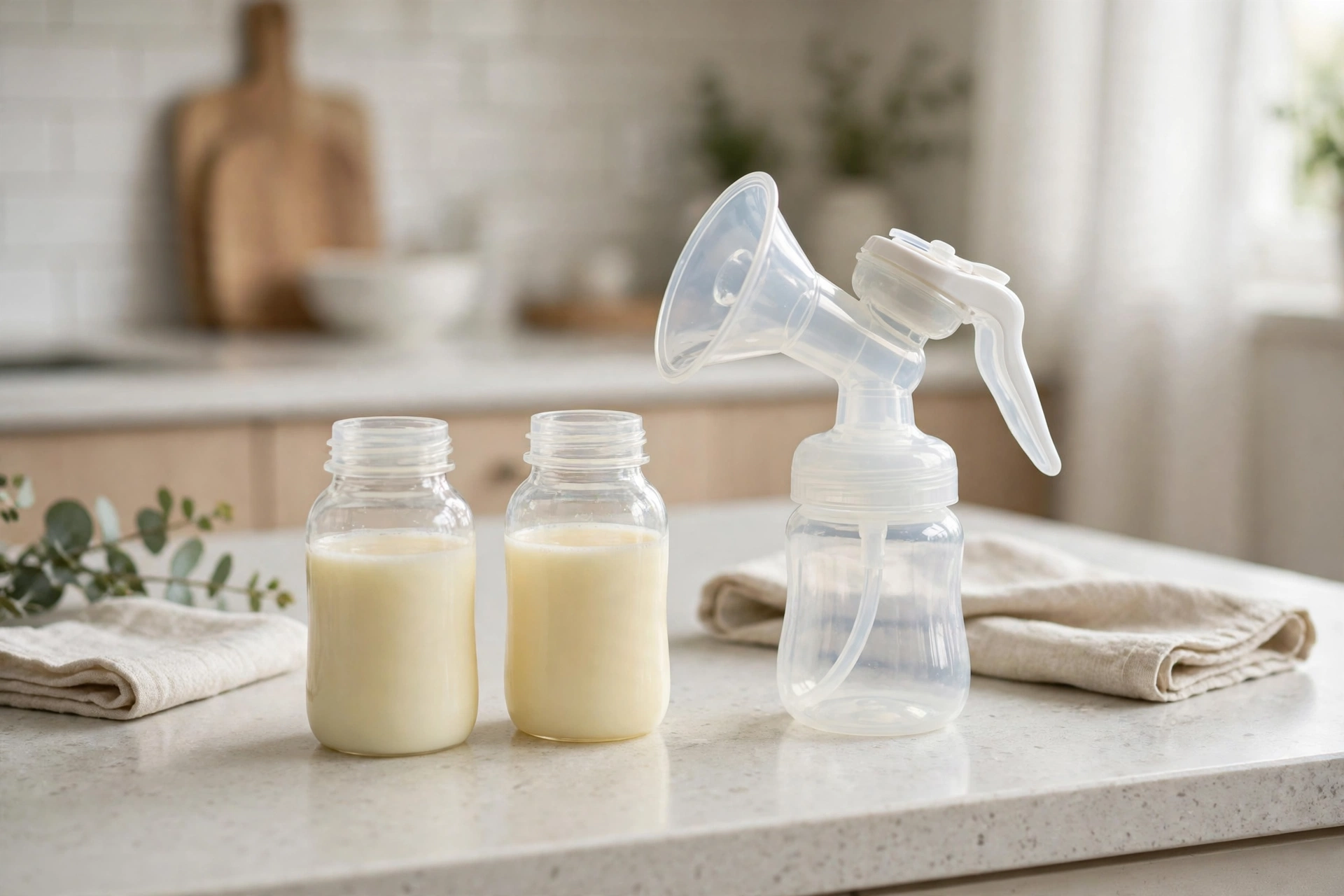
Express and store milk in advance. Even if you don’t end up needing it, a couple of feeds’ worth of expressed milk in the fridge or freezer removes a whole layer of worry. Label it with the date, and make sure whoever is looking after the baby knows where it is.
Arrange childcare for the appointment. You won’t be able to hold or feed the baby during the extraction, and you’ll be sore and groggy afterwards. Having someone else with the baby makes everything simpler.
Feed or express just before you leave. This keeps you comfortable, gives you milk ready if there’s a delay, and settles the baby while you’re gone.
Bring a small pillow for the journey home. Holding a soft pillow against your cheek takes the edge off the bumps in the road.
Set up a feeding spot in advance. You’ll be sore, possibly swollen, and probably tired. A comfortable chair, water, and everything you need within reach means you don’t have to get up and down.
Soft foods for you, too. You’ll be eating soft foods for a few days while the socket heals. Our recovery food timeline lists foods by day — soups, yoghurt, scrambled eggs, mashed potato — and most of them are easy to eat one-handed while holding a baby.
When to Call Your Dentist or Doctor
Most extractions heal without drama, but get in touch promptly if:
- Your pain gets worse after the third day instead of better
- Swelling goes down and then comes back, or you develop a fever
- There’s pus, or a persistent bad taste or smell from the socket
- Bleeding won’t stop with twenty minutes of steady pressure on gauze
- You develop a rash or itching after starting a new medicine
- Your baby seems unusually sleepy, develops a rash, or has persistent diarrhoea while you’re taking a prescribed medicine
You don’t need to wait for your follow-up appointment if something feels wrong. Early calls lead to early fixes.
Frequently Asked Questions
Do I need to stop breastfeeding to have a wisdom tooth removed?
In most cases, no. Local anaesthetic and the usual pain relief are considered compatible with breastfeeding. You don’t need to stop, and you don’t usually need to pump and dump. If you need sedation or a general anaesthetic, there may be a short wait before feeding again — your dentist or anaesthetist will tell you how long.
Is the numbing injection safe while breastfeeding?
Yes. Local dental anaesthetic passes into breast milk in only tiny amounts and is considered compatible with breastfeeding. You can normally feed your baby as soon as you feel up to it after the appointment.
What pain relief can I take while breastfeeding?
Paracetamol is the most commonly used option and is considered compatible with breastfeeding. Ibuprofen is also generally considered compatible in the short term, but your dentist may prefer you avoid it right after an extraction because it can affect bleeding slightly. Always follow your dentist’s recommendation rather than choosing on your own.
Can I take antibiotics while breastfeeding?
Usually yes. Your dentist will choose an antibiotic that’s compatible with breastfeeding. Tell them you’re breastfeeding before they prescribe, and mention any changes in your baby — such as looser stools or a rash — to your doctor.
Should I pump and dump after the extraction?
For a straightforward extraction under local anaesthetic, no. After sedation or a general anaesthetic, you may be advised to wait before feeding — express during that window to stay comfortable and keep your supply up, and discard that milk if advised.
How soon can I breastfeed after the appointment?
After a local anaesthetic, as soon as you feel comfortable holding your baby. After sedation or a general anaesthetic, wait until you’re fully awake and alert, and follow the specific time your dentist or anaesthetist gave you.
Tell your dentist you’re breastfeeding, follow their guidance on medicines, have some expressed milk and a helping hand ready for the day, and keep an eye on how both you and the baby are doing afterwards. Most mothers are back to feeding comfortably within a day or two — sore jaw and all.