
Updated November 18, 2026
Quick answer
A donut is one of those foods that sounds soft enough to be safe and turns out to be trickier than it looks. The dough itself is usually the easy part. It is everything on top of the dough, and everything inside it, that causes trouble after wisdom teeth removal. A plain glazed donut and …
A donut is one of those foods that sounds soft enough to be safe and turns out to be trickier than it looks. The dough itself is usually the easy part. It is everything on top of the dough, and everything inside it, that causes trouble after wisdom teeth removal. A plain glazed donut and a sprinkle-covered, cream-filled, nut-topped donut are basically two different foods as far as your healing mouth is concerned.
The 5-Second Donut Safety Checklist
Before you take a bite, run through this quick check. If the donut passes all five, it is probably fine. If it fails even one, wait or pick a different one.
1. Is it soft all the way through? Press it gently. A good recovery donut gives easily and springs back slowly. If it feels firm, dry, or stale, put it down. Stale donuts are chewy, and chewy means work your jaw does not need right now.
2. Is the topping smooth? Glaze is fine. Frosting is fine. Sprinkles, crushed nuts, coconut flakes, and cookie crumbs are not — they are small, hard bits that can lodge in a socket.
3. Is there anything hard inside? A plain donut has nothing to hide. A filled donut might contain jam, cream, or custard, which is soft enough, but some filled donuts also hide nuts or chocolate chunks. If you cannot see inside, cut it open first.
4. Can you eat it without much chewing? A donut you can break apart with your tongue and the roof of your mouth is a good sign. One that needs real grinding is not ready yet.
5. Are you past day three? The first two days are for liquids and very soft foods only. A donut, even a soft one, is a day-three-or-later food.
Which Donuts Are Safest?
Glazed donuts — the best choice. A fresh glazed donut is soft, moist, and smooth on top. The glaze melts rather than crumbles, and the dough underneath is usually pillowy. If you are going to try any donut during recovery, start here. Eat it fresh and take small bites.
Cake donuts — good, with a warning. Cake donuts are denser than yeast donuts, and they crumble more. A fresh, plain cake donut is manageable, but it produces more crumbs than a glazed one, so eat it slowly and rinse gently afterwards. Old cake donuts are dry and should be avoided.
Frosted donuts — good if the frosting is smooth. Chocolate or vanilla frosting is soft and causes no problems on its own. The risk is what is sprinkled on top of the frosting, so check before you bite.
Filled donuts — proceed with care. Jam, custard, and cream fillings are soft and usually fine. But filled donuts are often topped with powdered sugar or glaze that is fine, and sometimes with nuts or crumbs that are not. Cut the donut in half first so you can see what is inside, and eat it with a fork rather than biting into it whole.
Donuts with sprinkles, nuts, or coconut — wait. These toppings are the main reason donuts get flagged during recovery. Sprinkles are small and hard, nuts are sharp, and coconut flakes cling to everything. They are not worth the risk while sockets are still open. Save them for week two or three.
Donut holes — surprisingly tricky. They look like the perfect recovery snack because they are small, but they are often the crustiest part of the batch. A soft, fresh donut hole is fine, but a day-old one is basically a tiny rock.
When Can You Try a Donut?
Most people can try a small piece of a soft glazed donut around day three or four, once swelling has eased and opening the mouth feels comfortable. If you are still on liquids, or if chewing still hurts, wait a few more days.
By the end of the first week, if chewing feels normal and the sockets are closing well, most plain donuts are fine. Topped and filled donuts are worth waiting on until the second week, when the sockets have had more time to close. If you are unsure where you stand, the wisdom teeth removal food timeline shows what fits at each stage of recovery.
One thing worth knowing: donuts are sweet, and sugar feeds the bacteria in your mouth. That does not mean you cannot have one, but it does mean rinsing gently with water or salt water after eating matters.
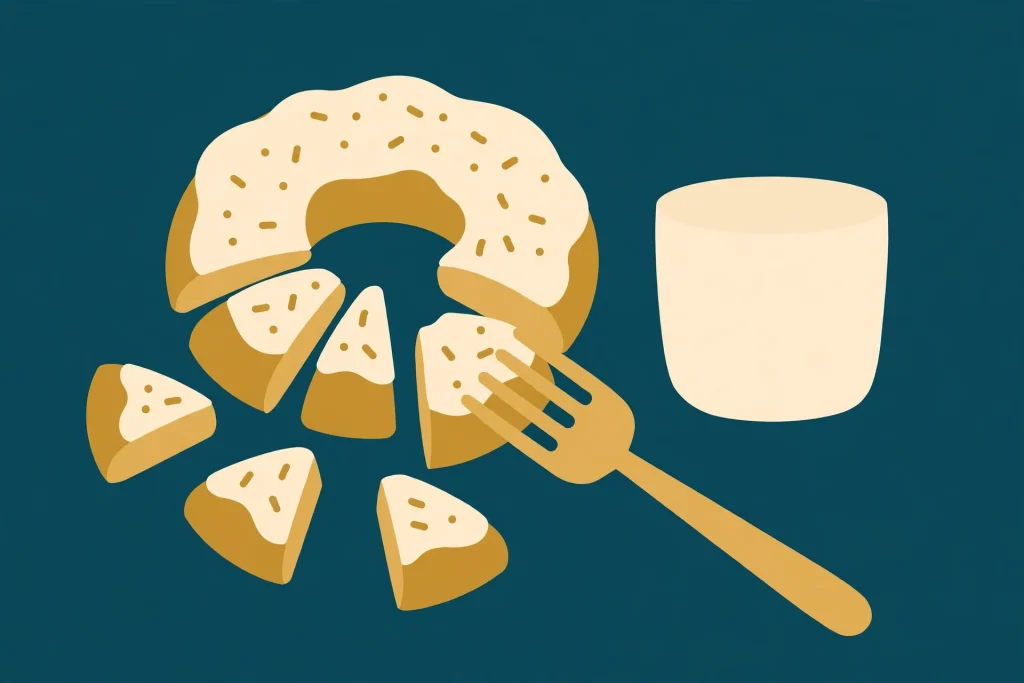
How to Eat a Donut Without Causing Problems
The way you eat a donut matters almost as much as which one you choose. Start by cutting it into small pieces instead of biting into it whole. Biting and tearing is how toppings scatter and crumbs end up near a socket. Small pieces, chewed slowly on the side away from your extraction sites, are much safer.
Eat it fresh and at room temperature. A donut straight from the fridge is firmer and harder to chew, and a very hot donut can irritate healing gums. Room temperature is the sweet spot. If your donut is a day old, a few seconds in the microwave can soften it up — just let it cool before eating.
Keep a drink nearby. Water or milk between bites helps wash away crumbs and sugar before they settle. After you finish, rinse gently with salt water once your dentist has said rinsing is safe. Do not swish hard, and never use a straw — the suction can disturb the blood clot in the socket.
Donut Alternatives That Hit the Same Spot
If the donut you want is covered in sprinkles, or you are still too early in recovery, a few swaps give you the same sweet comfort with less risk. A soft pancake with syrup is close in spirit and much easier to manage. Cookies after wisdom teeth removal follow similar rules, but a soft, chewy cookie without chips or nuts can be a good stand-in. And if you want something cold and sweet, ice cream is one of the safest treats in early recovery — soft, cold, and soothing on sore gums.
If someone asks what to bring you, a box of fresh plain glazed donuts is a genuinely good gift — soft, comforting, and one of the few treats that works in week one. Just ask them to skip the sprinkles.
Frequently Asked Questions
Q: Can I eat donuts the day after wisdom teeth removal?
A: It is best to wait. The first 24 to 48 hours are for liquids and very soft foods while the blood clot stabilises. A soft glazed donut is usually fine from around day three or four.
Q: Are glazed donuts safe after wisdom teeth removal?
A: Yes, a fresh glazed donut is one of the safest donut choices. The dough is soft and the glaze is smooth, so there is very little to get stuck in a socket. Eat it in small pieces and rinse gently afterwards.
Q: Can I eat donuts with sprinkles after wisdom teeth removal?
A: Not yet. Sprinkles are small and hard, and they can lodge in the socket. Wait until the sockets have closed up more, usually around two weeks, before trying sprinkle-topped donuts.
Q: Are filled donuts okay after wisdom teeth removal?
A: They can be, if the filling is soft like jam, custard, or cream, and there are no nuts or hard bits inside. Cut the donut open first to check, and avoid filled donuts with crunchy toppings.
Q: What should I do if donut crumbs get stuck in the socket?
A: Try a gentle salt-water rinse first, once your dentist has said rinsing is safe. Do not poke at the socket with your tongue, a finger, or anything else. If pain, swelling, or a bad taste develops, contact your dentist.