
Updated November 16, 2026
Quick answer
Lentils feel like they should be perfect after wisdom teeth removal: soft, warm, filling, and packed with protein and iron. But they can also turn out firm, chewy, or full of little skins that catch in awkward places. So the real question is not whether lentils are healthy — it is which lentils, cooked how, …
Lentils feel like they should be perfect after wisdom teeth removal: soft, warm, filling, and packed with protein and iron. But they can also turn out firm, chewy, or full of little skins that catch in awkward places. So the real question is not whether lentils are healthy — it is which lentils, cooked how, and on which day.
The good news is that lentils can absolutely be part of your recovery diet, as long as you pick the right type and cook it until it practically melts. Get that right and you have one of the best soft foods available: cheap, comforting, and genuinely nutritious when most of your meals are yoghurt and mashed potato.
The Short Answer
Yes — as long as they are cooked until completely soft and smooth. Red lentils are the safest choice because they break down into a creamy puree. Start with blended lentil soup around day 2 or 3, once the bleeding has stopped. Whole green or brown lentils should wait until about day 7 to 10, when your sockets are closing and you can chew soft foods without pain.
Red vs Green vs Brown Lentils: Which Is Safest?
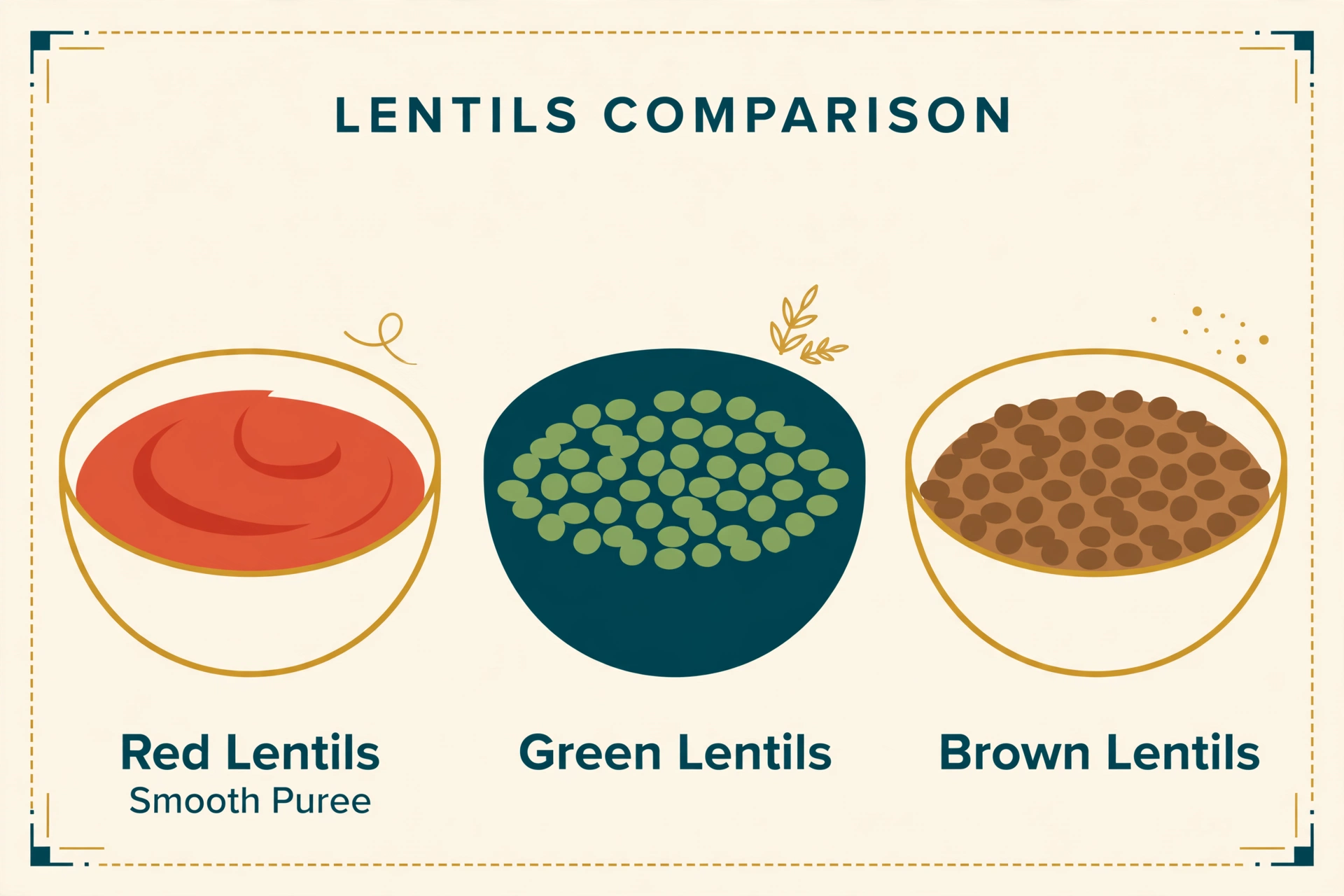
Not all lentils behave the same in the pot, and that difference matters a lot when you have open sockets in your mouth. Here is how the three common types compare.
| Lentil type | Texture when cooked | Best for recovery? | When to try it |
|---|---|---|---|
| Red lentils | Break down into a smooth, creamy puree | Yes — the safest choice | Day 2–3, blended |
| Green lentils | Hold their shape, firm and slightly chewy | Only when very well cooked and mashed | Day 7–10 |
| Brown lentils | Hold their shape, earthy and firm | Only when very well cooked and mashed | Day 7–10 |
Red lentils are the clear winner for the first week. They cook in about 15 minutes and fall apart on their own, so you barely need to blend them. Green and brown lentils keep their skins and shape, which means more chewing and more chance of a small piece lodging near a socket. They are not forbidden — they are just a second-week food.
If you only have green or brown lentils in the cupboard, you can still use them. Cook them for much longer than the packet says, until they are falling apart, then blend them with extra stock until smooth. The goal is always the same: nothing firm, nothing with a skin, nothing you need to chew hard.
When Can You Start Eating Lentils?
Your timeline depends less on the calendar and more on how your mouth feels, but this is a sensible guide for most people.
Days 1–2: Stick to liquids and very smooth foods. Your sockets are fresh, and even gentle chewing can be uncomfortable. If you really want lentils, a thin, well-strained red lentil soup is fine — just make sure there are no lumps at all. Sip it lukewarm, never hot, and let it slide down without swishing it around your mouth.
Days 3–5: This is the sweet spot for blended red lentil soup. Your swelling is starting to ease, and a warm bowl of soup feels wonderful. Keep it smooth, keep it lukewarm, and eat slowly with a spoon on the side opposite your extraction sites.
Days 7–10: Once you can chew soft foods without wincing, try well-cooked green or brown lentils, mashed with a fork. If anything gets stuck near a socket, rinse gently with warm salt water — never poke at the area.
After day 10: Most people can eat lentils normally again, including in salads and stews. If you still have stitches or a socket that feels tender, keep blending for a few more days. There is no prize for rushing.
Smooth Blended Lentil Soup Recipe
This recipe takes about 25 minutes, makes four generous bowls, and freezes well — cook once and eat well for days.
Ingredients:
- 1 cup red lentils, rinsed
- 1 medium carrot, peeled and chopped
- 1 small onion, chopped
- 1 clove garlic
- 4 cups low-sodium vegetable or chicken stock
- 1 tablespoon olive oil
- 1 teaspoon ground cumin
- A pinch of turmeric
- Salt to taste
Method:
- Warm the olive oil in a saucepan over medium heat. Add the onion, carrot, and garlic, and cook gently for 4–5 minutes until soft.
- Stir in the cumin and turmeric, then add the rinsed red lentils and the stock.
- Bring to a gentle boil, then turn the heat down and simmer for 18–20 minutes, until the lentils have completely fallen apart.
- Take the pan off the heat and blend until completely smooth. Add a splash more stock if it is thicker than you like.
- Season lightly with salt. Let it cool to lukewarm before eating.
Keep the soup mild: chilli, black pepper, and hot sauce can sting an open socket, so save the spice for next week. If you want extra calories — and many people do after surgery — stir in a spoonful of butter or a swirl of cream. For more gentle meal ideas, see our wisdom teeth recovery food timeline.
Lentils to Skip for Now
A few lentil dishes are best left until you are properly healed. Crunchy roasted lentil snacks are hard, dry, and made to be chewed. Lentil salads with whole lentils, raw onion, and vinaigrette are also a bad idea in week one — the lentils are firm, the onion sharp, the dressing acidic. Very spicy lentil curries can irritate your sockets too, even if the lentils themselves are soft.
How to Serve Lentils Safely
Texture is everything, so blend longer than you think you need to — 60 seconds in a blender, not 15. Strain the soup through a fine sieve if you are unsure; it takes a minute and removes any stray skins. Serve lukewarm, not steaming hot, because heat increases swelling and bleeding risk in the first few days. Eat small spoonfuls on the unoperated side of your mouth, and follow each meal with a gentle rinse of warm salt water after about 30 minutes.
Lentils also pair beautifully with other soft foods. A spoonful of mashed lentils stirred into mashed potato adds protein to a meal that is otherwise mostly carbohydrate. Blended lentils mixed into a smooth vegetable soup disappear entirely while adding iron and fibre. And if you are struggling to get enough protein while you cannot chew meat, lentils are one of the easiest answers — a single bowl of this soup gives you roughly 12 grams. For a full list of protein-rich soft options, check our guide to foods to eat after wisdom teeth removal.
FAQs
Can I eat lentils on day 1 after wisdom teeth removal?
Wait until day 2 or 3. On day 1, your sockets are still forming clots, so stick to cool liquids. Once the bleeding has fully stopped, try a thin, well-strained red lentil soup.
Are red lentils really better than green lentils after surgery?
Yes. Red lentils break down into a smooth puree with almost no effort, while green and brown lentils keep their shape and skins. That makes red lentils far safer for open sockets. Green and brown lentils are fine from about day 7 to 10, once you can chew soft foods comfortably.
Can lentils cause dry socket?
Lentils themselves do not cause dry socket. The risk comes from food particles getting trapped in the socket, or from vigorous rinsing and suction. Blended lentils carry very little risk — just avoid crunchy lentil snacks, eat slowly, and rinse gently with salt water after meals.
Can I eat lentil soup if it has spices in it?
Mild spices like cumin and turmeric are fine. Avoid chilli, cayenne, black pepper, and hot sauce during the first week, as they can sting the extraction sites and increase discomfort. You can always add heat later — your soup will still be there next week.
How much protein do lentils give me during recovery?
One cup of cooked red lentils provides around 18 grams of protein, plus iron, folate, and fibre — one of the best plant-based protein sources while you cannot chew meat or nuts. A bowl of blended soup covers a good share of your protein needs with no chewing at all.
When can I eat whole lentils again?
Most people can eat whole lentils from about day 10 to 14, once chewing feels comfortable and the sockets are closing. Start with very well-cooked green or brown lentils, chew away from the extraction sites, and rinse with salt water afterwards. If anything feels sore, go back to blended soup for a few more days.