
Updated November 18, 2026
Quick answer
The first thing many people crave after wisdom teeth surgery is something cold, sweet, and easy to swallow. Juice sounds perfect — no chewing, no crumbs, and it feels refreshing when your mouth is sore. But not every juice is a good idea in those first few days, and the difference between a safe sip …
The first thing many people crave after wisdom teeth surgery is something cold, sweet, and easy to swallow. Juice sounds perfect — no chewing, no crumbs, and it feels refreshing when your mouth is sore. But not every juice is a good idea in those first few days, and the difference between a safe sip and a stinging mistake usually comes down to acidity.
The short version: yes, you can drink juice after wisdom teeth removal, but only the mild, low-acid kind, and only once the first 24 hours have passed. Citrus juices like orange, grapefruit, and lemonade need to wait at least a week, because their acid can irritate the extraction sites and slow healing.
The Acidity Rule: Why Some Juices Hurt
Your extraction sites are open wounds for the first several days. Anything acidic that touches them can sting, irritate the tissue, and in some cases interfere with the blood clot that protects the socket. That clot is the single most important thing in your recovery — if it gets disturbed or dissolves too early, you can develop dry socket, which is painful and adds days to your healing.
Acid is the enemy here. On the pH scale, anything below 5.5 is acidic enough to matter. Most fruit juices sit well below that line. Orange juice is around pH 3.5. Lemonade is around pH 2.5. Apple juice, by contrast, is closer to pH 4 and is far gentler, especially when diluted with water.
The rule of thumb is simple: the milder the juice, the sooner you can drink it. And even mild juice should be sipped gently from a cup — never through a straw. The suction from a straw can pull the blood clot right out of the socket. That applies for at least a week, and honestly, two weeks is safer.
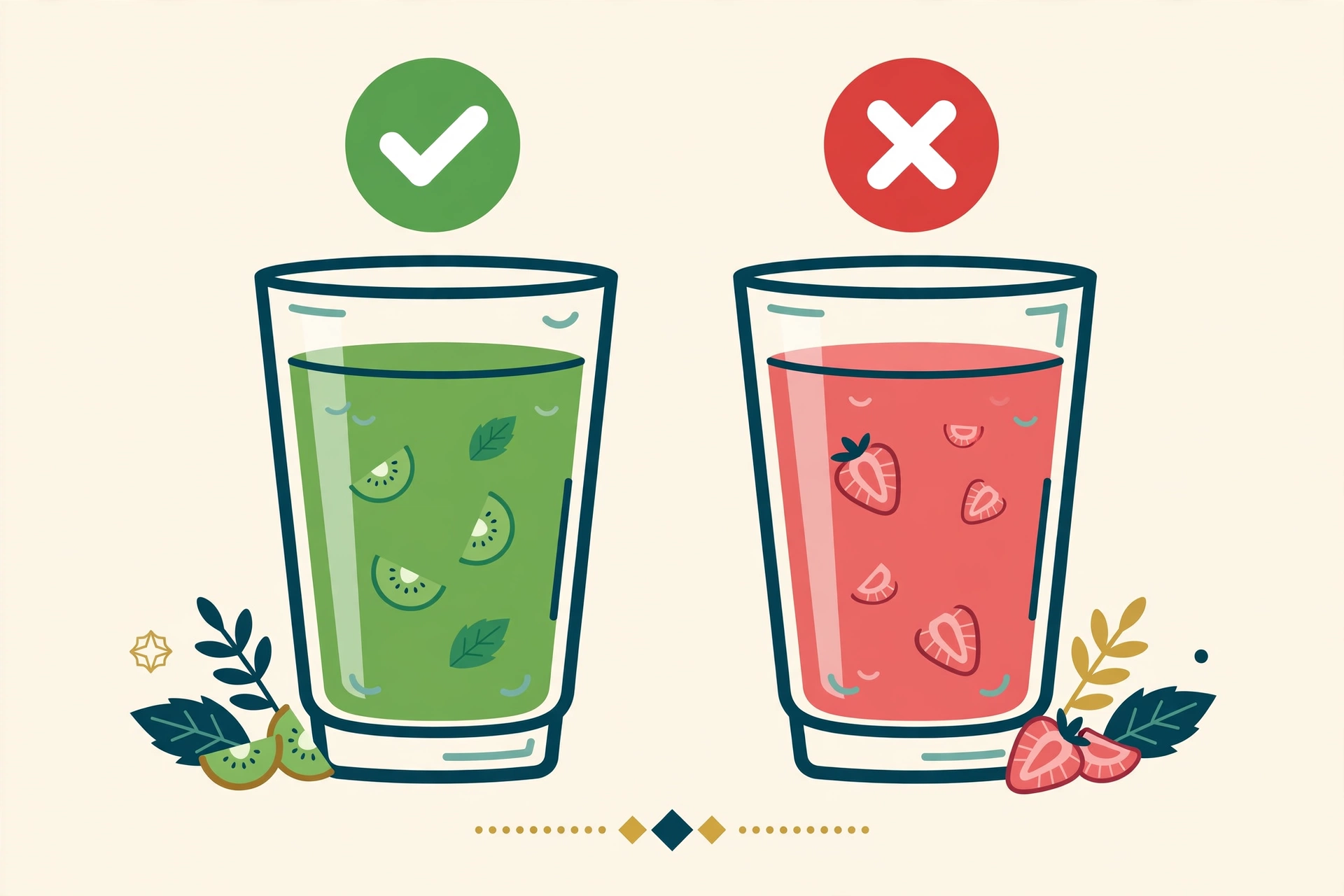
Safe vs. Risky Juices: The Comparison Table
| Juice | Acidity | When It’s Safe | Notes |
|---|---|---|---|
| Apple juice | Low–moderate | After 24 hours | Dilute 50/50 with water; the safest early choice |
| Pear juice | Low | After 24 hours | Very gentle; good for sensitive mouths |
| White grape juice | Low–moderate | After 24 hours | Sweeter and milder than purple grape juice |
| Peach nectar | Low–moderate | After 2–3 days | Thick texture is soothing; dilute if needed |
| Mango juice | Moderate | After 2–3 days | Naturally sweet; avoid if it contains citrus blends |
| Cranberry juice | High | After 7 days | Very acidic and tart — wait a full week |
| Pineapple juice | High | After 7 days | Acidic and can sting open sockets |
| Orange juice | High | After 7 days | The most common mistake; wait, even if it sounds refreshing |
| Grapefruit juice | Very high | After 10–14 days | The most acidic common juice — last on the list |
| Lemonade | Very high | After 10–14 days | Essentially lemon juice and sugar; avoid entirely early on |
If you’re unsure about a juice, check the label. Many “fruit juice” blends quietly include orange or lemon juice as a base, even when the front of the carton shows a picture of mango or berries. If citrus is in the ingredients, treat it as a citrus juice and wait.
The First 24 Hours: Water Only
For the first day after surgery, skip juice entirely. Your mouth needs plain, cool water — and not much else. The surgical sites are at their most vulnerable, and even mild juice can sting. Your surgeon probably told you the same thing, and it’s worth listening to: the first 24 hours set the tone for the whole recovery.
Once that first day is behind you, introduce juice slowly. Start with a small glass of diluted apple or pear juice, sipped gently from a cup. If it stings, stop and wait another day. There’s no prize for rushing, and the juice will still be in the fridge tomorrow.
A practical tip: keep your juice at room temperature or only slightly cool for the first few days. Ice-cold drinks can trigger sensitivity in the teeth next to the extraction sites, and that sharp zing is unpleasant when you’re already sore.
How to Drink Juice Safely While You Heal
Drinking juice after wisdom teeth removal isn’t just about which juice — it’s about how you drink it.
Use a cup, never a straw. This is the rule that matters most. Straws create suction, and suction dislodges blood clots. No straws for at least a week, and many dentists recommend two. The same goes for sippy cups with valves that require sucking — pour it into a regular cup instead.
Dilute it. Mixing juice half-and-half with water does two things: it lowers the acidity and it reduces the sugar load. Your mouth will thank you, and so will your teeth, which are already more vulnerable to decay while you’re eating a soft-food diet.
Sip slowly, don’t swish. Let the juice flow gently past the extraction sites rather than swirling it around your mouth. After you finish, rinse gently with plain water — but don’t rinse forcefully, and don’t spit hard. Just let the water fall out of your mouth.
When Can You Drink Orange Juice Again?
This is the question almost everyone asks, because orange juice is the drink most people associate with breakfast and recovery. The honest answer: wait a full week, and even then, take it slow.
After seven days, the sockets have usually closed over enough that a glass of orange juice won’t sting badly. Try a few sips first. If there’s no pain or sharp sting, you can finish the glass. If it still hurts, give it three or four more days. Grapefruit juice and lemonade need even longer — ten days to two weeks is the safe window, because their acidity is the highest of all.
Better Alternatives While You Wait
If juice feels too risky in the first few days, you have plenty of other options. Milk, smoothies made without citrus, and lukewarm broth all work well. A scoop of plain vanilla ice cream is a gentler way to get something sweet and cold — and if you want more ideas for what to eat and drink during recovery, the full guide to what to eat after wisdom teeth removal covers the whole first week.
Coconut water is another good choice: it’s naturally low in acid, hydrating, and easy on sore gums. Just check the label for added citrus flavouring. And plain water, boring as it sounds, is still the best thing you can drink in the first 24 hours.
FAQs
Can you drink juice after wisdom teeth removal on day 1?
No. Stick to plain water for the first 24 hours. Mild juice like diluted apple or pear juice is usually fine from day 2 onward, as long as it doesn’t sting.
Can you drink orange juice after wisdom teeth removal?
Not in the first week. Orange juice is highly acidic and can irritate the extraction sites. Wait at least 7 days, then try a few sips before drinking a full glass.
Is apple juice safe after wisdom teeth removal?
Yes, apple juice is one of the safest choices. Dilute it 50/50 with water, drink it from a cup (never a straw), and start after the first 24 hours.
Can juice cause dry socket?
Juice itself doesn’t cause dry socket, but drinking through a straw can dislodge the blood clot that protects the socket. Always drink from a cup, and if you notice severe pain a few days after surgery, contact your dentist promptly.
Can I drink juice if it stings?
If a juice stings, stop drinking it and wait another day or two before trying again. Stinging means the tissue is still too raw for that level of acidity — it’s your mouth telling you to wait.
When can I drink lemonade after wisdom teeth removal?
Lemonade is one of the most acidic drinks you can have, so wait 10 to 14 days. Even then, try it diluted first and stop if it stings.