
Updated November 16, 2026
Quick answer
Mango is one of those foods people crave most when they cannot eat properly: sweet, fragrant, and tasting like summer. The good news is that mango is one of the friendlier fruits for wisdom teeth recovery. The catch is that the wrong mango, eaten the wrong way, can sting, stick, and make your mouth unhappy. …
Mango is one of those foods people crave most when they cannot eat properly: sweet, fragrant, and tasting like summer. The good news is that mango is one of the friendlier fruits for wisdom teeth recovery. The catch is that the wrong mango, eaten the wrong way, can sting, stick, and make your mouth unhappy.
The difference comes down to ripeness. A soft, fully ripe mango is gentle, juicy, and easy to eat without chewing. An unripe mango is firm, sour, and fibrous — everything you do not want near an open socket. So the question is less “can I eat mango?” and more “is this mango ready, and how should I eat it?”
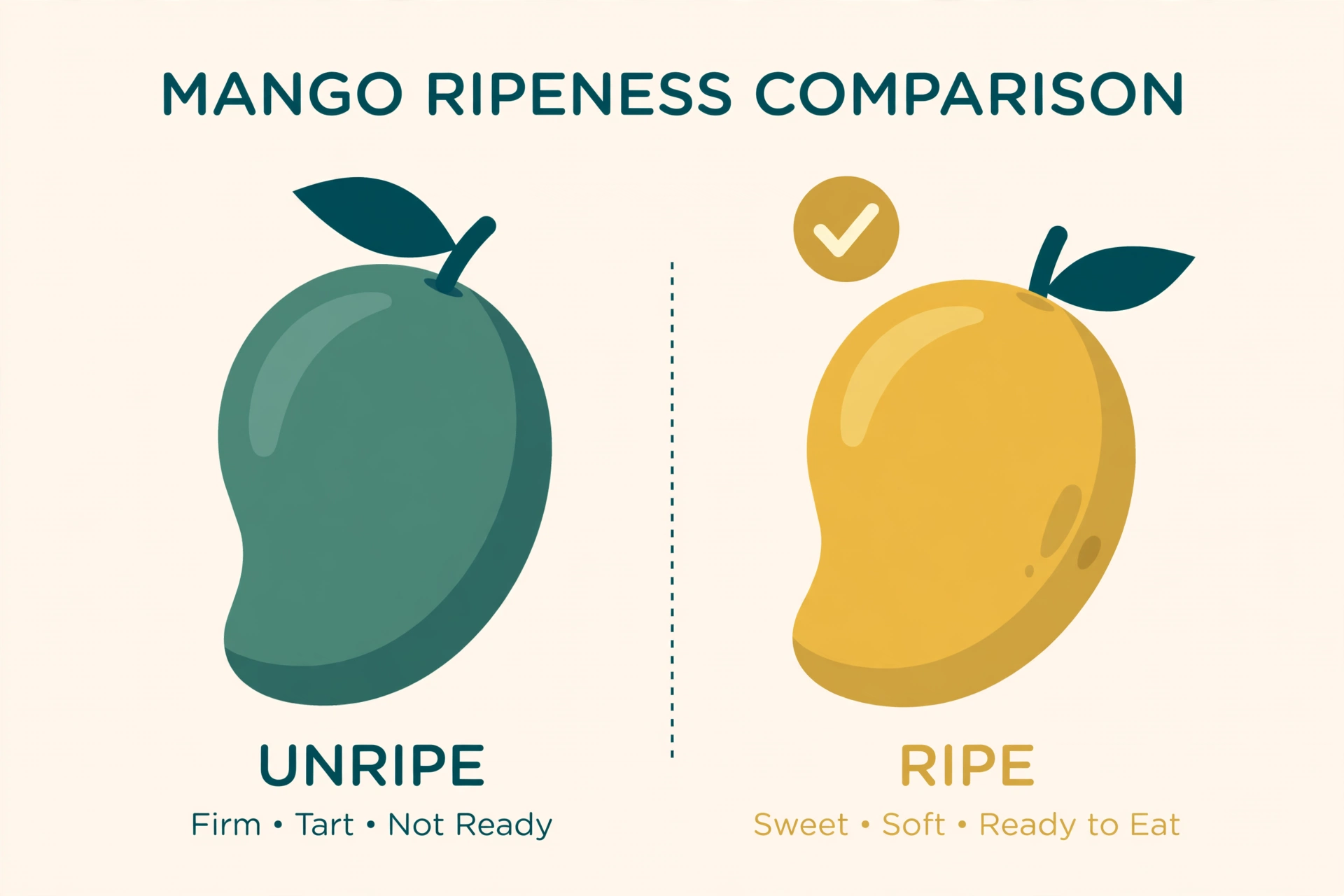
Ripe vs Unripe Mango: The Comparison That Matters
This is the single most important thing to understand about mango after surgery. The two are almost different fruits.
| Feature | Ripe mango | Unripe mango |
|---|---|---|
| Texture | Soft, buttery, melts in the mouth | Firm, crunchy, fibrous |
| Taste | Sweet and fragrant | Sour, sharp, acidic |
| Chewing needed | Almost none — mash with your tongue | A lot — hard to break down |
| Socket risk | Very low, if eaten soft or blended | High — fibres can lodge in sockets |
| Best use | Smoothies, mashed pulp, soft slices | Avoid completely until healed |
A ripe mango should give slightly when you press it gently, smell sweet near the stem, and have skin that has turned from green to a warm yellow-orange blush. If it feels hard as a rock, it is not ready — leave it on the counter for a few more days. If you are unsure, cut it open: ripe flesh is deep golden and yields easily to a spoon, while unripe flesh is pale, firm, and resists the spoon.
One more warning: unripe mango is acidic enough to sting an extraction site, and its fibres are exactly the kind of stringy debris that gets trapped in a socket. Even mango pickle and raw mango chutney are off the table for the first two weeks — they are sour, spicy, and full of hard pieces.
Day-by-Day: When Mango Is Safe
Days 1–2: Hold off. Your mouth needs liquids and the smoothest foods only. Even ripe mango pulp requires a little tongue movement, and your sockets are at their most delicate. Water, broth, and yoghurt are the right choices right now.
Days 3–5: Ripe mango is back on the menu — but blended, not bitten. A mango smoothie or a bowl of mashed mango pulp is ideal. Keep it cool or at room temperature, never ice-cold straight from the freezer, and skip any added citrus juice. Eat with a spoon, on the side away from your extraction sites.
Days 6–10: You can graduate to soft slices of very ripe mango. Cut the flesh away from the pit, slice it thin, and let it practically dissolve in your mouth. If you have to chew more than a couple of times, it is not ripe enough — blend it instead. Dried mango is still off limits: it is chewy, sticky, and clings to teeth and sockets.
After day 10: Most people can eat mango normally, including thicker slices and mango in fruit salads. If a socket still feels tender, keep peeling and slicing thinly for a few more days. Mango with the skin on should wait until you are fully comfortable chewing, since the skin is tough and fibrous.
Mango Smoothie Recipe
This smoothie is the easiest way to enjoy mango during recovery, and it doubles as a small meal. It takes five minutes and needs no chewing at all.
Ingredients:
- 1 cup ripe mango flesh, cubed
- 1/2 cup plain yoghurt or Greek yoghurt
- 1/2 cup milk (or oat milk)
- 1/2 ripe banana
- 1 teaspoon honey (optional)
- 3–4 ice cubes (optional — use sparingly in the first week)
Method:
- Add the mango, banana, yoghurt, and milk to a blender.
- Blend on high for 60 seconds until completely smooth, with no lumps or fibres.
- Taste and add honey if you like it sweeter.
- Pour into a glass and drink slowly. Do not use a straw — the suction can disturb the blood clot in your socket.
Skip the straw entirely for at least a week — suction is one of the main causes of dry socket. If the smoothie feels too cold, let it sit for ten minutes first. For extra nutrition, a spoonful of peanut butter blends in beautifully and adds protein and calories. For more gentle meal ideas, see our soft snacks for wisdom teeth recovery.
Other Ways to Eat Mango While You Heal
Smoothies are the star, but they are not the only option. Mashed mango pulp — just a ripe mango scooped out and mashed with a fork — is lovely on its own or stirred into plain yoghurt. Mango lassi, the classic yoghurt drink, is smooth, cooling, and easy to sip, as long as you skip any added sugar syrup or ice. Mango ice cream or sorbet is fine too in small amounts, though very cold foods can sting sensitive sockets, so let it soften for a few minutes first.
Mango also works as a flavour booster: a spoonful of puree stirred into oatmeal turns a boring breakfast into something you look forward to, and blended mango sweetens a smoothie bowl without any chewing. Keep everything soft, smooth, and lukewarm or cool — never hot, never chunky, never fibrous.
Skip carton mango juice: many brands are high in added sugar and citric acid, which can irritate healing tissue. Fresh blended mango is always better. Our guide to what to eat after wisdom teeth removal has more on which drinks help healing and which ones slow it down.
The Vitamin Question
Mango is not just a treat — it is genuinely useful during recovery. A single cup provides well over half your daily vitamin C, which your body uses to build collagen and close wounds, plus vitamin A for healthy mouth tissue, fibre, and potassium. That is a lot of healing value from one fruit.
But keep the balance: mango is fairly high in natural sugar, which feeds the bacteria that cause infections around healing sockets. Enjoy it, but rinse gently with warm salt water about 30 minutes after eating, and keep it to one or two servings a day.
FAQs
Can I eat mango the day after wisdom teeth removal?
Wait until day 3. On days 1 and 2 your sockets are still forming clots, and even soft mango pulp needs a little tongue movement. Start with a blended mango smoothie on day 3, once the bleeding has stopped.
Is ripe mango safe for dry socket risk?
Ripe mango that is blended or mashed carries very little risk. The danger comes from fibrous or stringy pieces getting trapped in the socket, and from suction — so never drink a mango smoothie through a straw. Eat with a spoon, keep it smooth, and rinse gently with salt water afterwards.
Can I eat unripe mango after wisdom teeth removal?
No — avoid unripe mango completely until you are fully healed, usually around two weeks. It is firm, sour, and fibrous, which means heavy chewing, acidic stinging, and fibres that can lodge in your sockets. Raw mango, mango pickle, and green mango chutney are all off limits for the same reasons.
Is mango smoothie good after wisdom teeth removal?
Yes, it is one of the best recovery foods. A mango smoothie needs no chewing, provides vitamin C for wound healing, and can be made calorie-rich with yoghurt, milk, and peanut butter. Just blend it completely smooth, skip the straw, and avoid adding citrus juice in the first week.
Can I eat dried mango after wisdom teeth removal?
Not until you are fully healed, usually after two weeks. Dried mango is chewy, sticky, and tough, clings to teeth and sockets, and is very hard to rinse out. Fresh ripe mango, mashed or blended, is much safer.
Does mango help wisdom teeth heal faster?
Mango supports healing but does not speed it up dramatically on its own. Its vitamin C helps your body produce collagen for closing wounds, and its vitamin A supports healthy mouth tissue. With rest, good oral hygiene, and a balanced soft diet, it is a genuinely helpful part of recovery.