
Updated November 16, 2026
Quick answer
Strawberries are a strange case after wisdom teeth removal. The fruit itself is soft, juicy, and gentle — exactly what you want when chewing hurts. But those tiny seeds on the outside are a real problem: small enough to slip into an open socket, hard enough to irritate it, and stubborn enough to stay there. …
Strawberries are a strange case after wisdom teeth removal. The fruit itself is soft, juicy, and gentle — exactly what you want when chewing hurts. But those tiny seeds on the outside are a real problem: small enough to slip into an open socket, hard enough to irritate it, and stubborn enough to stay there. So strawberries are not a simple yes or no — they are a yes, but only in the right form, at the right time.
If you love strawberries, you do not have to give them up for a month. You just have to respect the seeds. Blend them, mash them, strain them — or wait until your sockets have closed enough that a stray seed cannot cause trouble.
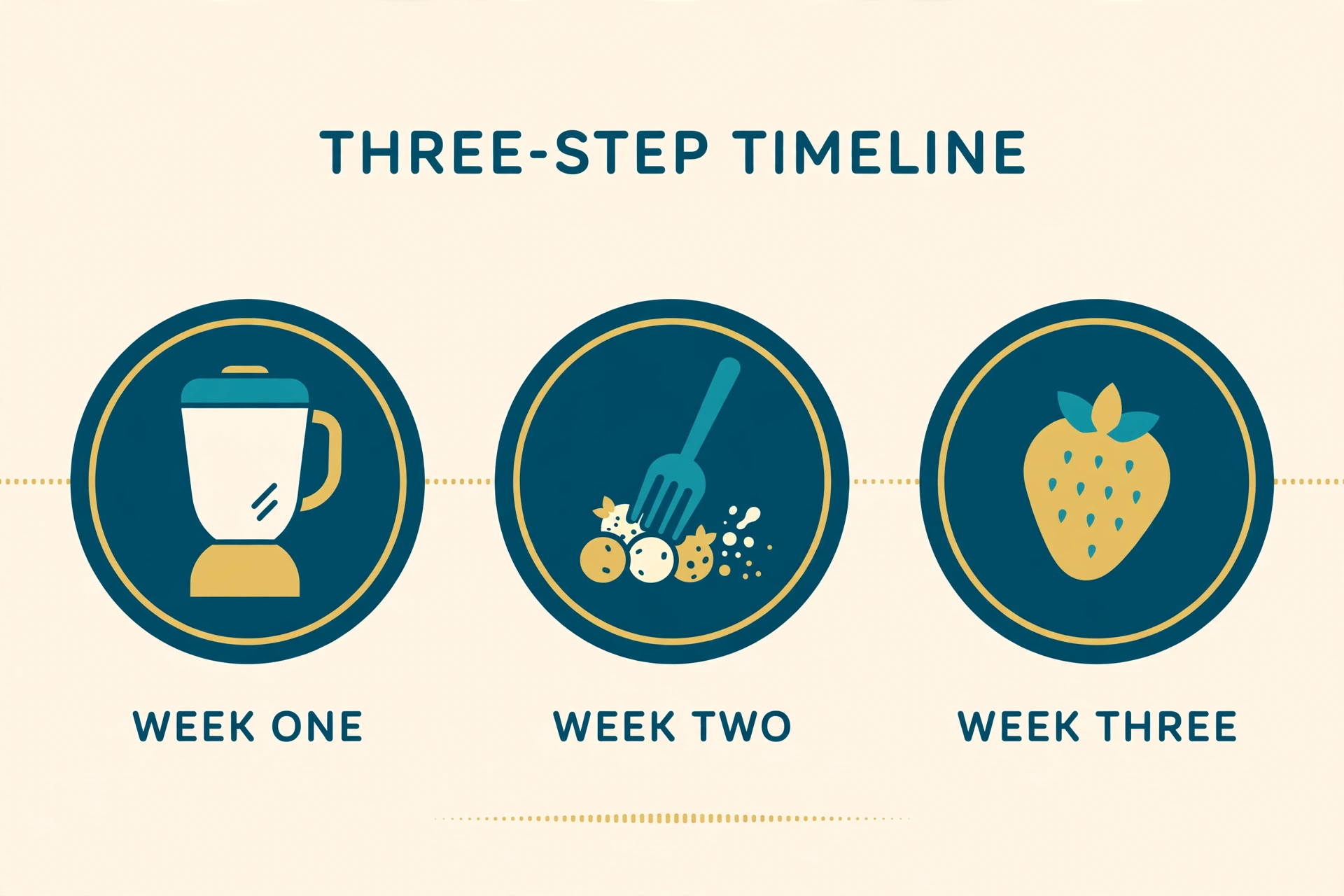
Week-by-Week Timeline
Week 1 (Days 1–7): Blended Only
In the first week, strawberries are safe only when they are fully blended and strained. That means smoothies, purees, and strained sauces — never whole berries, never halved berries, and never berries with visible seeds.
A good rule for week one: if you can see a seed, do not eat it. A blender breaks seeds down, and a fine sieve catches whatever is left. It takes an extra minute, but it turns a risky fruit into a safe one.
On days 1 and 2, keep it very simple — a small strawberry smoothie made with yoghurt and milk, drunk slowly from a glass. No straw, ever: the suction can dislodge the blood clot protecting your socket. From day 3 onwards, you can also try strawberry puree stirred into yoghurt or oatmeal, as long as it has been strained.
Week 2 (Days 8–14): Mashed and Soft
By the second week, your sockets are closing and the gum tissue is starting to cover them. This is when you can try mashed strawberries — berries crushed with a fork until they are almost a pulp, with most of the seeds broken or removed.
Start small: try a few spoonfuls of mashed strawberries on day 8 or 9. Chew on the side away from your extraction sites and rinse gently with warm salt water about 30 minutes after eating. If seeds get stuck, do not poke — just rinse again.
Whole strawberries are still not a good idea in week two. Even a soft berry needs a few chews, and the seeds are still there. If you really want the experience of eating a strawberry, cut it into very small pieces, remove the green top, and chew slowly. Most people find mashed is easier and just as satisfying.
Week 3 and Beyond (Day 15+): Back to Normal
By week three, most people can eat whole strawberries normally — the sockets have closed significantly, and a stray seed is unlikely to cause more than mild annoyance. Keep rinsing after meals for another week, and avoid eating a large punnet in one sitting, since the acidity can still irritate tender gums.
If you had a complicated extraction, impacted teeth, or stitches that are still in place, add a few extra days to each stage. Your mouth will tell you when it is ready; pain or a feeling of something stuck means you moved too fast.
Mashed Strawberries: The Safe Way to Enjoy Them
Mashed strawberries are the middle ground between a smoothie and a whole berry, and they are the best option for week two. Here is how to do them properly.
Pick the ripest berries you can find — deep red all the way through, soft to the touch, and sweet-smelling. Wash them well and remove the green tops. Put them in a bowl and mash with a fork until they are a rough pulp, then push the pulp through a fine sieve if you want to be extra careful about seeds. The result is a bright, sweet puree that needs no chewing at all.
Mashed strawberries are lovely stirred into Greek yoghurt, spooned over vanilla ice cream, or mixed into porridge. Keep portions modest — a small bowl is plenty — and always rinse afterwards. For more gentle second-week foods, see our wisdom teeth recovery food timeline.
Strawberry Smoothie Ideas
Smoothies are the easiest way to enjoy strawberries in week one, and they are endlessly adaptable. Here are three combinations that work well during recovery.
Classic strawberry banana: One cup of strawberries, half a banana, half a cup of yoghurt, and half a cup of milk. Blend for a full 60 seconds, then strain through a fine sieve to catch any seed fragments. Creamy, sweet, and filling.
Strawberry oat smoothie: One cup of strawberries, a quarter cup of cooked and cooled oats, half a cup of milk, and a teaspoon of honey. The oats add staying power and make this a proper small meal rather than just a drink. Blend until completely smooth.
Strawberry avocado smoothie: One cup of strawberries, a quarter of a ripe avocado, half a cup of milk, and a spoonful of yoghurt. The avocado makes it rich and silky, and adds healthy fats that support healing. Blend thoroughly and strain.
In every case, blend longer than you think you need to, strain if unsure, and drink from a glass — never through a straw. If a smoothie feels too cold, let it sit for ten minutes first. For more soft food ideas, check our guide to foods to eat after wisdom teeth removal.
Why Seeds Matter More Than You Think
A seed the size of a pinhead sounds harmless, but an open socket is a small, deep hole with a fragile blood clot at the bottom. Anything that gets in there — a seed, a crumb, a grain of rice — can irritate the tissue, trap bacteria, and in the worst case contribute to dry socket, where the clot is lost and bone is exposed.
Strawberry seeds are especially tricky because there are so many — around 200 on a single berry. Chewing a few whole berries scatters dozens around your mouth, and you will not feel most of them until they have reached a socket. That is why straining matters in week one, and mashed beats whole in week two.
The same logic applies to other seedy fruits like raspberries, blackberries, and kiwi. If a fruit has visible seeds, treat it the same way: blend and strain early, mash later, eat whole only when you are properly healed.
What to Avoid
Skip these for the first two weeks: strawberry jam and jelly (seeds, plus lots of sugar that feeds bacteria around healing sockets), freeze-dried strawberries (hard and crunchy), strawberry candy (acidic and sugary), and any strawberry dessert with nuts, granola, or biscuit crumbs.
Fresh, ripe strawberries — prepared the right way — are always better than any processed version. When in doubt, blend it and strain it.
FAQs
Can I eat strawberries the day after wisdom teeth removal?
You can have strawberries on day 2 or 3, but only as a fully blended and strained smoothie. Whole or mashed strawberries are not safe in the first week because the seeds can lodge in your open sockets. Wait until week two for mashed strawberries, and week three for whole ones.
What happens if a strawberry seed gets stuck in my socket?
Do not panic, and do not poke at it with your tongue, a toothpick, or your finger. Rinse gently with warm salt water a few times — the seed will usually flush out on its own. If the area becomes painful, swollen, or starts to smell bad, contact your dentist.
Are strawberry smoothies safe after wisdom teeth removal?
Yes — a strawberry smoothie is one of the safest ways to enjoy strawberries after surgery, as long as you blend it thoroughly, strain out any seed fragments, and drink it from a glass without a straw. Use ripe berries, yoghurt, and milk for a smooth, nutritious drink.
Can I eat strawberry ice cream after wisdom teeth removal?
Yes, in small amounts. Strawberry ice cream is soft and needs no chewing, but check whether it contains real strawberry pieces or seeds — many brands do. Let it soften for a few minutes before eating, since very cold food can sting sensitive sockets, and rinse with salt water afterwards.
When can I eat whole strawberries again?
Most people can eat whole strawberries from around day 15, once the sockets have closed significantly. Start with one or two soft, ripe berries, chew on the side away from your extraction sites, and rinse afterwards. If you had a difficult extraction or still have stitches, wait a few extra days.
Do strawberries help wisdom teeth heal?
Strawberries are rich in vitamin C, which your body needs to make collagen and close wounds, so they do support healing. But they are also acidic and sugary, so rinse with warm salt water after eating. They help most as part of a balanced soft diet, not as a cure on their own.