
Updated November 18, 2026
Quick answer
A croissant is the worst kind of temptation during wisdom teeth recovery: it looks soft, it feels light, and it seems like it should be easy to eat. Then you take a bite and realise the truth. A croissant is not really one piece of bread. It is dozens of thin, buttery layers, and every …
A croissant is the worst kind of temptation during wisdom teeth recovery: it looks soft, it feels light, and it seems like it should be easy to eat. Then you take a bite and realise the truth. A croissant is not really one piece of bread. It is dozens of thin, buttery layers, and every one of them sheds crumbs. Those crumbs are the problem. Not the butter, not the flavour — the flakes.
This is not a forever ban. Most people enjoy croissants again within a couple of weeks. But croissants are one of the foods most worth waiting on, because the very thing that makes them delicious is the very thing that makes them risky while your sockets are healing. Here is how the timeline plays out, day by day, so you know exactly when your croissant moment arrives.
Day 1–2: Not Yet
The first two days are for liquids and very soft foods — yogurt, smoothies, broth, ice cream. Your extraction sites are fresh, the blood clots are fragile, and your jaw is likely swollen and sore. A croissant is out of the question, and honestly, you probably will not want one. Chewing anything with layers and flakes would hurt, and the crumbs would have nowhere safe to go.
If you are craving something warm and bready, this is the moment for pudding after wisdom teeth removal instead — soft, smooth, and no chewing at all. It does not taste like a croissant, but it gives you the comfort without the risk.
Day 3–4: Still Wait — But the Craving Peaks Here
By day three or four, the worst swelling usually starts to ease, and this is when the cravings get loud. You can open your mouth a little wider, soft foods are getting boring, and a croissant from the bakery down the street sounds like exactly what you need. This is the hardest point in the timeline, because you feel better but you are not healed yet.
Hold off. The sockets are still open, and croissant flakes are among the worst offenders for getting lodged in them. A flake is thin, light, and sharp-edged, which means it can slip into a socket easily and stay there. If you absolutely need something bread-like, a piece of soft white bread with the crust removed is far safer.
Day 5–7: The First Careful Test
By the end of the first week, many people can try a small piece of croissant — emphasis on small, and on the softest part. If your swelling is mostly gone, you can open your mouth comfortably, and chewing soft foods feels normal, you can test a bite-sized piece of the soft inner part of a croissant, with the flaky outer layers peeled away.
Eat it slowly, in a tiny piece, chewed on the side away from your extraction sites. Have water nearby and rinse gently afterwards, once your dentist has said rinsing is safe. If you feel flakes near a socket, or any sharp pain, stop — your mouth is telling you it is not ready yet, and there is no shame in waiting a few more days.
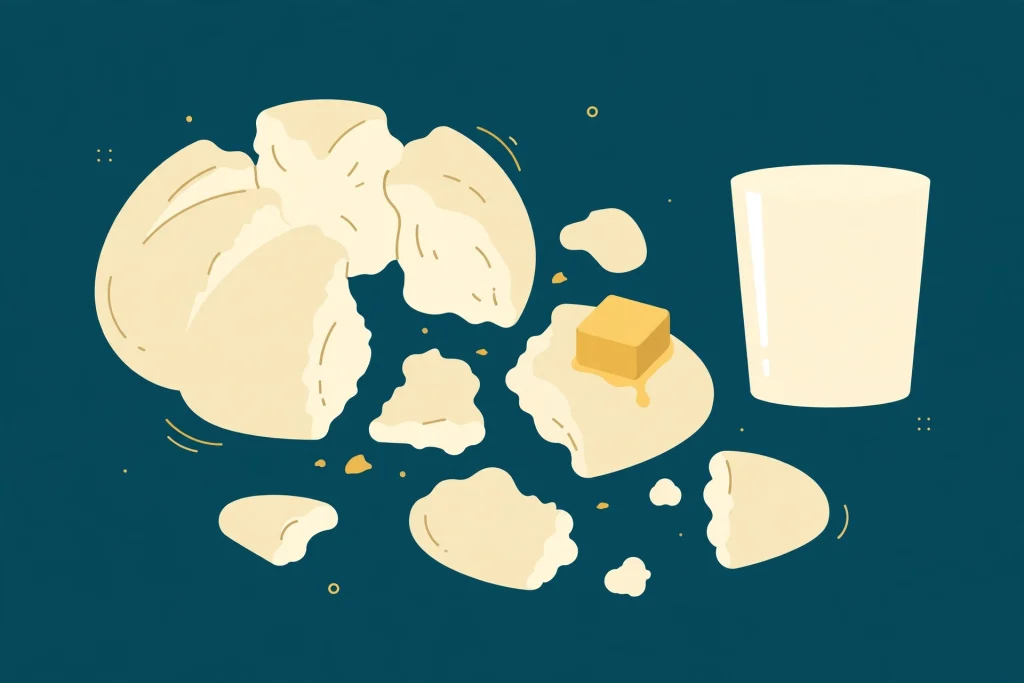
Week 2: Getting Closer
In the second week, the sockets have started to close, and most people find a croissant much more manageable. You can try a larger piece now, and you may not need to peel away every flaky layer. Still take it slowly, still eat in small pieces, and still rinse afterwards. A croissant with a filling — chocolate, almond paste, or ham and cheese — is a different question: fillings add chewing effort and sometimes hard bits, so a plain croissant is the safer test first.
This is also a good time to check in with how healing is going overall. The wisdom tooth extraction healing stages explain what should be happening at each point in recovery, so you can tell whether you are on track or whether something needs a dentist’s attention.
Week 3 and Beyond: Croissants Are Back
By week three, most people are eating croissants normally again. The sockets have closed enough that flakes are no longer a serious risk, and chewing feels like chewing again. If your dentist has confirmed that healing is going well at a follow-up visit, you can stop worrying about the flakes entirely and enjoy your croissant the way it was meant to be eaten — warm, flaky, and preferably with too much butter.
If you had complications, or if a socket is still tender at three weeks, give it more time and ask your dentist before going back to flaky foods. Recovery timelines vary, and your mouth sets the pace, not the calendar.
Why Flakes Are the Problem
It helps to understand what is actually happening in your mouth. After a wisdom tooth is removed, the socket fills with a blood clot that protects the bone and nerves underneath. That clot is delicate in the first week. Anything that dislodges it, or anything that gets trapped in the socket, can slow healing or cause pain.
Croissant flakes are almost designed to cause this problem. They are dry, thin, and light, so they scatter when you bite down. They are small enough to slip into a socket and stiff enough to stay there. Unlike a soft piece of bread, which compresses and swallows cleanly, a flake breaks into more flakes. This is why soft, moist foods are the heroes of recovery and dry, flaky foods are the ones to wait on.
If You Must Have a Croissant Now
Sometimes waiting is not realistic — maybe it is your birthday, or someone brought you your favourite bakery box. If you are past day five and your mouth feels ready, here is how to make a croissant as safe as it can be. Peel away the crisp outer layers and eat only the soft, doughy centre. Tear it into tiny pieces rather than biting into it. Dip each piece briefly in warm milk or coffee to soften it further. Eat slowly, chew away from the extraction sites, and rinse gently afterwards. Do not use a straw for your drink.
And if it still feels risky, a soft bread roll with butter gives you most of the same satisfaction with none of the flakes.
Frequently Asked Questions
Q: Can I eat a croissant the day after wisdom teeth removal?
A: No, it is best to wait. The first 24 to 48 hours are for liquids and very soft foods while the blood clot stabilises. Croissants shed flakes that can lodge in the socket, so they are a later food.
Q: When can I eat a croissant after wisdom teeth removal?
A: Most people can try a small piece of the soft centre around day five to seven, once swelling has eased and chewing feels comfortable. A whole croissant, flakes and all, is usually fine by week two or three.
Q: Are croissants worse than other breads after wisdom teeth removal?
A: Yes, because of the flakes. Soft white bread compresses and swallows cleanly, while a croissant shatters into thin, dry layers. That is why a bread roll with the crust removed is a safer early choice.
Q: Can I eat a chocolate croissant after wisdom teeth removal?
A: Wait longer for filled croissants. The filling adds chewing effort, and chocolate or almond fillings can contain hard bits. Try a plain croissant first, and save filled ones for week two or later.
Q: What should I do if croissant crumbs get stuck in the socket?
A: Try a gentle salt-water rinse first, once your dentist has said rinsing is safe. Do not poke at the socket with your tongue, a finger, or anything else. If pain, swelling, or a bad taste develops, contact your dentist.