
Updated November 18, 2026
Quick answer
Can You Drink Sparkling Water After Wisdom Teeth Removal? If plain water feels boring after your wisdom teeth come out, sparkling water probably sounds like the perfect compromise. It is still water, after all — just with bubbles. How much harm could a little fizz do? More than you might expect, at least in the …
Can You Drink Sparkling Water After Wisdom Teeth Removal?
If plain water feels boring after your wisdom teeth come out, sparkling water probably sounds like the perfect compromise. It is still water, after all — just with bubbles. How much harm could a little fizz do?
More than you might expect, at least in the first week. The bubbles are the whole problem, and timing matters more than the drink itself.
The Short Answer First
No, not right away. Most dentists recommend waiting about a week before drinking sparkling water after wisdom teeth removal. The carbonation creates pressure and fizz in your mouth, and that fizz can disturb the blood clot sitting in each extraction socket. That clot is the single most important thing protecting your healing jawbone in the first few days. Lose it, and you risk dry socket — a painful condition where the bone is exposed and healing stalls.
Flat, still water is your best friend from day one. Sparkling water can wait. A week of flat water is a small price for a smooth recovery.
Why Carbonation Is the Problem
It helps to understand what is actually happening inside your mouth after surgery. When a wisdom tooth is removed, the socket fills with blood that clots. That clot is not a nuisance; it is a natural bandage. It seals the wound, protects the bone and nerves underneath, and gives new tissue a scaffold to grow on. Everything about early aftercare — no straws, no spitting hard, no vigorous rinsing — exists to keep that clot exactly where it is.
Carbonated drinks work against that goal in two ways. First, the bubbles create tiny bursts of pressure when they pop against the socket, which can loosen the clot’s edges over a whole drink. Second, carbonated water is mildly acidic, and acid irritates raw, healing tissue.
This is also why dentists group sparkling water with soda and other fizzy drinks in the early days, even though sparkling water has no sugar. The sugar is not the issue here. The bubbles are.
Your Day-by-Day Timeline
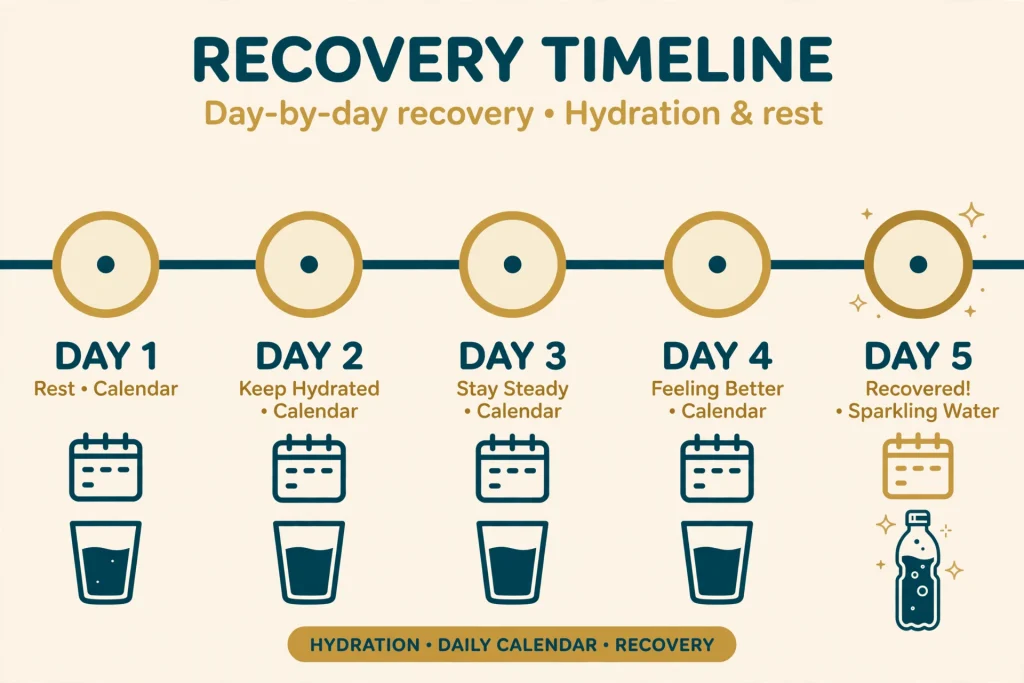
Day 0: Surgery Day — Flat Water Only
Today is about rest and clot formation. Sip cool, still water slowly, straight from a glass. Do not use a straw, do not gulp, and do not swish. Small, gentle sips are the rule. If you are thirsty, plain water is the safest thing you can drink, and it helps with the dry mouth that often follows anesthesia. Sparkling water is firmly off the menu today.
Days 1–3: The Clot Is Still Fragile
These are the highest-risk days for dry socket. The clot is forming and settling, and the socket is at its most vulnerable. Keep drinking still water, and you can add lukewarm herbal tea or diluted juice if you want variety — but nothing fizzy, nothing hot, and nothing through a straw. If you are craving that sparkling water, this is the hardest stretch. It passes quickly.
It is worth checking the general recovery picture at this stage, because knowing what normal healing looks like helps you spot problems early. The wisdom tooth extraction healing stages walk through what to expect in the first week.
Days 4–7: Healing Picks Up, but Hold the Fizz
By now the swelling is usually easing and you may be eating soft foods again. The socket is starting to fill with new tissue, and the clot is more stable — but it is not yet fully secure. Most dentists still advise against carbonation during this window. If you are unsure, wait one more day.
Day 7 and Beyond: The Green Light (Usually)
Around the one-week mark, most people can try sparkling water again. Start with a few small sips rather than a full glass, and pay attention to how the sockets feel. A little sensitivity is normal; sharp pain is a signal to stop and give it another day or two. If you had a complicated extraction, or your dentist gave you a longer timeline, follow their advice over any general guide — including this one.
For a broader sense of when foods and drinks return to normal, the wisdom teeth removal food timeline lays out the whole first two weeks.
What About Flavoured Sparkling Water?
Plain sparkling water is the mildest version of the drink, and flavoured varieties add a second concern: acidity. Citrus-flavoured sparkling waters — lemon, lime, grapefruit — tend to be more acidic than unflavoured ones, and that extra acidity can irritate a healing socket even after the clot is stable. Sweetened flavoured waters add sugar to the mix, which feeds the bacteria around a healing wound.
So the rule of thumb is simple. When you do bring sparkling water back, start with plain, unflavoured, unsweetened sparkling water. Save the flavoured cans for week two or later, when the sockets have closed over more fully.
What About Sparkling Water With a Straw?
No. This is the one combination that makes a borderline drink genuinely risky. Straws create suction, and suction is the classic way blood clots get dislodged. Dentists warn against straws for at least a week after extraction, no matter what you are drinking. When you do drink sparkling water again, drink it from a glass, in small sips.
Safer Drinks While You Wait
A week without fizz does not have to mean a week of boredom. These are all safe from day one, as long as they are cool or lukewarm and drunk from a glass:
- Still water. The gold standard. Keep a bottle beside you and sip often.
- Lukewarm herbal tea. Chamomile or peppermint, without sugar, once cooled down.
- Diluted apple juice. Half juice, half water, served cool.
- Coconut water. Naturally hydrating and mild.
- Milk. Cool milk is soothing and adds some calories when eating is hard.
Avoid alcohol, very hot drinks, and anything fizzy for the first week, and skip drinks with lots of added sugar while the sockets are open.
Warning Signs to Watch For
Most recoveries are uneventful, but call your dentist promptly if you notice severe pain that gets worse after day three instead of better, a bad taste or smell coming from the socket, visible bone in the socket, fever, or swelling that increases after the first couple of days. These can be signs of dry socket or infection, and both are much easier to treat when caught early.
The Bottom Line
Sparkling water is not banned forever — just paused. Give your mouth about a week, stick to still water and other gentle drinks in the meantime, and bring the bubbles back gradually once the sockets have had time to heal. Your future self, sipping a cold sparkling water with zero pain, will be glad you waited.
Frequently Asked Questions
Q: Can you drink sparkling water after wisdom teeth removal?
A: Not in the first week. Wait about 7 days, because the carbonation can disturb the blood clot in the socket and raise the risk of dry socket. After a week, start with a few small sips from a glass and see how it feels.
Q: Can I drink sparkling water 3 days after wisdom teeth removal?
A: It is best not to. Days 1–3 are the highest-risk period for losing the blood clot. Stick to still water until around day 7.
Q: Is flavoured sparkling water worse than plain?
A: Yes, slightly. Citrus-flavoured sparkling waters are more acidic and can irritate healing tissue, and sweetened ones add sugar that feeds bacteria near the wound. Start with plain, unflavoured sparkling water when you bring it back.
Q: Can I drink sparkling water through a straw after wisdom teeth removal?
A: No. Straws create suction that can dislodge the blood clot, and combining suction with carbonation is the riskiest way to drink sparkling water. Always drink from a glass, in small sips, and avoid straws for at least a week.
Q: What is the safest drink after wisdom teeth removal?
A: Cool, still water. It hydrates you, does not irritate the sockets, and carries no risk to the blood clot. Lukewarm herbal tea, diluted juice and coconut water are good alternatives while you wait for the fizz to return.
Q: When can I drink soda after wisdom teeth removal?
A: Soda follows the same rule as sparkling water — wait at least a week — but many dentists suggest waiting longer, because soda adds sugar and higher acidity on top of the carbonation.