
Updated November 16, 2026
Quick answer
Grapes feel like perfect recovery food — soft, juicy, hydrating, and barely needing chewing. But then you remember the seeds, the skins, and that round shape that seems made to roll into a socket. Are grapes a smart choice, or a food that looks harmless and turns out to be trouble? The honest answer is …
Grapes feel like perfect recovery food — soft, juicy, hydrating, and barely needing chewing. But then you remember the seeds, the skins, and that round shape that seems made to roll into a socket. Are grapes a smart choice, or a food that looks harmless and turns out to be trouble?
The honest answer is in the middle. Most people can enjoy grapes from day two or three, if they pick the right kind and prepare them properly. Whole, seeded grapes are a different story. This guide clears up the confusion with a myth-vs-fact breakdown and practical tips for eating grapes safely.
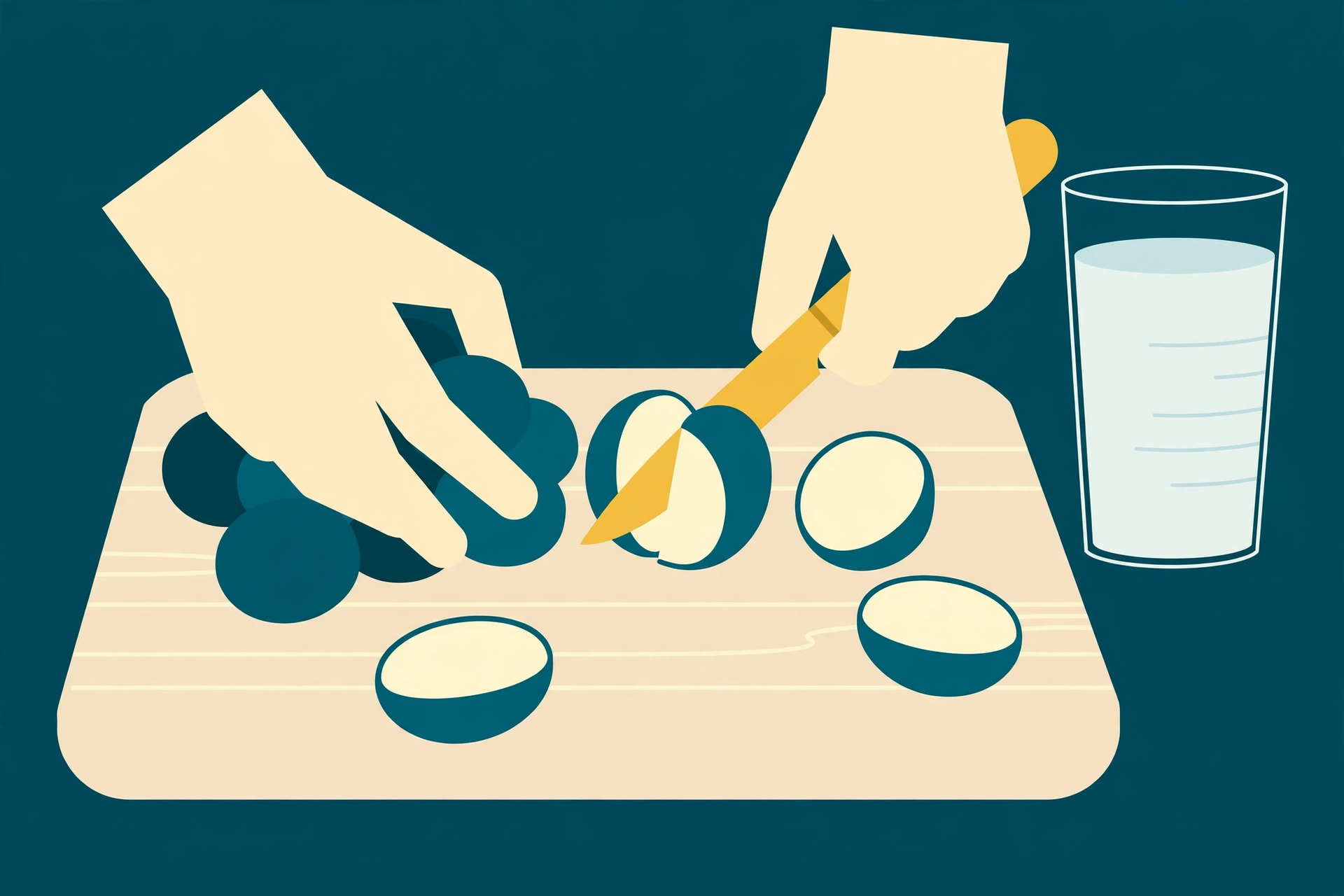
Myth vs Fact: Grapes After Wisdom Teeth Removal
Myth 1: Grapes are too risky because they are round
Fact: The round shape is not the real problem. A whole grape can slip toward the back of your mouth, but it rarely lodges in a socket. Cut grapes in half or quarters and the risk drops sharply — halved grapes are flat on one side and easy to chew gently.
Myth 2: The skin will get stuck in your socket
Fact: Grape skins are thin and soft, and they usually break down easily as you chew — nothing like popcorn hulls or seeds, which genuinely get trapped. Chew slowly and rinse gently with warm salt water afterwards, as your dentist advised. Peeling is an option in the first few days, but most people do not need to peel every grape.
Myth 3: Grapes are too acidic for healing gums
Fact: Grapes are mildly acidic, but far gentler than citrus fruits, pineapple, or tomato sauce. Most people find them soothing, especially chilled. If your sockets are very tender in the first day or two, any fruit might feel sharp — a sign to wait a day, not a sign grapes are forbidden. Once the worst tenderness eases, their mild acidity is nothing to worry about.
Myth 4: You have to wait a full week before any fruit
Fact: Hard, crunchy, or seedy fruit needs care early on, but soft fruit is often one of the earliest foods people return to. Mashed banana and applesauce usually come back within days, and seedless grapes belong in that same gentle group once you can open your mouth comfortably. If soft foods are going down easily, halved seedless grapes are a reasonable next step.
Myth 5: Frozen grapes soothe swelling
Fact: Cold food can feel wonderful on sore gums, but a fully frozen grape is hard as a pebble, and biting one can jar a tender socket. Chilled grapes from the fridge are better — cool, refreshing, and soft. If you want something icy, let a frozen grape thaw until slushy-soft first. Cold is soothing; rock-hard is not.
Seedless vs Seeded Grapes: Which Is Safer?
Here is how the two types compare after wisdom teeth removal:
| Feature | Seedless Grapes | Seeded Grapes |
|---|---|---|
| Seeds | None — nothing hard to bite or trap | Hard seeds that can lodge in a socket |
| Chewing effort | Very low when halved | Higher — you must work around seeds |
| Skin | Thin, soft, usually fine | Often thicker, slightly tougher |
| Best time to try | Day 2–3, halved | Day 7 or later, only if well healed |
| Preparation | Cut in half or quarters | Cut, remove every seed, then halve |
| Overall verdict | Good early recovery snack | Wait — more effort, more risk |
Seedless grapes win clearly for the first week. Seeded grapes are not banned forever, but they add work and worry for little benefit. If seeded grapes are all you have, slice each one open and pick the seeds out, or save them for next week.
When Can You Eat Grapes?
Day 1: Stick to liquids and very soft foods — cool water, broth, yogurt, and smoothies. Your mouth is at its most tender, and chewing is not worth it today. Grapes can wait.
Days 2–3: If soft foods are going well and you can open your mouth without sharp pain, try a few halved seedless grapes, eaten slowly and chewed away from your extraction sites. Chilled grapes often feel best at this stage.
Days 4–7: Most people can eat seedless grapes comfortably by now, still halved, as a regular snack. Keep avoiding seeded grapes for now.
After day 7: If healing is going smoothly, whole seedless grapes are usually fine. Cut seeded grapes open and remove the seeds for at least another week. If anything hurts or feels stuck, pause and go back a step.
How to Eat Grapes Safely
Wash grapes well first — you do not want grit near a healing socket. Cut each grape in half, or into quarters if your mouth is still very sore, and chill them in the fridge so they feel soothing and slightly firmer.
Eat them one at a time, sitting upright, and chew gently — never toss a handful in at once. After eating, rinse gently with warm salt water if your dentist recommended it, or sip plain water. Do not use a straw, and do not swish forcefully.
A small bowl of halved grapes with yogurt makes a light snack that feels like a real meal. For more ideas, see the foods to eat after wisdom teeth removal — grapes fit naturally into that soft, hydrating group.
What to Avoid With Grapes
Do not eat seeded grapes in the first week, do not eat them frozen solid, and do not eat them by the handful while lying down. Skip sour or underripe grapes if your mouth is still sensitive — they are more acidic and more likely to sting.
Skip lookalike products too. Raisins are sticky and can cling to sockets, very sweet grape juice can feel uncomfortable on raw tissue, and grape jelly is sticky. Stick to fresh, ripe, seedless grapes, cut in half.
If a piece of skin or a seed gets stuck near a socket, do not poke at it. Rinse gently with warm salt water and let it come out on its own. If it stays put or causes pain, call your dentist.
Grapes also help with hydration — they are mostly water — and provide natural sugars for energy plus vitamin C that supports healing. They are not a complete meal, but as a refreshing change from yogurt and soup, chilled halved grapes are one of the easiest soft snacks for wisdom teeth recovery you can make.
FAQs
Can I eat grapes the day after wisdom teeth removal?
Often yes — but only seedless grapes, cut in half, and only if soft foods are already going down comfortably. Day one is usually too early; by day two or three, a few halved, chilled seedless grapes are reasonable. If chewing still hurts, wait another day.
Are seedless grapes safe for wisdom teeth sockets?
Yes, seedless grapes are one of the safer fruits after extraction, provided you cut them in half or quarters. Without seeds there is nothing hard to get trapped, and the thin skin breaks down easily. Eat slowly, one at a time, and rinse gently afterwards.
What about seeded grapes — can I eat those?
Not in the first week. Seeded grapes need cutting open with every seed removed, and the thicker skin and extra chewing make them riskier. Wait until at least day seven, when your sockets feel well on the way to closing — and still remove the seeds.
Can grape skin get stuck in the extraction socket?
It is possible but uncommon. Grape skins are thin and soft, unlike popcorn hulls or seeds, and cutting grapes in half and chewing slowly reduces the chance further. If a piece does get stuck, rinse gently with warm salt water and do not poke at the socket. Call your dentist if it will not come out.
Are frozen grapes okay for soothing swelling?
No — not while fully frozen. A frozen grape is hard enough to jar a tender socket and cause pain. Chilled grapes from the fridge give the same cool, soothing feeling without the hardness. Let a frozen grape thaw until soft and slushy first.
Can I drink grape juice after wisdom teeth removal?
Yes, but drink it from a glass, never through a straw. Very sweet juice can sting raw tissue slightly, so dilute it with water if it feels sharp. Whole grapes are better than juice, but juice is reasonable when chewing feels like too much effort.