
Updated November 16, 2026
Quick answer
Oranges are one of the healthiest fruits — full of vitamin C, hydrating, and refreshing. After wisdom teeth removal, though, they are also one of the most likely fruits to hurt: the citrus acid that makes an orange taste bright can sting raw, healing gum tissue like lemon juice on a cut. The question is …
Oranges are one of the healthiest fruits — full of vitamin C, hydrating, and refreshing. After wisdom teeth removal, though, they are also one of the most likely fruits to hurt: the citrus acid that makes an orange taste bright can sting raw, healing gum tissue like lemon juice on a cut. The question is when your mouth is ready for them.
The short version: wait. Oranges are a later-stage food — most people need at least a week, often ten days, before a fresh orange feels comfortable. Timing, preparation, and choosing the gentlest citrus option all matter. This guide explains why citrus stings, compares your options, and tells you when the sting stops.
Why Citrus Acid Stings a Healing Socket
A wisdom tooth removal leaves an open socket — raw tissue gradually covered by a blood clot, then new gum tissue. In the first few days that tissue is extremely sensitive: nerve endings are exposed, and anything acidic, spicy, salty, or very hot can trigger a sharp sting.
Citrus fruits are acidic by nature. An orange typically has a pH around 3.5 to 4 — acidic enough to sting skin where there is a cut, and a healing socket is, in effect, an open wound inside your mouth. When orange juice touches raw tissue, the acid irritates the nerve endings and burns for minutes. It rarely causes lasting damage, but it hurts.
Acid matters for a second reason too: your mouth is rebuilding tissue, and a very acidic environment is not ideal for that. This is why dentists advise against citrus, tomato sauce, vinegar dressings, and fizzy drinks in the first week. One orange will not ruin your healing — but the discomfort is a signal, and listening to it makes recovery smoother.
There is also a texture problem. A fresh orange is fibrous and stringy, with segments that need real chewing and can leave pulp and pith stuck around a socket. The juice sacs burst as you chew, flooding the socket with acid all at once.
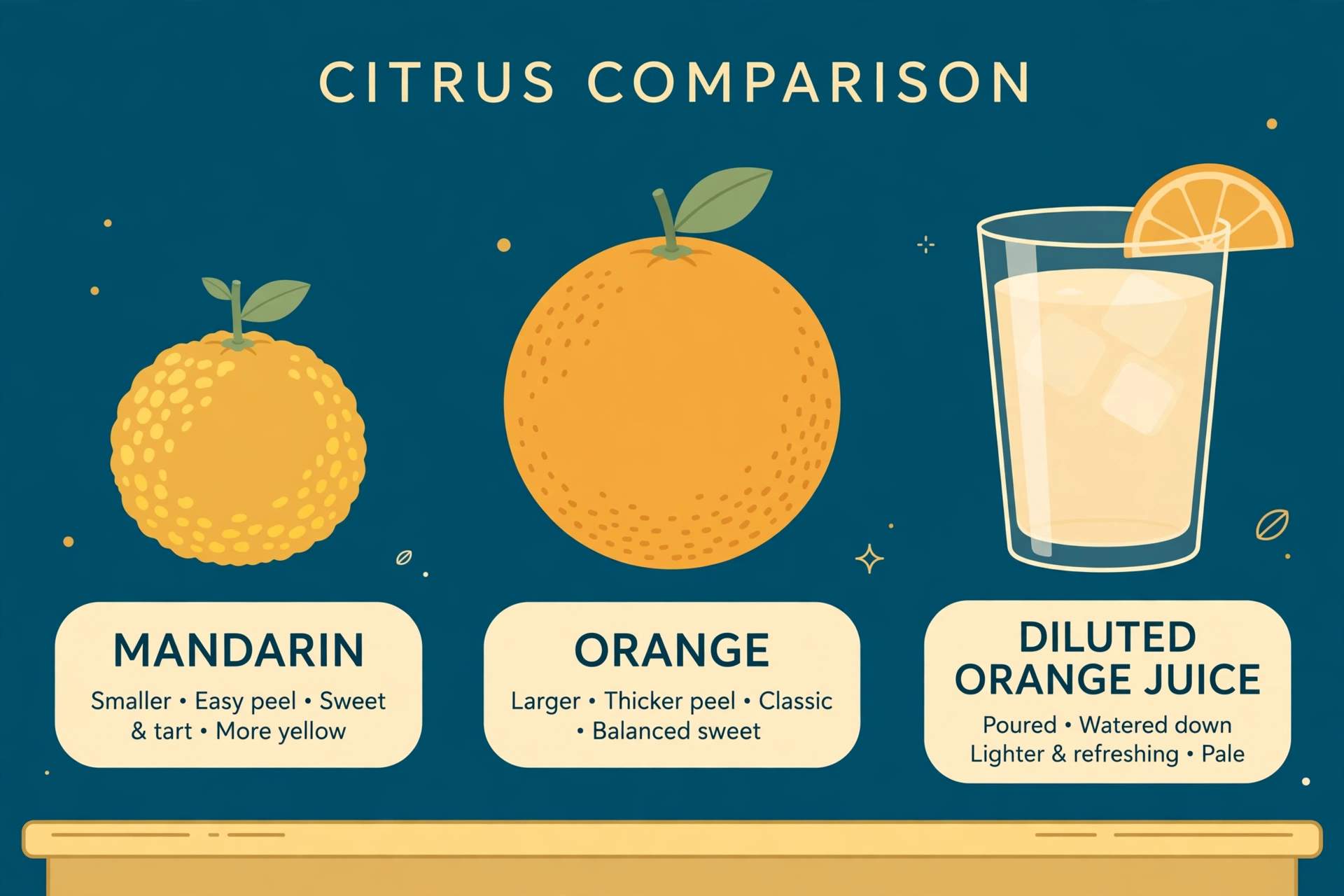
Orange vs Mandarin vs Orange Juice: Which Is Gentlest?
Not all citrus is equally harsh — here is how the options compare:
| Option | Acidity | Texture | Best time to try | Verdict |
|---|---|---|---|---|
| Fresh orange segments | High | Fibrous, stringy, needs chewing | Day 10–14 | Wait the longest |
| Mandarin / clementine | Lower | Softer, thinner membranes, easy to peel | Day 7–10 | The gentlest fresh citrus |
| Orange juice (fresh) | High | Liquid, but coats the whole socket | Day 10+, diluted | Wait, and dilute it |
| Orange juice (diluted) | Moderate | Liquid, easy to sip slowly | Day 7+, diluted | A reasonable early citrus taste |
| Orange-flavoured yogurt or smoothie | Low | Soft, spoonable, no chewing | Day 4–5 | The easiest way to get the flavour |
Mandarins and clementines are the surprise winners: sweeter and less acidic than a full-size orange, with smaller, tender segments and thinner membranes. They still sting if your mouth is very raw, but they are usually the first citrus most people can manage, around day seven to ten.
Orange juice is trickier than it looks: liquid coats the entire socket at once, with no fibre to slow the acid down. Diluting it half and half with water helps, and sipping slowly from a glass — never through a straw — keeps contact gentler. Even so, save juice until the second week.
The gentlest option is orange flavour without the acid: orange-flavoured yogurt, or a banana-yogurt smoothie with a splash of orange juice, where dairy buffers the acid.
When Does Citrus Stop Stinging?
Days 1–3: Citrus will almost certainly sting — sockets are at their rawest. Avoid oranges, juice, lemons, grapefruit, and pineapple entirely. For vitamin C, try mashed banana, well-cooked carrots, or a soft avocado after wisdom teeth removal — creamy and mild, with no acid sting.
Days 4–7: Tenderness eases, but sockets are still open — fresh orange is usually still too sharp. Diluted juice or orange-flavoured yogurt may be tolerable; test a tiny amount first.
Days 7–10: The turning point. Sockets are closing over, and a mandarin or a few sips of diluted juice often feel fine. Try a small amount first; if there is no sting, increase gradually.
Days 10–14: Most people can eat a fresh orange comfortably by now — still peel it well and eat slowly. A complicated extraction may need a few more days.
After two weeks: Oranges should feel completely normal again for almost everyone. If citrus still stings sharply, or you notice persistent pain, swelling, or a bad taste, mention it to your dentist. Test a tiny amount and listen to your mouth: no sting means you are ready; a sharp sting means wait a few more days.
How to Eat Your First Orange Safely
Choose a sweet, ripe orange. Peel it completely, remove all the white pith, and separate it into segments, peeling the thin membrane off each one so only soft juice sacs remain — this removes the stringy parts most likely to get stuck.
Eat one segment at a time, chewing gently away from your extraction sites. Afterwards, rinse gently to wash away lingering acid. Do not brush immediately after citrus — acid softens enamel, so wait at least thirty minutes.
Vitamin C is not only found in citrus, and the foods to avoid after wisdom teeth removal list puts citrus in the wait-a-week group — not because oranges are bad, but because timing matters.
Other citrus follows the same rules. Grapefruit is more acidic than orange and needs an even longer wait, while lemons and limes are the most acidic of all and should stay off the menu until healing is well advanced. Pineapple is not citrus, but it is similarly acidic, so it belongs in the same wait-a-week group. Ripe mango, papaya, and banana are gentler choices that provide plenty of vitamin C meanwhile.
FAQs
Can I eat oranges the day after wisdom teeth removal?
No — oranges are one of the foods to wait on. The citrus acid stings raw sockets sharply, and the fibrous segments need more chewing than a healing mouth can manage. Wait at least a week, often ten days, and start with a mandarin or diluted juice.
Why do oranges sting after wisdom teeth removal?
The socket left by extraction is raw, healing tissue with exposed nerve endings. Orange juice is acidic, with a pH around 3.5 to 4, and acid on raw tissue burns and stings. It rarely causes lasting damage, but it hurts — and as the socket closes over, the sting fades.
Are mandarins safer than oranges after extraction?
Yes — mandarins and clementines are gentler: sweeter, less acidic, with smaller segments and thinner membranes. Most people can try one a few days earlier than an orange, often around day seven to ten, but test a small amount first.
Can I drink orange juice after wisdom teeth removal?
Not in the first week — juice coats the whole socket with acid at once. From around day seven, try it diluted half and half with water, drunk slowly from a glass, never through a straw. Fresh segments are usually comfortable from day ten to fourteen.
When can I eat oranges normally again?
Most people can eat oranges normally after about two weeks, once the sockets have closed over — a few days longer after a complicated extraction. Try a small amount first: no sting means you are ready.
How can I get vitamin C while avoiding oranges?
You do not need oranges for vitamin C. Mashed banana, well-cooked carrots, soft avocado, ripe mango, and papaya all provide it without the sting. Orange-flavoured yogurt can also give you the flavour while dairy buffers the acid.