
Updated November 15, 2026
Quick answer
You just had your wisdom teeth out, you are hungry, and the jar of peanut butter in your pantry is calling your name. It is soft, filling, and feels like exactly the kind of food you should be able to eat when chewing hurts. The good news is that peanut butter can be a genuinely …
You just had your wisdom teeth out, you are hungry, and the jar of peanut butter in your pantry is calling your name. It is soft, filling, and feels like exactly the kind of food you should be able to eat when chewing hurts. The good news is that peanut butter can be a genuinely helpful recovery food — but only the right kind, at the right time, eaten the right way.
The short answer is this: smooth peanut butter is usually safe from around day two or three, once you are past the liquids-only first day. Chunky peanut butter, gritty natural peanut butter, and dry powdered peanut butter all need to wait longer. The difference is not the flavor. It is the texture, the stickiness, and how much chewing and rinsing each type demands from a mouth that is still healing.
Smooth vs Chunky: Which Peanut Butter Is Safe, and When?
Not all peanut butter behaves the same in a healing mouth. Use this comparison to decide what is in your pantry and when you can reach for it.
| Type of peanut butter | Texture | When you can usually try it | What to watch out for |
|---|---|---|---|
| Smooth (creamy) | Silky, no pieces | Day 2–3, small amounts mixed into soft food | Very sticky; rinse gently afterward |
| Chunky (crunchy) | Hard peanut pieces | Day 10–14, only if chewing feels comfortable | Pieces can lodge in sockets |
| Natural (oil on top) | Runny, then gritty at the bottom | Day 5–7, well-stirred smooth top only | The bottom of the jar is gritty |
| Powdered peanut butter | Dry powder, mixed with water | Day 4–5, stirred into smoothies or oatmeal | Can feel dry and pasty; needs moisture |
| With honey or chocolate swirls | Smooth but sweeter and stickier | Day 3–4, in small amounts | Extra sugar; rinse well |
If you only remember one row, remember the first. Smooth peanut butter is your friend during recovery; chunky is not. The hard pieces do not break down or dissolve, and they can sit in a socket long after you finish eating.
Natural peanut butter sits in the middle. The top of a freshly stirred jar is often nearly as smooth as regular creamy peanut butter, but the texture gets grittier as you work down. Stir well, take from the top, and stop before the gritty bottom. Powdered peanut butter is another quiet option: mixed into a smoothie or oatmeal, it gives you peanut flavor without the heavy stickiness. Just never eat the powder dry.
Why Peanut Butter Can Actually Help Your Recovery
Once you are past the first day, peanut butter has a lot going for it. It is calorie-dense, which matters when you can only eat small amounts and far less than usual. A single spoonful stirred into oatmeal can turn a light breakfast into something that keeps you full until lunch. It is also rich in protein and healthy fats, both of which your body uses while it repairs tissue.
It is also practical. You do not need to cook it, and you barely need to chew it when it is smooth. You can eat it at room temperature, a relief when hot food still feels uncomfortable. And unlike many soft foods that get boring fast, peanut butter adds flavor to the plain foods you are already eating. That said, it is not a first-day food. The first 24 hours are liquids only: water, broth, and smoothies without seeds. Wait until day two or three, and start with a small amount mixed into something else.
3 Easy Ways to Eat Peanut Butter During Recovery
The trick is not to eat it straight from the jar. Mix it into something soft and moist, and let the other food carry it past your teeth.
1. Stirred into warm oatmeal
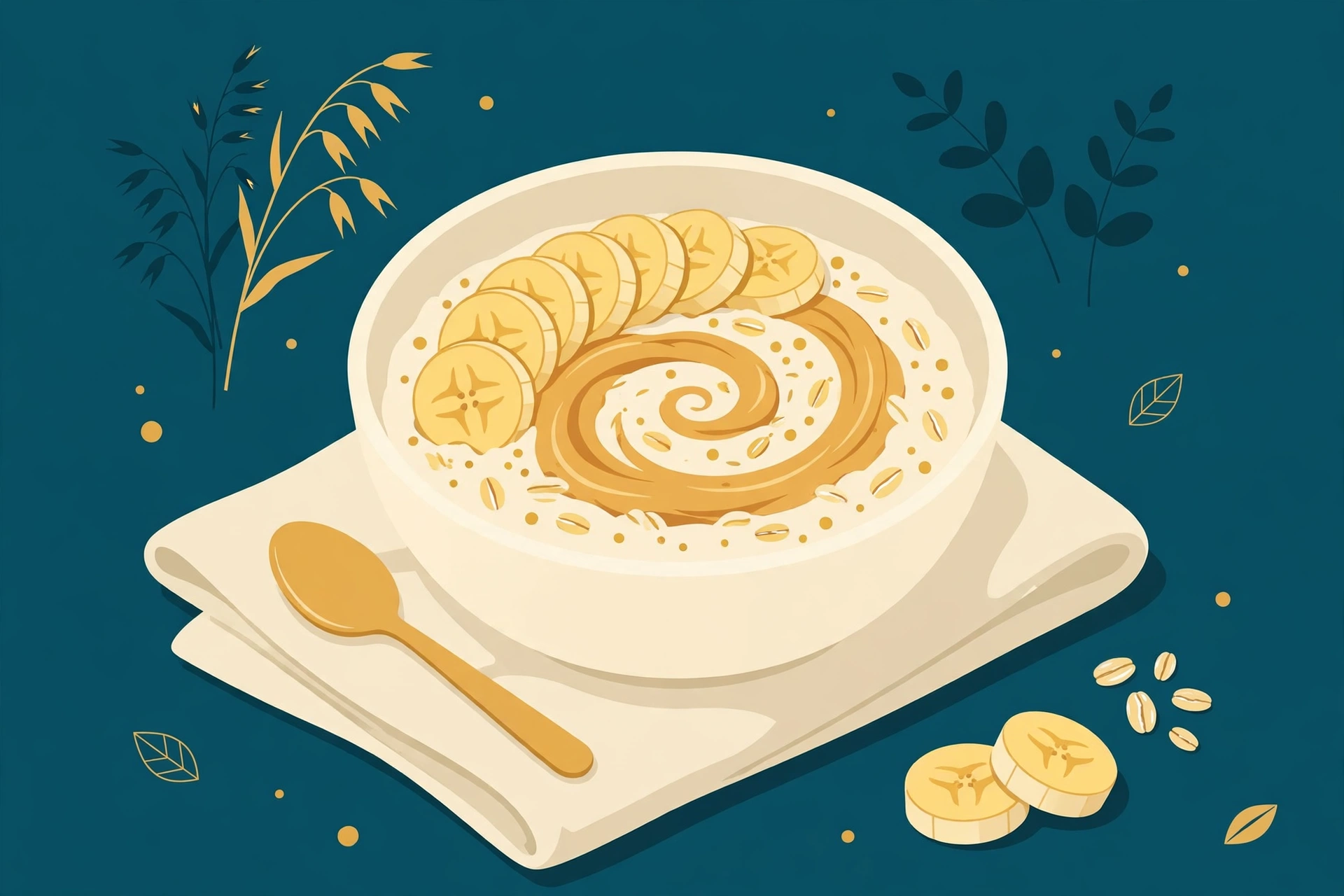
Make plain oatmeal, let it cool until warm rather than hot, and stir in a spoonful of smooth peanut butter until it melts through the oats. The oatmeal keeps the peanut butter from clumping, and the whole bowl goes down with almost no chewing. Add a few slices of soft banana if you like. For the full day-by-day picture, our wisdom teeth recovery food timeline walks through the first week, and our guide to eating oatmeal after wisdom teeth removal covers breakfast in more detail.
2. Blended into a smoothie
Add a spoonful of smooth peanut butter to a blender with a banana, some milk or yogurt, and a little honey, and blend until completely smooth — no lumps, no grit, nothing to chew. Drink slowly, and do not use a straw: the suction can disturb the blood clots in your sockets, so sip straight from the glass. Keep the smoothie free of seeds, nuts, and crunchy add-ins.
3. Spread thinly on soft bread without crust
By day five to seven, when soft bread feels comfortable, try a thin layer of smooth peanut butter on soft white bread with the crusts cut off. The key word is thin — a thick layer sticks to the roof of your mouth and your extraction sites. Tear the bread into small pieces, chew slowly away from your extraction sites, and if it feels dry or clingy, try again in a couple of days with mashed banana underneath or milk between bites.
Allergy Note and Alternatives
Peanut butter is a wonderful recovery food for most people, but not for everyone. If you have a peanut allergy, do not try to push through it during recovery, and do not assume a small amount will be fine because your mouth is already sore. An allergic reaction on top of surgical healing is a combination you do not want, so skip peanut butter entirely and use an alternative below.
Good alternatives include almond butter, cashew butter, and sunflower seed butter. Almond butter is the closest match in flavor and texture. Cashew butter is even creamier and milder. Sunflower seed butter is the safest choice if nut allergies are a concern, because it is made from seeds rather than nuts. Whichever you choose, apply the same rules: smooth only, no crunchy bits, small amounts mixed into soft food.
What to Avoid, and When Things Go Back to Normal
Do not eat peanut butter straight off a spoon in the first week. It sticks to your teeth and gums, it is hard to rinse away without disturbing the sockets, and you will end up working it loose with your tongue. Do not eat it on crackers, toast, or anything crisp in the first ten days — the crunch is the problem, not the peanut butter. Skip peanut butter with whole peanuts, peanut brittle, or peanut candy until week three.
After eating, rinse gently with plain water or a salt-water rinse if your dentist recommended one. Do not swish hard, and do not use a straw. For most people, peanut butter returns to normal around the two-week mark, when the sockets have closed enough for a smooth peanut butter sandwich and even chunky is usually fine if you chew carefully. Let comfort guide you rather than the calendar — if chunky still feels uncomfortable at day fourteen, go back to smooth for a few more days.
Frequently Asked Questions
Can I eat peanut butter the day after wisdom teeth removal?
Yes, from day two or three — smooth peanut butter only, a small amount mixed into oatmeal or a smoothie. The first 24 hours are liquids only.
Is chunky peanut butter safe after wisdom teeth removal?
Not in the first two weeks. The hard pieces can get trapped in the sockets and irritate healing tissue. Wait until day ten to fourteen, and only when chewing feels comfortable.
Can I eat peanut butter if I have a peanut allergy?
No. Skip it entirely and use sunflower seed butter, made from seeds rather than nuts. Almond or cashew butter are options only if your doctor says tree nuts are safe.
Does peanut butter cause dry socket?
Peanut butter itself does not cause dry socket, but eating it the wrong way can irritate the socket. Smooth peanut butter eaten gently and rinsed away afterward is low risk.
How do I clean peanut butter out of my extraction sites?
Rinse gently with plain water or a salt-water rinse if your dentist recommended one. Do not use a straw, do not swish hard, and do not poke at the socket with your tongue or a toothpick.
Can I eat a peanut butter sandwich after wisdom teeth removal?
On soft white bread with the crusts removed, usually from day five to seven, with a thin layer of smooth peanut butter. Wait until week two for crusty or toasted bread, or chunky peanut butter.