
Updated November 15, 2026
Quick answer
The Short Answer: Yes — Tofu Is a Recovery Winner Yes, you can eat tofu after wisdom teeth removal, and it may be one of the smartest foods you can reach for during recovery. Tofu is soft, gentle on sore gums, easy to swallow without much chewing, and packed with protein at a time when …
The Short Answer: Yes — Tofu Is a Recovery Winner
Yes, you can eat tofu after wisdom teeth removal, and it may be one of the smartest foods you can reach for during recovery. Tofu is soft, gentle on sore gums, easy to swallow without much chewing, and packed with protein at a time when your body needs it to heal.
The trick is picking the right kind at the right time. A wobbly block of silken tofu is a completely different experience from a slab of extra-firm tofu fried until crisp. One practically melts on your tongue; the other asks your jaw to do real work, which is exactly what you want to avoid in the first few days.
The timing follows the usual pattern. For the first 24 hours, stick to liquids and very smooth foods. From day two or three, soft tofu is usually fine. Firmer and crispier preparations need to wait until around the end of the first week. As always, listen to your own mouth: if something hurts, stop and go back to something softer for another day or two.
Which Tofu Is Safe — and When
| Tofu type | Texture | When it is safe | How to eat it |
|---|---|---|---|
| Silken tofu | Very soft, custard-like | Day 2–3 | Blended into smoothies or soups, or eaten plain with a spoon |
| Soft tofu | Delicate, spoonable | Day 2–3 | In soup, mashed with a fork, or in a smoothie bowl |
| Medium tofu | Holds its shape but still tender | Day 3–4 | Small soft cubes in soup or congee |
| Firm tofu | Holds its shape, needs gentle chewing | Day 5–7 | Steamed or simmered until very soft, cut into small pieces |
| Extra-firm tofu | Dense, chewy | Week 2 and beyond | Only when chewing feels comfortable again |
| Fried or baked tofu | Crisp outside, chewy inside | Week 2 and beyond | Avoid the crispy edges until sockets feel settled |
Silken and soft tofu are your best friends in the first few days. They need almost no chewing, which matters when your jaw is stiff and sore. You can eat them with a spoon, straight from the bowl, and barely open your mouth. They are also easy to blend, which opens up options when you are tired of the same few foods.
Medium tofu is a good step up around day three or four. It still feels tender, but it holds its shape in soup, which makes a meal feel more like a meal. Cut it into small cubes so you can swallow them with minimal chewing, and let the hot broth soften it further.
Firm and extra-firm tofu are where people get into trouble. They ask your jaw to work and can leave crumbs near a healing socket. Save them for the second week, steamed or simmered until very soft. Fried tofu is delicious, but crisp is the opposite of what your mouth needs right now.
Recipe 1: Silken Tofu Smoothie Bowl
This is the easiest way to get a proper meal in when chewing still feels like too much. It takes about five minutes and needs no cooking.
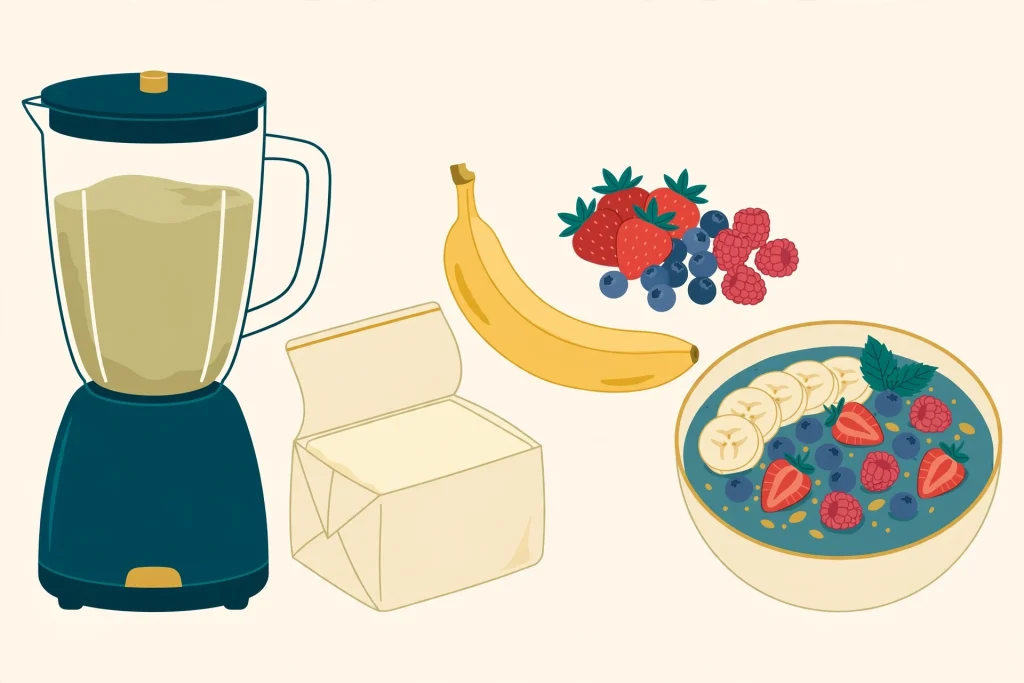
You will need half a block of silken tofu, one ripe banana, half a cup of frozen berries, two tablespoons of smooth peanut butter, and half a cup of milk or oat milk. Add a teaspoon of honey if you want it sweeter, or a splash more milk if you want it thinner.
Put everything in a blender and blend until completely smooth — no lumps, no bits. Pour it into a bowl and eat it with a spoon. If your blender leaves berry seeds behind, strain the mixture through a fine sieve first, because tiny seeds can irritate a socket.
The tofu disappears into the smoothie, giving you around ten grams of protein plus vitamins and natural sweetness from the fruit. It is cold, which feels soothing on sore gums, and filling enough to count as a real meal. For a savoury version, blend silken tofu with half an avocado, lemon, and a pinch of salt.
For more ideas on building soft, filling meals during the first week, our wisdom teeth recovery food timeline walks through what to eat day by day.
Recipe 2: Soft Tofu Soup
When you want something warm and savoury, this soup is about as gentle as a meal gets. It takes less than fifteen minutes.
You will need one block of soft tofu, two cups of low-sodium vegetable or chicken broth, a small handful of well-cooked soft noodles, a teaspoon of soy sauce, and a drizzle of sesame oil. Optional: a beaten egg stirred in slowly to make silky ribbons, or a spoonful of miso paste dissolved in the broth.
Warm the broth until it is steaming but not boiling hard. Cut the soft tofu into small cubes — about the size of a pea — and slide them gently into the broth. Let them warm through for three to four minutes. Add the noodles, the soy sauce, and the sesame oil, then take the pan off the heat. Let it cool until lukewarm before eating, since hot food can sting a healing socket.
Eat it slowly, with a spoon. If the noodles feel like too much, leave them out — tofu in broth alone is a perfectly good meal, and a good way to stay hydrated.
If soups are becoming your main food group this week, you might also like our guide to can you eat oatmeal after wisdom teeth removal which covers another warm, soft staple.
What to Avoid With Tofu
Most tofu mistakes are not about tofu itself — they are about what comes with it. Fried tofu is the biggest one: the crispy coating is hard and sharp, and it leaves crumbs near a fresh socket. The same goes for tofu baked until the edges go crunchy, or tofu stir-fried with hard vegetables like raw carrots or toasted nuts.
Spicy sauces are another thing to skip for now. Chilli oil, hot sauce, and very spicy marinades can sting healing tissue. Mild flavours — soy sauce, sesame, a little ginger, a little garlic — are usually fine and make tofu taste like something.
Watch out for tofu dishes that hide hard bits. A tofu salad with crunchy croutons, a wrap with raw onion, or a bowl topped with toasted seeds all add textures your mouth is not ready for. If you are ordering takeaway, check what is in the dish first. A plain steamed tofu dish is safe; a crispy tofu bao is not.
FAQs
Can I eat tofu on the first day after wisdom teeth removal?
On the first day, stick to liquids and very smooth foods. Silken tofu blended into a smoothie or soup is usually fine from day two, once bleeding has settled. Whole cubes of tofu, even soft ones, are better from day two or three.
Is silken tofu better than firm tofu after surgery?
Yes, by a long way. Silken tofu is custard-soft and needs almost no chewing, so it is safe from day two or three. Firm and extra-firm tofu need real chewing and should wait until around day five to seven, steamed or simmered until very soft.
Can tofu get stuck in the extraction socket?
Small pieces of firm or fried tofu can lodge near a socket, which is why soft and silken tofu are safer early on. They break apart easily and rinse away with water or a gentle salt-water rinse. If food does get stuck, do not poke at the socket — rinse gently with warm salt water.
Is tofu a good source of protein during recovery?
Yes. A half block of tofu gives you roughly ten grams of protein, which helps your body repair tissue after surgery. It is also easy to digest, which matters when your appetite is low. Pair it with other soft protein sources like eggs and yoghurt across the day.
Can I eat fried tofu after wisdom teeth removal?
Not in the first week. Fried tofu has a crisp, crunchy coating that can scratch healing tissue and leave crumbs near the socket. Wait until the second week, when chewing feels comfortable, and even then, go easy on the crispy edges.
What should I put on tofu to make it taste better?
Mild flavours work best: soy sauce, sesame oil, smooth peanut butter, mashed avocado, or miso dissolved in broth. Avoid chilli oil, hot sauce, and very spicy marinades for the first few days. Sweet options like honey, banana, and berries work well in smoothies.