Here’s the situation most people find themselves in after wisdom teeth removal: your surgeon told you to keep your mouth clean — but also told you not to rinse aggressively, not to disturb the clot, and not to brush near the extraction sites.
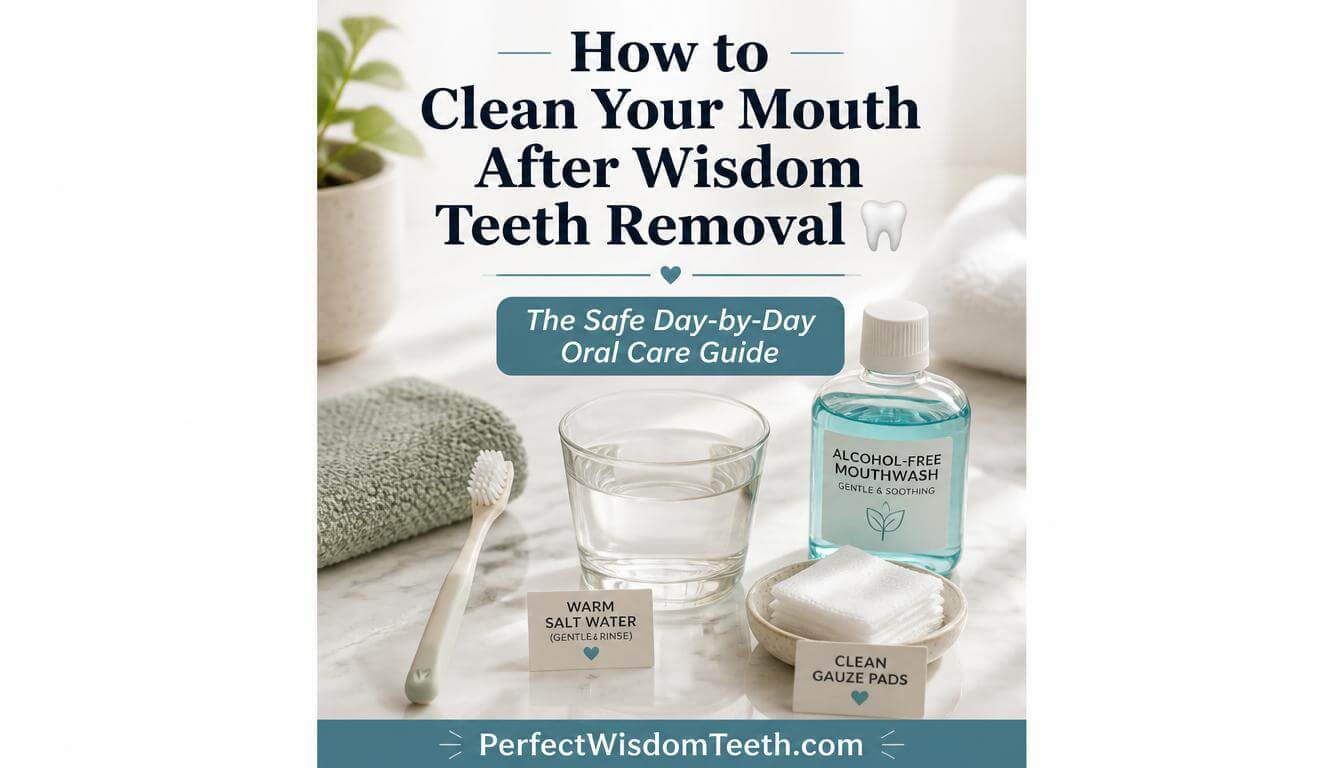
So… how exactly do you clean your mouth without disturbing anything?
It’s a genuinely confusing instruction set for most patients — and it’s one of the most common sources of post-operative questions. Getting oral hygiene wrong after extraction either risks the healing process (too aggressive) or risks infection (not enough cleaning).
This guide gives you a precise, day-by-day oral hygiene protocol that keeps your mouth genuinely clean throughout recovery without disturbing the healing socket. Every instruction has a reason behind it — and understanding the reason helps you apply the guidance intelligently to situations not specifically covered.
Why Oral Hygiene Matters So Much During Recovery
The extraction socket is an open wound in a uniquely bacteria-dense environment. Your mouth contains hundreds of bacterial species — and every meal, every breath, and every hour of healing creates opportunity for bacterial colonization of the socket.
Two competing risks:
Too much bacteria: Inadequate oral hygiene allows plaque, food debris, and bacterial biofilm to accumulate around the extraction site. This increases infection risk, causes bad breath, and can introduce pathogens into the healing socket that complicate or delay recovery.
Too much disturbance: Aggressive rinsing, vigorous brushing near the socket, or anything that creates suction or pressure near the clot risks dislodging it — causing dry socket, the most painful post-extraction complication.
The goal of post-extraction oral hygiene is to thread precisely between these two risks — removing bacteria and debris from the rest of the mouth effectively, while leaving the socket itself undisturbed to heal.
The Golden Rules of Post-Extraction Oral Hygiene
Before the day-by-day guide, commit these principles:
✅ Gentle always — everything in your mouth during recovery should be done with less force than you think necessary ✅ No spitting forcefully — creates suction that disturbs the clot ✅ No aggressive rinsing — swish gently, let fluid fall out of your mouth rather than spitting ✅ No mouthwash containing alcohol in the first 24 hours — dries and irritates healing tissue ✅ Brush the rest of your mouth normally — just avoid the immediate extraction area ✅ Salt water rinsing from day 2 — the single most beneficial home oral hygiene tool during recovery ✅ Don’t probe the socket — not with your tongue, not with a toothpick, not with anything
Day-by-Day Oral Hygiene Guide
Day 1 (Surgery Day) — Rest and Minimal Intervention
The priority on day one is clot formation — not cleaning.
The blood clot that forms in the socket in the first hours after surgery is the foundation of your entire recovery. Any disruption at this stage — even gentle — is risky.
What to do on day 1:
Do not rinse at all for the first 24 hours. This includes salt water, mouthwash, and plain water swishing. Rinsing on day one — even gently — disturbs the forming clot.
Do not brush near the extraction sites. You can carefully brush your front teeth and the teeth on the opposite side of your mouth — but stay well away from the surgical sites.
Gently blot the extraction area with clean gauze if bleeding continues — do not wipe or rub.
Drink water gently — let it pass over your teeth without swishing.
Do not spit. Let saliva and any blood gently fall into the sink or gauze. The suction of spitting creates negative pressure that pulls on the forming clot.
Do not use any mouthwash on day one — even alcohol-free varieties.
Day 2 — Introducing the Salt Water Rinse
From 24 hours after surgery, you can begin gentle salt water rinsing. This is the most important oral hygiene tool for the remainder of your first week.
Why salt water works:
Salt water (saline) creates a mildly hypertonic environment that:
- Draws fluid from swollen tissue (reduces edema)
- Creates conditions hostile to bacteria
- Gently cleanses the socket area without chemical irritation
- Supports healthy granulation tissue formation
It’s simple, inexpensive, and genuinely effective — which is why it appears in post-operative instructions from virtually every oral surgeon worldwide.
How to make it:
- ½ teaspoon of table salt
- 250ml (one cup) of warm water — warm, not hot
- Stir until fully dissolved
How to use it correctly:
- Take a mouthful of the salt water solution
- Hold it gently near the extraction area for 30 seconds
- Let it gently fall out of your mouth — do not spit forcefully
- Tilt your head to let it drain rather than actively pushing it out
- Repeat until the glass is finished
Frequency: 3–4 times daily from day 2 — after every meal and before bed. Consistency matters more than any single rinse.
The gentle spit: This deserves its own explanation because it’s the technique most patients get wrong. After rinsing, tilt your head sideways over the sink and let the water drain out passively — with as little active muscle pressure as possible. Imagine the water falling out rather than being pushed out. This avoids the suction that comes with normal spitting.
Day 2–3 — Brushing Carefully
You can resume careful brushing from day 2 — but with specific technique modifications.
Your day 2–3 brushing approach:
Toothbrush: Use the softest toothbrush you own — a soft or extra-soft bristle brush. Some people find a children’s brush helpful for its smaller head and extra-soft bristles in the first few days.
Toothpaste: Use your normal fluoride toothpaste. Some mild stinging near healing gum tissue is normal — if it’s significant, rinse the area with plain water.
What to brush:
- All teeth on the opposite side from the extraction sites — brush normally
- Front teeth — brush normally but carefully
- The teeth adjacent to extraction sites — approach very gently, barely touching the gum tissue
What to avoid:
- Brushing directly on or into the extraction socket
- Brushing the gum flap or stitches if present
- Pressing down on the gum tissue near the socket
- Brushing with any pressure near the surgical sites
The technique: Brush the rest of your mouth first — maintaining your normal 2-minute routine for all other areas. When you reach the areas near the extraction sites, switch to the lightest possible touch, barely grazing the adjacent teeth without contacting the socket area at all.
Spitting after brushing: As with rinsing — let the toothpaste fall from your mouth with minimal active spitting. The spit-don’t-rinse rule normally (leaving fluoride on enamel) applies here too — but prioritize minimal suction over fluoride retention in the first few days.
Day 3–4 — Adding Gentle Mouthwash
From day 3, alcohol-free therapeutic mouthwash can be introduced as an additional antibacterial tool.
Why alcohol-free matters: Alcohol-based mouthwashes (including standard Listerine) are harsh on healing tissue and can cause a burning sensation at the surgical site. They can also dry out oral tissue, impairing the moist environment needed for optimal healing. Alcohol-free alternatives provide antibacterial benefit without these drawbacks.
Recommended types:
- Alcohol-free chlorhexidine mouthwash (0.12% or 0.2%) — the gold standard antibacterial rinse. If your surgeon prescribed this specifically, use it exactly as directed. Note: chlorhexidine can cause temporary tooth staining with extended use.
- Alcohol-free essential oil mouthwash (alcohol-free Listerine variants)
- Alcohol-free antiseptic mouthwash (Corsodyl without alcohol)
How to use:
- After brushing, take a mouthful of mouthwash
- Hold gently for 30 seconds
- Let it drain from your mouth — gentle spit only
- Do not rinse with water afterward
- Once daily is sufficient as an adjunct to salt water rinsing
⚠️ If your surgeon prescribed chlorhexidine mouthwash: Follow their specific instructions exactly regarding concentration, frequency, and duration. Prescription chlorhexidine is stronger than OTC versions and prescribed for specific reasons related to your procedure.
Day 4–7 — Expanding Your Routine
As the socket begins closing over and healing progresses, you can gradually expand your oral hygiene routine.
Day 4–7 additions:
More confident brushing: The adjacent teeth can be approached more normally. The socket itself still requires avoidance, but the margin of caution can narrow as tissue closes over the wound.
Water flosser (low setting): From day 4–5, some surgeons permit gentle water flosser use on a very low pressure setting — aimed away from the socket and used on other teeth only. Do not aim the water flosser directly into the socket. Check your surgeon’s specific guidance before using.
String flossing (other teeth): Normal flossing on the teeth away from the extraction sites can resume from day 3–4. Floss very gently near the adjacent teeth — avoid snapping floss down near the socket.
Tongue scraper: Resume from day 2–3 — gentle scraping of the tongue reduces bacterial load significantly and is safe as long as you’re not contacting the surgical site.
Week 2 — Returning to Normal Oral Hygiene
By the start of week two, soft tissue healing is well advanced for most patients. The socket is closing over with new tissue, and the risk of clot disruption has significantly reduced.
Week 2 oral hygiene:
- Resume normal brushing including near-socket teeth — still gentle over the healing tissue
- Normal salt water rinsing 2x daily (reduce from 4x)
- Normal flossing — all areas, including careful flossing adjacent to healing sites
- Water flosser on normal setting for other areas (avoid direct socket irrigation until surgeon advises)
- String or interdental brushes around healing sites — when tissue is sufficiently closed
Full oral hygiene restoration: Most patients return to completely normal oral hygiene by weeks 3–4 when the socket has fully closed. Your surgeon will advise at any follow-up appointment.
Oral Care Mistakes to Avoid
These are the most common oral hygiene errors patients make during recovery — and each one either risks the clot or risks infection.
Mistake 1: Rinsing Too Aggressively
The most common error. Vigorous rinsing creates fluid pressure and suction inside the mouth that acts directly on the socket. Many cases of dry socket occur because patients rinsed more forcefully than they realized — believing they were being gentle.
The fix: Practice the “passive drain” technique every time. Let water fall out; never push it out.
Mistake 2: Rinsing on Day 1
Some patients begin salt water rinsing immediately after surgery, believing this will keep the area clean. Day one rinsing — even gently — disrupts clot formation during the critical first 24 hours.
The fix: No rinsing of any kind for the first 24 hours. Start salt water rinsing from 24 hours after your surgery time.
Mistake 3: Using Alcohol Mouthwash
Standard antiseptic mouthwashes — including regular Listerine — contain high concentrations of alcohol (around 26% in standard Listerine). Applied to raw healing tissue, this causes significant irritation, pain, and drying of the wound environment.
The fix: Alcohol-free mouthwash only, from day 3 onward. Check the label before using any mouthwash during recovery.
Mistake 4: Brushing the Socket Area on Day 1
Some patients believe brushing the area immediately will prevent infection. Brushing near the socket in the first 24 hours risks directly disturbing the forming clot.
The fix: Avoid brushing near the socket on day one. From day two, brush with extreme gentleness in adjacent areas.
Mistake 5: Probing the Socket With the Tongue
The tongue is extraordinarily sensitive — it will detect the socket, the stitches, and any tissue changes with remarkable accuracy. Most patients find this detection irresistible to investigate. Don’t.
Repeated tongue contact with the socket creates mechanical disturbance, introduces bacteria from the tongue, and can dislodge the clot through repeated pressure.
The fix: Consciously avoid directing your tongue to the socket area. It helps to have something to do with your mouth — eat, drink, or speak — rather than idle exploration.
Mistake 6: Skipping Oral Hygiene Because “It’s Complicated”
Some patients, confused by the instructions or anxious about disturbing the healing, skip oral hygiene altogether during recovery. This creates a bacterial environment that significantly increases infection risk.
The fix: Clean your whole mouth carefully and consistently. The rest of your mouth needs normal cleaning — only the immediate socket area requires the modified gentle approach.
Mistake 7: Using a Water Flosser Too Early or at High Pressure
Water flossers on a high setting can create significant pressure inside the mouth — enough to displace a clot or irrigate the socket in ways that impede healing.
The fix: Wait until day 4–5 at earliest for water flosser use, use the lowest pressure setting, and direct the tip away from the socket.
The Salt Water Rinse — Your Most Important Recovery Tool
Salt water deserves special emphasis because it’s consistently the single most beneficial post-extraction oral hygiene measure available at home — and it’s almost universally underused (too infrequent, too gentle, or started too late).
The full protocol:
| Timing | Frequency | Technique |
|---|---|---|
| Day 1 | None | Rest only |
| Days 2–7 | After every meal + before bed (3–4x daily) | Gentle hold and passive drain |
| Week 2 | 2x daily | Gradually normalize |
| Week 3+ | 1x daily or as needed | Normal rinsing resumes |
Make it fresh each time: Don’t prepare a large batch — make fresh salt water for each rinsing session. Prepared solution left standing becomes contaminated and loses effectiveness.
The temperature matters: Warm salt water (not hot, not cold) is most effective. Warm temperature supports tissue comfort and gentle circulation; hot temperature risks clot disruption; cold temperature is less effective for tissue cleansing.
When to Be Concerned About Oral Cleanliness
Some signs suggest that oral hygiene isn’t sufficient — or that something more than inadequate cleaning is occurring:
Signs to monitor:
- 🟡 Persistent bad taste or odor from the socket area — may indicate food debris or early infection; increase salt water rinsing frequency and contact your surgeon if it doesn’t improve within 24 hours
- 🔴 White or yellow discharge from the socket — possible infection, contact your surgeon
- 🔴 Increasing pain 3+ days after surgery combined with bad taste — possible dry socket or infection
- 🔴 Fever above 38°C / 100.4°F alongside socket discomfort — possible systemic infection, contact your surgeon promptly
For a complete guide on distinguishing normal healing from complications, our post on wisdom tooth infection symptoms covers every warning sign in detail.
Your Complete Post-Extraction Oral Hygiene Routine
Day 1:
- ❌ No rinsing of any kind
- ✅ Gently brush distant teeth if needed (front teeth, opposite side)
- ✅ Let saliva and fluid drain passively — do not spit
- ✅ Keep gauze in place as directed
Day 2:
- ✅ Salt water rinse — 3–4x daily (after meals and before bed)
- ✅ Careful gentle brushing — all teeth except near socket
- ✅ Tongue scraper — gentle morning use
- ❌ No mouthwash yet
- ❌ No flossing near socket
Day 3:
- ✅ Salt water rinse — 3–4x daily
- ✅ Brushing — expanding slightly toward adjacent teeth, extreme gentleness near socket
- ✅ Alcohol-free mouthwash — once daily after brushing
- ✅ Normal flossing on teeth away from extraction sites
- ✅ Tongue scraper morning and evening
Days 4–7:
- ✅ Salt water rinse — 3–4x daily
- ✅ More confident brushing of most teeth — still gentle near socket
- ✅ Alcohol-free mouthwash daily
- ✅ Water flosser (low setting, other teeth only) from day 4–5
- ✅ Normal flossing on distant teeth
- ✅ Tongue scraping twice daily
Week 2:
- ✅ Salt water rinsing 2x daily
- ✅ Near-normal brushing including careful approach to healing sites
- ✅ Normal mouthwash routine
- ✅ Normal flossing — carefully near healing sites
- ✅ Water flosser at normal setting for other areas
Conclusion
Oral hygiene after wisdom teeth removal isn’t complicated — but it does require precision and patience.
The first 24 hours: rest and minimal intervention. From day two: consistent, gentle salt water rinsing after every meal. Careful brushing of all other teeth from day two. Alcohol-free mouthwash from day three. Gradual restoration of your full routine through the first two weeks.
The socket needs to heal without disturbance. The rest of your mouth needs normal cleaning to prevent infection. Threading that needle consistently for seven to ten days is all recovery oral hygiene requires.
Be gentle. Be consistent. And be patient with the process.
For more recovery support, our complete wisdom teeth recovery guide and guide on how to reduce swelling cover every aspect of the healing process in detail.
Frequently Asked Questions
Q: When can I brush my teeth after wisdom teeth removal? You can carefully brush your teeth from day two after wisdom teeth removal — avoiding the immediate extraction site and any stitches. Use a soft-bristled brush, minimal pressure, and approach teeth adjacent to the socket with extreme gentleness. The rest of your mouth should be brushed normally. On day one, either avoid brushing entirely or brush only the teeth farthest from the extraction sites, being extremely careful not to introduce any suction or pressure near the socket.
Q: When can I use mouthwash after wisdom teeth removal? Alcohol-free mouthwash can be introduced from day three after wisdom teeth removal. Alcohol-containing mouthwash should be avoided for at least the first week as the alcohol irritates healing tissue and can slow recovery. If your surgeon has prescribed chlorhexidine mouthwash, follow their specific instructions regarding timing and frequency. Standard alcohol-free antiseptic mouthwash used once daily from day three provides useful supplementary antibacterial support alongside salt water rinsing.
Q: How do you do a salt water rinse after wisdom teeth removal? Mix half a teaspoon of table salt in a cup of warm water until fully dissolved. Take a mouthful and hold it gently near the extraction area for 30 seconds. Let the solution drain passively from your mouth by tilting your head — avoid forceful spitting, which creates suction that can disturb the healing clot. Rinse three to four times daily from 24 hours after surgery — after every meal and before bed — through the first week of recovery.
Q: Can I use a water flosser after wisdom teeth removal? Wait until days four to five before attempting any water flosser use, and only use it on the lowest pressure setting directed away from the extraction sites. Water flossers should not be aimed directly into the socket during the first week of recovery, as the pressure can disturb healing tissue. Use it exclusively on teeth distant from the extraction sites in the early recovery period. Your surgeon may have specific guidance — follow their instructions if provided.
Q: What happens if I don’t clean my mouth after wisdom teeth removal? Inadequate oral hygiene during wisdom teeth recovery significantly increases the risk of infection at the extraction site. Food debris and bacterial biofilm accumulate in the socket, creating conditions for bacterial growth that can cause painful post-extraction infection, alveolar osteitis (dry socket), delayed healing, and potentially spreading infection. Regular salt water rinsing and careful brushing of the rest of the mouth are essential — the goal is cleaning everything except the immediate socket area while leaving the clot itself undisturbed.
Looking for dental care options? Call to discuss the advertised dental service.
Call Now