
Updated November 16, 2026
Quick answer
Fish is one of the best foods you can eat while recovering from wisdom teeth removal — but only the right kinds, cooked the right way, at the right time. Soft, flaky fish is gentle on your jaw, easy to swallow, and packed with the protein your body needs to heal. Crispy, bony, or raw …
Fish is one of the best foods you can eat while recovering from wisdom teeth removal — but only the right kinds, cooked the right way, at the right time. Soft, flaky fish is gentle on your jaw, easy to swallow, and packed with the protein your body needs to heal. Crispy, bony, or raw fish is a different story, and eating it too soon can hurt or slow your recovery.
The Short Answer: Yes — soft, flaky fish such as cod, tilapia, haddock, or sole is usually safe from day 2–3, once you can open your mouth a little and chew gently. Steam, poach, or bake it until it flakes apart with a fork, let it cool to lukewarm, and eat small bites on the opposite side from the extraction sites. Avoid fried or battered fish, fish with small bones, and raw fish or sushi until your sockets have healed more — usually weeks 3–4. Always follow your oral surgeon’s specific instructions.
Why Fish Works So Well After Wisdom Teeth Removal
Fish ticks almost every box on the recovery food list, once the first day is behind you:
- Soft and flaky. White fish cooked gently falls apart with almost no chewing, so your stiff, sore jaw barely has to work.
- High in protein. Protein is what your body uses to repair tissue and close the sockets. When chewing meat is still too hard, fish is often the easiest protein you can manage.
- Omega-3 fatty acids. Oily fish such as salmon and mackerel are rich in omega-3s, which may help calm inflammation around the extraction sites.
- Easy to digest. Unlike red meat, fish is light and easy on a stomach that may still be unsettled from anaesthesia or pain medication.
- Versatile. Steamed, poached, baked, or mashed into a soft fish cake, it can be adapted to whatever stage of healing you are in.
That is why fish shows up on most post-surgery food lists, alongside eggs, yoghurt, and mashed potato — with one condition: it has to be soft, boneless, and not too hot.
When Can You Eat Fish After Wisdom Teeth Removal?
| Stage | Fish status |
|---|---|
| Day 1 | No — stick to liquids and very soft foods such as soup, yoghurt, and ice cream. Your mouth is still numb, and chewing anything is risky. |
| Days 2–3 | Yes — soft, flaky white fish (cod, tilapia, haddock, sole), steamed or poached until it falls apart. Small portions, lukewarm, chewed on the opposite side. |
| Days 4–7 | Yes — most cooked fish is fine now, including baked salmon and mashed canned tuna. Still avoid anything fried, crispy, or bony. |
| Days 8–14 | Yes — firmer fish such as grilled salmon or tuna steak is usually fine, as long as chewing is comfortable. Try small pieces first. |
| Weeks 3–4 | Yes — fish is fully back on the menu, including lightly fried fish and sushi, once the sockets have closed and chewing feels normal. |
Healing speed varies. Surgical or impacted extractions need more caution than simple ones, and if your jaw still barely opens, wait a few more days before trying fish at all.
For the full day-by-day picture of what you can eat and when, see our wisdom teeth recovery food timeline.
How to Eat Fish Safely the First Time
A few small rules make a safe food even safer:
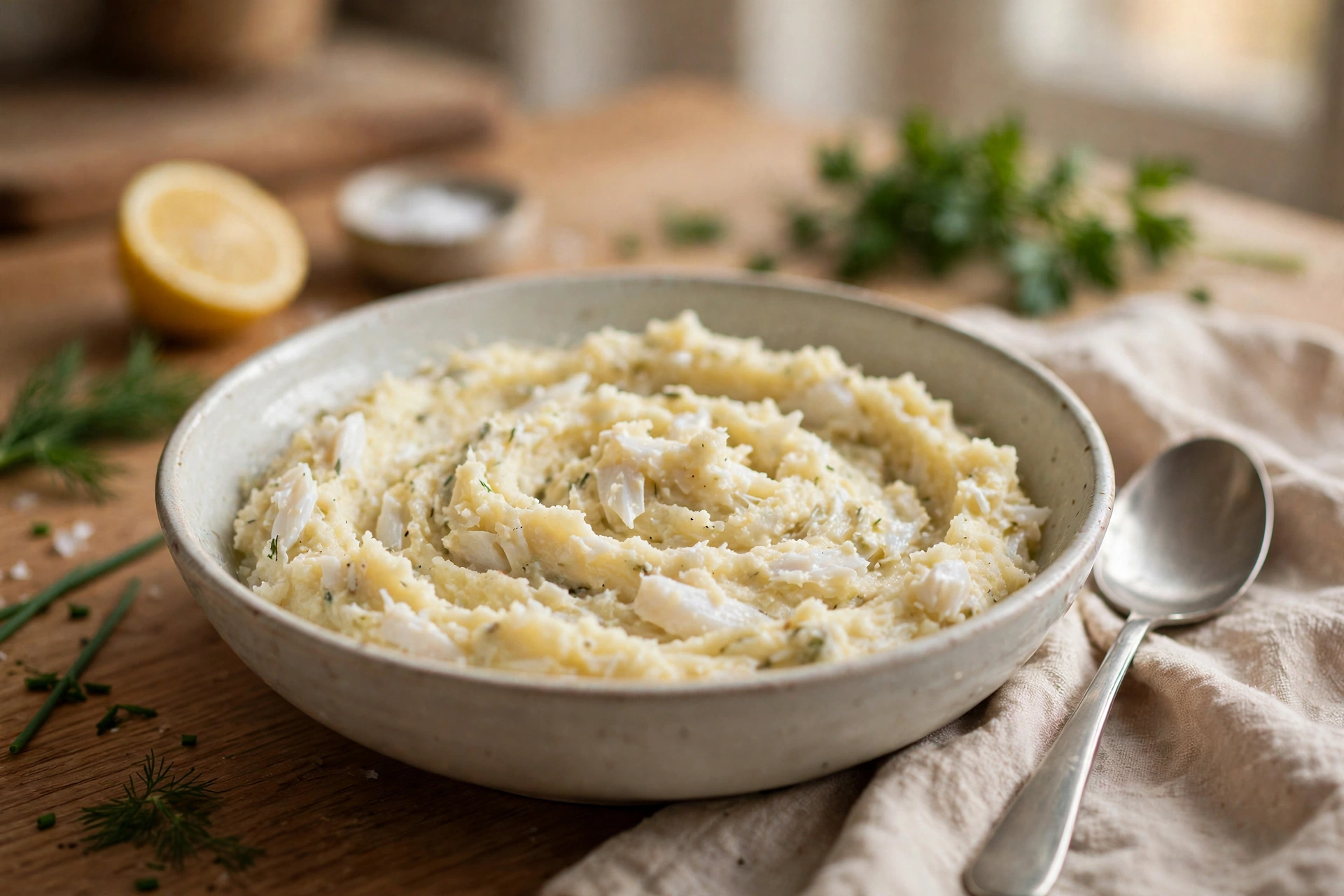
- Choose flaky white fish first. Cod, tilapia, haddock, sole, and pollock are the safest starting point — they break into soft flakes with a fork.
- Steam, poach, or bake — don’t fry. Steaming and poaching keep fish soft and moist. Frying creates a crispy coating that can crumble into the socket.
- Check for bones twice. Even a fillet labelled boneless can hide a pin bone. Flake the fish apart with a fork before eating, and check every piece.
- Let it cool to lukewarm. Very hot food can increase bleeding and irritate the sockets. Warm is fine; steaming hot is not.
- Take small bites and chew on the opposite side. Keep food away from the extraction sites, and chew slowly with the side that feels better.
- Mash it if you need to. If chewing still hurts, mash soft fish with a fork and mix it with mashed potato — you still get the protein without the chewing.
- Rinse gently afterwards. Rinse with warm salt water after eating to wash away any flakes near the sockets. Don’t spit forcefully or rinse vigorously.
What Kinds of Fish Are Best — and Which to Avoid
- Best: soft white fish. Cod, tilapia, haddock, sole, pollock, and hake — steamed, poached, or baked until flaky.
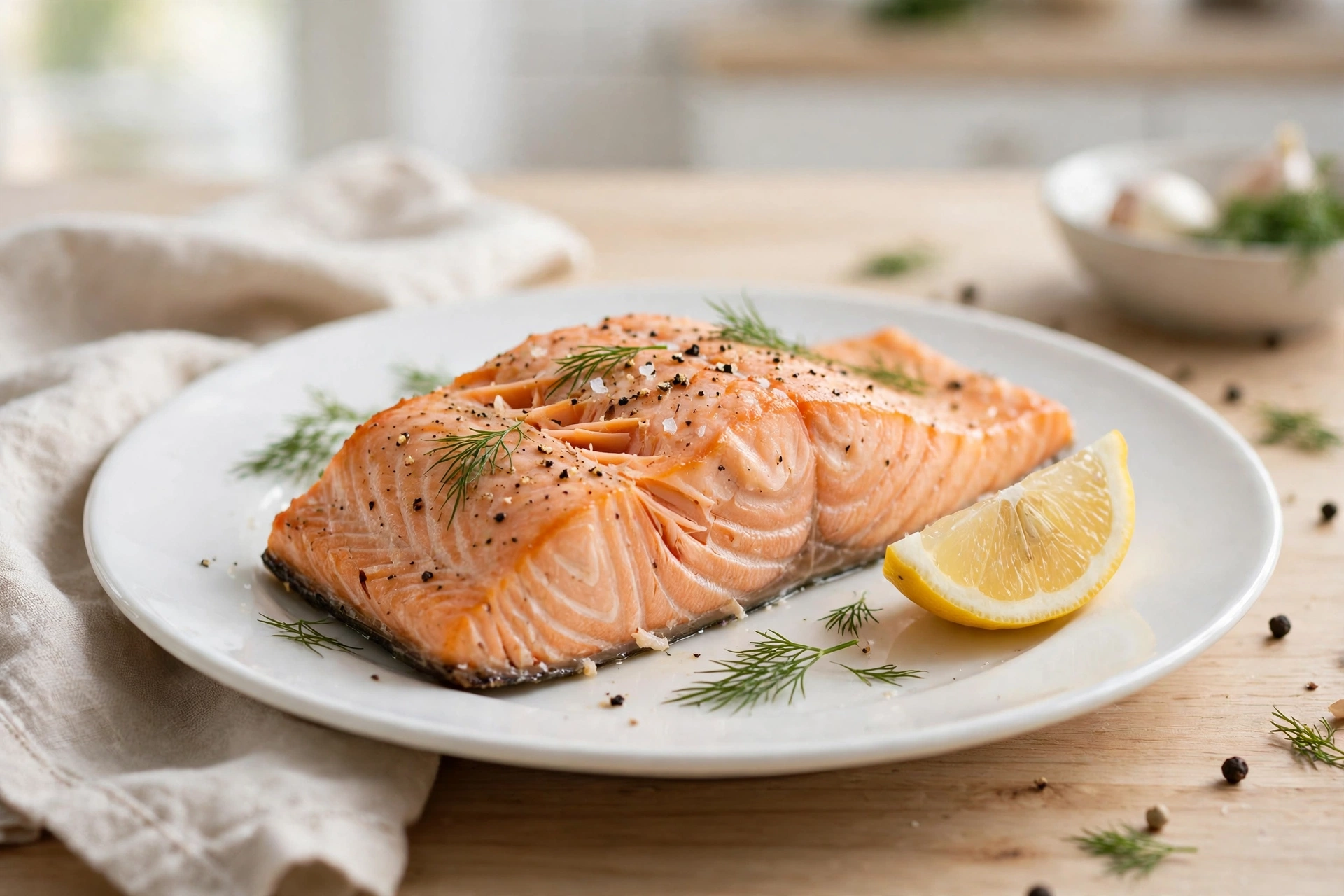
- Good: oily fish once you are past day 4. Salmon, mackerel, and sardines are soft when baked and give you omega-3s. Salmon is the easiest of the three to chew.
- Good: canned tuna, mashed. Plain canned tuna in water, mashed with a fork, is soft and easy from around day 4. Skip tuna with crunchy celery or onion mixed in for now.
- Avoid for now: fried or battered fish. Fish and chips, fish fingers, and any crispy coating can crumble into the socket and need real chewing. Wait until weeks 3–4.
- Avoid for now: fish with lots of small bones. Whole sardines, small fried fish eaten whole, and bony fish such as carp need careful chewing and carry a bone risk.
- Avoid for now: raw fish and sushi. Raw fish carries a higher infection risk while the sockets are open wounds, and sushi rice and seaweed are sticky and hard to chew. Wait until weeks 3–4, and only when the sockets have closed.
- Avoid: very spicy or acidic fish dishes. Chilli fish, fish in vinegar, and ceviche can sting the sockets. The acid in ceviche is especially harsh on healing tissue — and the fish in it is raw.
For when other proteins are safe, see our guide to when you can eat meat after wisdom teeth removal.
Fish Alternatives While You Wait
If fish feels too ambitious on day 2 or 3, these give you similar soft protein without the chewing:
- Eggs — scrambled or soft-boiled, soft and easy to eat.
- Yoghurt and cottage cheese — no chewing at all. See our guide to yoghurt after wisdom teeth removal.
- Tofu — silken tofu is as soft as it gets and takes on any flavour.
- Lentil or bean soup — blended smooth, with protein and no chewing.
- Protein shakes — drunk from a cup, never through a straw.
Frequently Asked Questions
Q: Can you eat fish the day after wisdom teeth removal?
Usually not on day 1, but often from day 2–3. On day 1 your mouth is still numb and chewing is risky, so stick to liquids and very soft foods. From day 2, soft steamed or poached white fish in small flakes is usually fine, as long as you can open your mouth enough to chew gently.
Q: Is fish good for wisdom teeth recovery?
Yes. Fish is one of the best recovery foods: it is soft, easy to chew, easy to digest, and rich in the protein your body needs to heal the sockets. Oily fish also provides omega-3 fatty acids, which may help with inflammation. Just keep it soft, boneless, and lukewarm.
Q: Can fish cause dry socket?
Fish itself does not cause dry socket. The risk comes from chewing too hard, eating food that crumbles into the socket, or disturbing the blood clot — for example by rinsing forcefully or using a straw. Eat soft fish in small bites on the opposite side, and rinse gently with warm salt water afterwards. If you notice severe throbbing pain 2–4 days after surgery, see our guide to the signs of dry socket and infection.
Q: Can I eat salmon after wisdom teeth removal?
Yes, from around day 4. Baked or poached salmon is soft, flakes easily, and is rich in omega-3s. Avoid smoked salmon in the first week — it is firmer, saltier, and usually eaten cold with bread, which is harder to manage. Wait until weeks 2–3 for smoked salmon.
Q: Can I eat fried fish after wisdom teeth removal?
Not until weeks 3–4. The crispy batter or coating crumbles into small hard pieces that can lodge in the socket, and fried fish needs real chewing. Steamed, poached, or baked fish is the safe choice until the sockets have closed.
Q: When can I eat sushi after wisdom teeth removal?
Wait until weeks 3–4, when the sockets have closed and chewing feels normal. Sushi combines three problems for early healing: raw fish (a higher infection risk while sockets are open), sticky rice, and chewy seaweed. Even then, start with a small piece and skip anything spicy.
Q: What fish should I avoid after wisdom teeth removal?
Avoid fried or battered fish, fish with many small bones, raw fish and sushi, and very spicy or acidic fish dishes such as ceviche. Also be cautious with high-mercury fish — swordfish, king mackerel, shark, and tilefish — which health authorities advise limiting in general, not just after surgery.
Bottom Line
Fish is a day 2–3 food, not a day-one food — and once you start, it is one of the best things you can eat. Soft, flaky white fish, steamed or poached and eaten lukewarm in small bites, gives you easy protein with almost no chewing. Skip the fryer, check for bones, and save raw fish and sushi for weeks 3–4. If it hurts to chew, or the socket still feels open, wait a few more days and try again.