
Updated November 16, 2026
Quick answer
Shrimp After Wisdom Teeth Removal: What's True and What's Not Shrimp sits in a strange spot on the recovery menu. It's soft, it's high in protein, and it barely needs chewing — which sounds perfect. But it's also seafood, and seafood comes with a whole cloud of worries: Is it too chewy? Will the shell …
Shrimp After Wisdom Teeth Removal: What’s True and What’s Not
Shrimp sits in a strange spot on the recovery menu. It’s soft, it’s high in protein, and it barely needs chewing — which sounds perfect. But it’s also seafood, and seafood comes with a whole cloud of worries: Is it too chewy? Will the shell irritate the sockets? Does it slow healing? Will it cause an infection?
The short answer is that shrimp is actually one of the better proteins you can eat during recovery — once you cook it the right way and time it sensibly. Most people can enjoy well-cooked, peeled shrimp from around day 4 or 5.
Let’s separate the myths from the facts first, then look at which cooking methods work and which ones don’t.
Myth vs. Fact: Shrimp and Wisdom Teeth Recovery
Myth: Shrimp is too chewy for a healing mouth
Fact: Properly cooked shrimp is tender and slightly springy, not tough. Overcooked shrimp turns rubbery — that’s a cooking problem, not a shrimp problem. Steamed or gently boiled shrimp, cooked just until pink and opaque, is easy to chew and easy to cut into small pieces. If your shrimp feels like a rubber band, it was left on the heat too long.
Myth: Seafood causes infections in open sockets
Fact: There’s no evidence that eating cooked shrimp causes infection in extraction sites. What matters is food hygiene: fresh shrimp, cooked thoroughly, eaten with clean hands, and followed by a gentle salt-water rinse. The same rules apply to chicken or any other protein. Raw or undercooked seafood is a different story — that’s a genuine risk, which is why raw shrimp is off the menu entirely.
Myth: Shrimp slows down healing
Fact: If anything, the opposite is true. Shrimp is rich in protein, zinc, and selenium — nutrients your body uses to repair tissue. A diet that skips protein altogether heals more slowly than one that includes soft, lean protein sources like shrimp. The real enemy of healing is eating too little, not eating shrimp.
Myth: You have to wait two weeks for any seafood
Fact: Two weeks is the right timeline for raw fish and shellfish, but cooked shrimp is a different category. Most dentists are comfortable with soft, fully cooked seafood from day 4 or 5 onward, as long as chewing is comfortable.
Cooking Methods Compared: How You Cook Shrimp Changes Everything
The same shrimp can be a great recovery food or a terrible one depending on what you do with it. Here’s the breakdown.
| Cooking method | Texture | Earliest safe day | Recovery verdict |
|---|---|---|---|
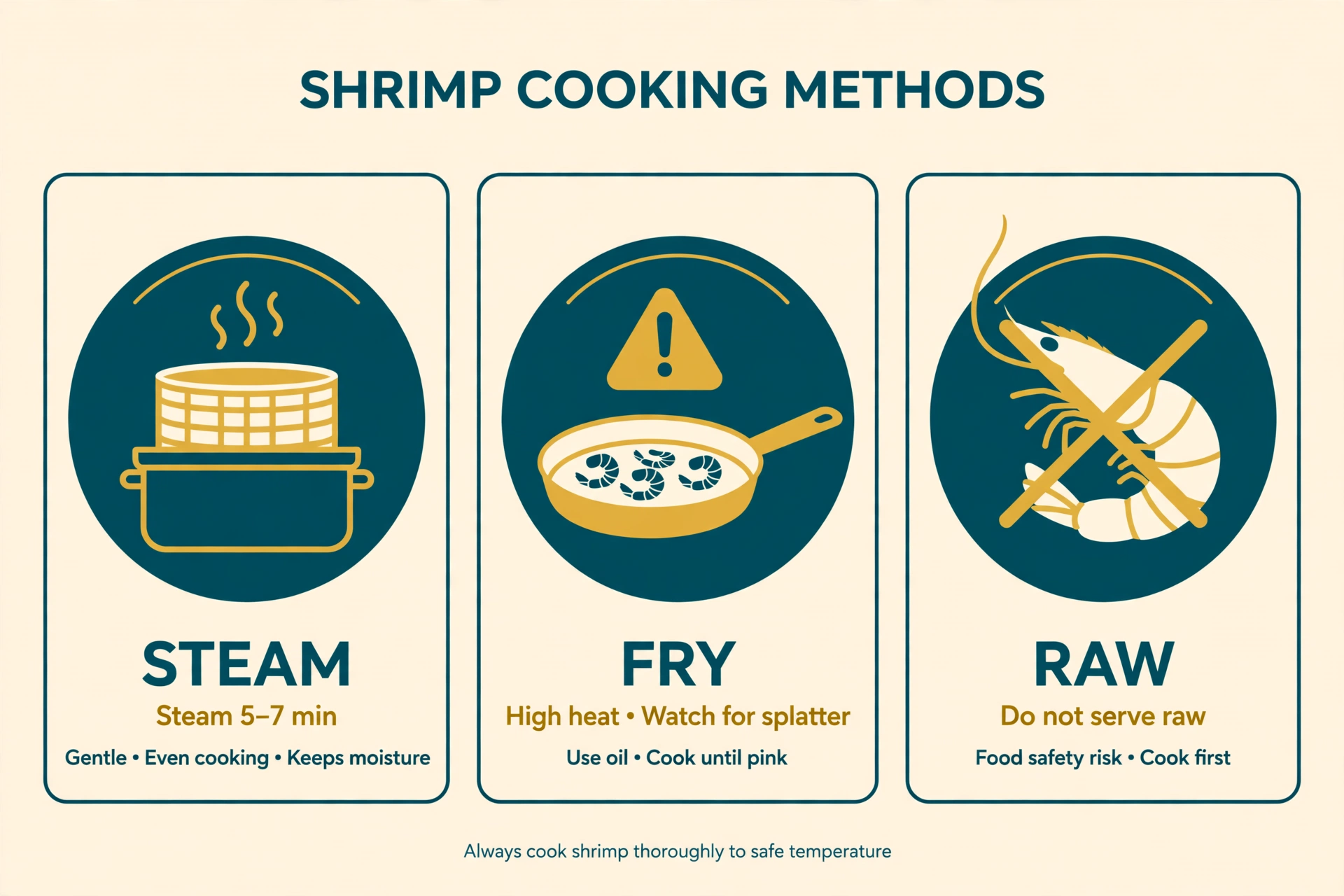
| Steamed | Tender, moist, soft | Day 4–5 | Best choice — gentle heat, no added fat |
| Boiled / poached | Soft, clean flavour | Day 4–5 | Excellent — easy to cut into small pieces |
| Baked (in foil with butter) | Tender, buttery | Day 5–6 | Very good — stays moist if not overbaked |
| Sautéed (light oil, low heat) | Soft with light browning | Day 6–7 | Good — keep the seasoning mild |
| Grilled | Firmer, slightly charred | Day 8–10 | Okay later — charred bits can irritate sockets |
| Fried / tempura | Crunchy coating, greasy | Day 12–14 | Wait — crumbs and grease are the problem |
| Raw (sashimi, ceviche) | Raw, cold | Day 14+ (ask your dentist) | Avoid — infection risk with open sockets |
Steaming and boiling win because they keep shrimp moist and soft with nothing extra added. Frying loses because the crunchy coating breaks into crumbs that love to hide in sockets, and the grease can upset a stomach that’s already adjusting to a limited diet.
If you’re eating shrimp as part of a broader recovery diet, it pairs beautifully with the soft foods already on your plate — mashed potatoes, steamed rice, or soft noodles. Our guide to what to eat after wisdom teeth removal has plenty of pairing ideas.
How to Eat Shrimp Safely During Recovery
A few practical rules make the difference between a smooth meal and a sore mouth:
- Peel everything. No shells, no tails, no exceptions for the first two weeks. Buy shrimp already peeled and deveined if you can — it saves effort and removes the risk of shell fragments.
- Cut it small. Even soft shrimp should be cut into bite-size pieces. Smaller pieces mean less chewing and less chance of food pressing into a socket.
- Keep the seasoning gentle. Garlic, butter, and a little lemon are fine. Hot sauce, chili flakes, and heavy black pepper can sting raw tissue in the first week. If you love spicy food, our guide on when you can eat spicy food after wisdom teeth removal explains when it’s safe to bring the heat back.
- Eat it warm, not cold. Warm shrimp is softer and more comfortable than cold shrimp straight from the fridge. If you’re eating leftovers, warm them gently first.
- Rinse after eating. A gentle warm salt-water rinse after any meal helps clear tiny food particles from around the sockets. Don’t swish forcefully — just let the water move around your mouth and spit gently.
- Watch for allergies. If you’ve never eaten shrimp before, recovery week is not the time to find out you’re allergic. Stick to foods you already know you tolerate.
Shrimp and Healing: What’s Actually in It for You
Shrimp earns its place on the recovery menu for a few solid reasons. A serving gives you lean protein with very little fat, which helps your body rebuild tissue without weighing down your digestion. It’s also a good source of zinc and selenium, two minerals involved in wound repair, plus iodine and vitamin B12.
When to Wait a Little Longer
Most people are fine with shrimp from day 4 or 5, but a few situations call for patience. If you had all four wisdom teeth removed and the sockets are still very tender, give it another day or two. If you have stitches that feel tight or a socket that keeps catching food, wait until that settles.
The Bottom Line
Shrimp is a genuinely good recovery food — soft, high in protein, and easy to prepare well. Steam it or boil it, peel it fully, cut it small, keep the seasoning mild, and you can usually enjoy it from around day 4 or 5. Save the fried, grilled, and raw versions for week two and beyond.
Frequently Asked Questions
Can I eat shrimp 4 days after wisdom teeth removal?
Yes, usually. Steamed or boiled shrimp, fully peeled and cut into small pieces, is soft enough for most people by day 4 or 5.
Is steamed shrimp better than fried shrimp after wisdom teeth removal?
Yes, by a lot. Steamed shrimp stays moist and soft, while fried shrimp has a crunchy coating that breaks into crumbs and can get trapped in sockets. Fried shrimp should wait until around day 12 to 14.
Can I eat shrimp with the shell on after wisdom teeth removal?
No. Shell fragments are sharp and can scratch healing tissue or get lodged in a socket. Always eat shrimp fully peeled, with the tail removed, during the first two weeks.
Can I eat raw shrimp or shrimp ceviche after wisdom teeth removal?
No, not while the sockets are still open. Raw seafood carries a higher risk of bacteria, and an open socket is a vulnerable spot. Wait at least two weeks and check with your dentist first.
Does shrimp cause infection after wisdom teeth removal?
Cooked shrimp does not cause infection. The risk comes from undercooked or raw seafood, or from poor food hygiene. Cook shrimp thoroughly, eat it fresh, and rinse gently with warm salt water afterward.
Can I eat shrimp if I had all four wisdom teeth removed?
Yes, but you may want to wait a day or two longer than the standard timeline — around day 5 or 6 — since more sockets means more tenderness. Start with a small portion of steamed shrimp and see how it feels.