
Updated November 12, 2026
Quick answer
You had your wisdom teeth out years ago. Then one day you run your tongue along the back of your mouth and feel something hard poking through the gum. Or you catch a glimpse in the mirror and there it is — a white edge where there should be nothing. The first thought is usually …
You had your wisdom teeth out years ago. Then one day you run your tongue along the back of your mouth and feel something hard poking through the gum. Or you catch a glimpse in the mirror and there it is — a white edge where there should be nothing. The first thought is usually the same: did my wisdom tooth grow back?
It is a good question, and the worry behind it is understandable. Nobody wants to go through that recovery twice.
The Short Answer: No — But the Feeling Is Real
Once a wisdom tooth has been fully removed, it cannot grow back. Teeth are not like hair or fingernails. A tooth grows from a root and a pulp inside the jaw, and once the whole tooth — crown and roots — is out, there is nothing left to grow from.
What makes it confusing is that something very much like a tooth can appear in the same spot afterwards. So if you feel something hard at the back of your mouth after an extraction, you are probably not imagining it. It is just usually not a new tooth.
So What Is That Hard Thing at the Back?
The most common explanation is also the least dramatic: a small piece of bone. After an extraction, the socket heals by filling in with new bone, and sometimes a sharp fragment of bone — a bone spicule — works its way to the surface as the gum heals. It feels exactly like a tooth edge: hard, sharp, sometimes a little sore. Most spicules come out on their own within a few weeks, or your dentist can remove one in a minute or two.
The second possibility is that the socket hasn’t finished healing. For weeks after an extraction, the gum over the socket is still remodelling, and the ridge of bone underneath can feel uneven or pointed. Running your tongue over it constantly — which everyone does — can make it feel bigger and more tooth-like than it is.
The third possibility is a fragment of tooth left behind. This is uncommon, but it happens: a tiny piece of a root tip can remain after a difficult extraction. Usually your surgeon will tell you if this was a possibility — sometimes leaving a small fragment is deliberate, when removing it would risk a nerve. A retained fragment can occasionally work its way out months later, looking for all the world like a new tooth. If you can see white material in the socket, or feel something sharp that doesn’t settle, get it checked. An X-ray will show in seconds what it is.
The Extra Tooth: Fourth Molars Really Do Exist
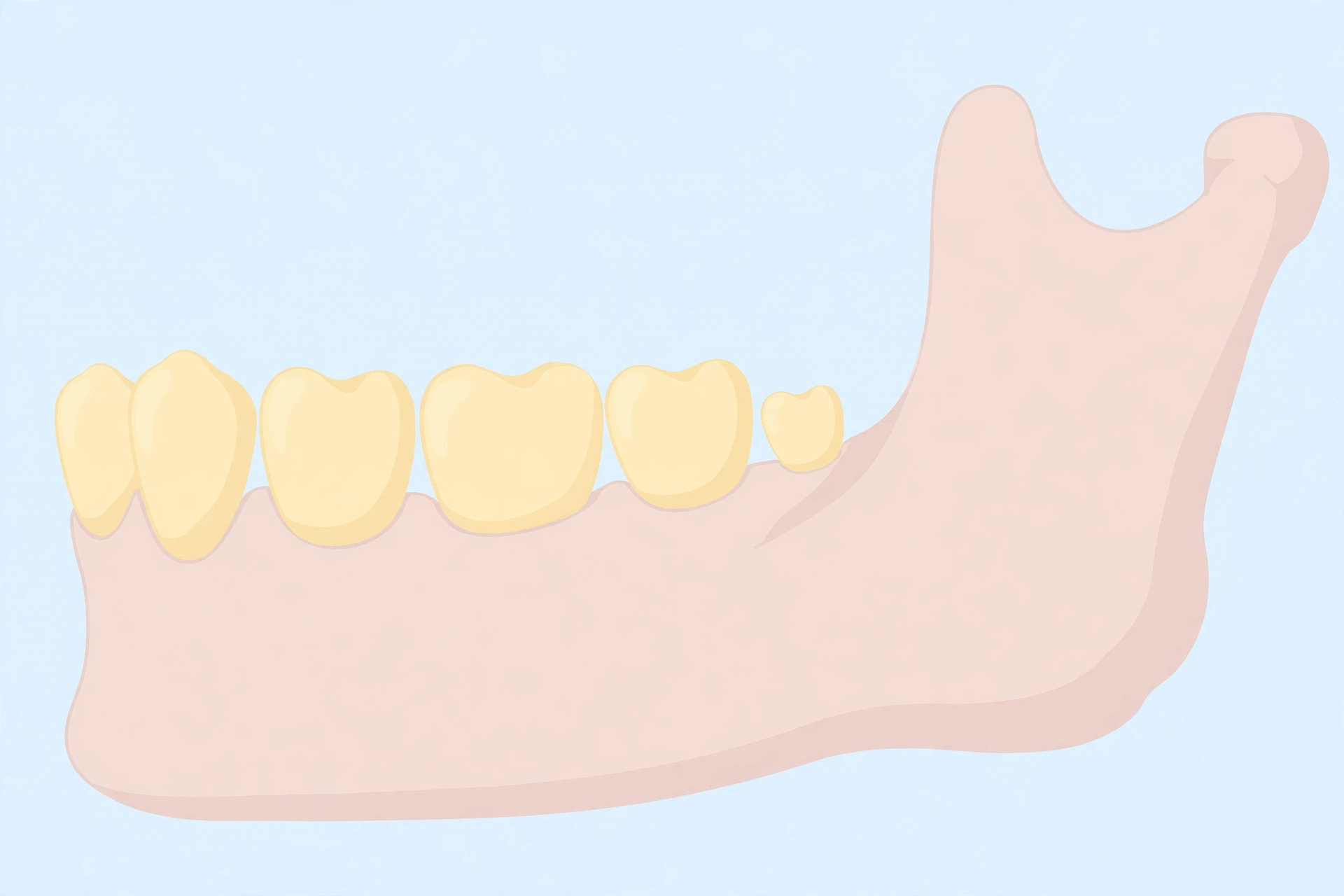
There is one more possibility, and it is the closest thing to a wisdom tooth genuinely “growing back”. Some people have extra teeth, called supernumerary teeth. The most common extra teeth at the back of the mouth are fourth molars — sometimes called distomolars — which sit behind the wisdom teeth.
A fourth molar can develop slowly and erupt years after the wisdom teeth were removed, which makes it feel as though the removed tooth has returned. It hasn’t: it is a different tooth that was there all along, hiding in the jawbone. Extra molars are uncommon, but they are the usual explanation when a dentist finds a real, whole tooth where a wisdom tooth used to be.
This is also why X-rays matter. If your dentist takes an X-ray and finds a whole tooth with roots, that is an extra molar, not regrowth. The treatment is usually the same conversation as the first time: does it need to come out, or can it be left alone?
What If the Tooth Was Never Removed at All?
Sometimes the confusion goes the other way. A few people are told they had a wisdom tooth removed when what actually happened was a partial procedure — for example, a coronectomy, where the crown is removed but the roots are deliberately left in place to protect a nearby nerve. In that case, the roots stay in the jaw, and occasionally a root can drift upward over time. It can feel like something is coming back, and in a sense something is — but it is the old root, not a new tooth.
If you are not sure what procedure you had, your dental records will say. And if the tooth in question was never extracted — say you had one side done and not the other — a wisdom tooth on the untreated side can erupt years later and feel like a repeat performance. Our guide to the wisdom tooth extraction healing stages explains what normal healing looks like week by week.
What Grows in the Socket After Removal?
It helps to know what is supposed to happen after an extraction, because the healing process itself produces some strange sensations. In the first day, a blood clot forms in the socket. Over the next few weeks, soft tissue grows over it, and underneath, new bone gradually fills the space. That bone fill takes months — the socket can feel hollow or uneven for a long time, and the gum over it stays tender.
What does not grow back is the tooth itself, or the ligament that held it in place. You may also notice the neighbouring molar feels different — it can drift very slightly into the space left behind. That is normal, and it is another reason a post-extraction mouth can feel unfamiliar for months.
The one thing to watch for during healing is a dry socket: if pain suddenly gets worse a few days after the extraction, or you notice a bad taste or smell, call your dentist. Our guide to what dry socket is and what to do covers the signs.
When to Get It Checked
Most of the things that feel like regrowth are harmless and settle on their own. But get an appointment if you can see a white tooth-like shape coming through the gum, the area is painful or swollen, there is a bad taste or discharge, or the hard spot keeps growing or has been there for weeks without improving.
The visit is usually quick — an examination and an X-ray — and it will settle the question one way or the other. If it turns out to be a fourth molar or a retained fragment, your dentist will talk through whether it needs treatment or just monitoring. If it is a bone spicule, it may be removed on the spot. If it is just healing bone, you will leave reassured, which is worth the trip on its own.
One more consideration: if a whole extra tooth is found, ask whether it is pressing on the molar in front of it. An extra molar leaning against its neighbour can wear a cavity into that tooth — and that neighbouring tooth is one you actually need. Our guide to impacted wisdom teeth explains how dentists judge whether a back tooth is a problem or just an oddity.
Frequently Asked Questions
Q: Can wisdom teeth grow back after removal?
No. Once the whole tooth is removed, there is nothing left to grow from. What feels like regrowth is usually a bone spicule, a retained root fragment, healing bone, or — rarely — an extra fourth molar erupting.
Q: What is a fourth molar?
An extra molar that develops behind the wisdom teeth. It is uncommon, and it can erupt years after the wisdom teeth were removed, which makes it look like the removed tooth has come back. An X-ray tells the two apart.
Q: I feel something sharp in the socket months later. Is that normal?
It is often a bone spicule — a small fragment of bone working its way out as the socket heals. Most come out on their own within a few weeks. If it is painful or still there after a month, see your dentist.
Q: Can a tooth grow back if only part of it was removed?
A partial procedure called a coronectomy deliberately leaves the roots in place. Those roots can sometimes drift upward over time, which can feel like regrowth. Your dental records will show whether this was done.
Q: Do I need treatment if an extra molar appears?
Not necessarily. If it is painless and not damaging the tooth in front, monitoring is often enough. If it causes pain, crowding, or decay, removal is usually recommended.
Bottom Line
Wisdom teeth do not grow back. If you feel something hard where one used to be, it is almost certainly healing bone, a small bone fragment, or a leftover root tip — and very rarely, an extra fourth molar that was quietly waiting its turn. None of these mean the extraction failed, and most need nothing more than a quick check. So don’t sit at home poking at it and worrying: book a check-up, get an X-ray, and find out what it actually is.