
Updated November 13, 2026
Quick answer
Packing for wisdom teeth surgery is not like packing for a holiday. You do not need much — but the few things you do need really matter, and forgetting one of them can cause a delay, a rescheduled appointment, or an uncomfortable trip home. The clinic will probably send you a short list of their …
Packing for wisdom teeth surgery is not like packing for a holiday. You do not need much — but the few things you do need really matter, and forgetting one of them can cause a delay, a rescheduled appointment, or an uncomfortable trip home. The clinic will probably send you a short list of their own, and that list wins if anything here disagrees with it. But most clinics assume you know the basics, and the basics are exactly what people forget when they are nervous.
This guide is a proper checklist, not a vague list of suggestions. Work through it the night before, tick things off as they go into your bag, and put the bag by the front door.
The Night Before: Get the Bag Ready
Do not leave the packing until the morning. You will be fasting, you may be nervous, and your brain will not be at its best. Pack the night before, when you are calm and thinking clearly.
Start with a small bag — a tote, a backpack, or a drawstring bag. You will not need a suitcase, and a big bag just gets in the way at the clinic. Lay everything out on the bed or the table first, check it against the list below, then pack it in. Put your phone charger in the bag too, and charge your phone overnight.
While you are at it, confirm the practical details: the clinic address and arrival time, your escort’s phone number, and how you are getting there and back. Write the clinic’s number on a piece of paper and put it in your bag as well — if your phone dies, you will still be able to call from the clinic phone.
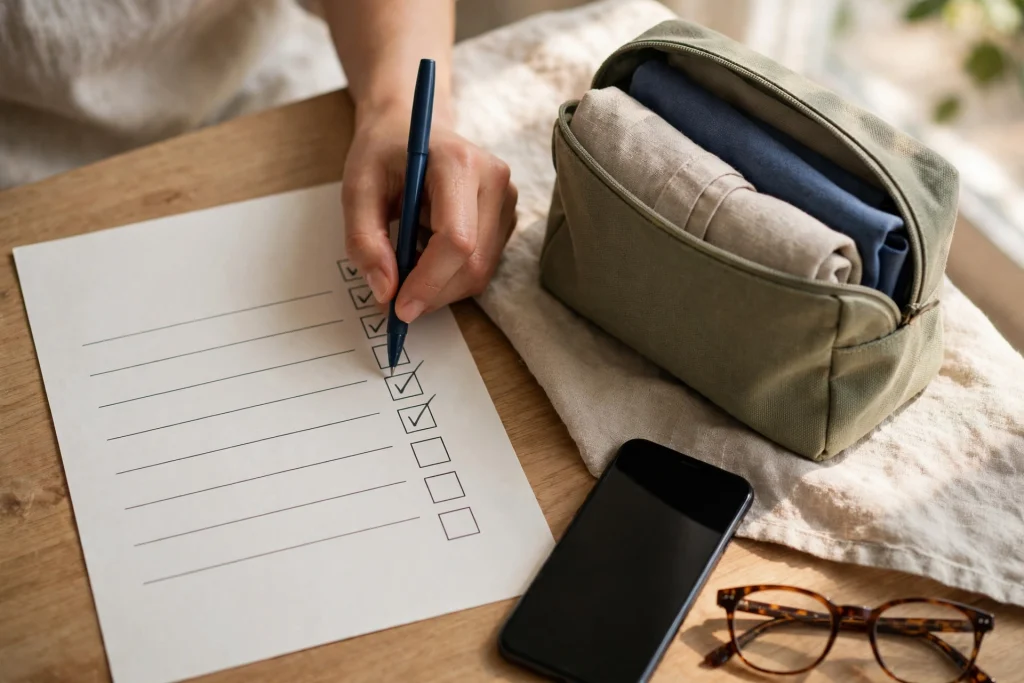
The Must-Bring Checklist
These are the things you should not turn up without. Tick each one off.
Paperwork and identification
- Photo ID — a driving licence or passport, whichever the clinic asked for
- Insurance details or payment card, if your clinic needs them
- Any referral letter or paperwork the clinic sent you
- A written list of every medication and supplement you take, plus any allergies
- Your dentist’s or doctor’s contact details, just in case
The medication list is the one people forget most often, and it is the one the team most wants to see. Do not rely on memory — write it down the night before, including the names and how often you take each one. If you take anything for a medical condition, that goes on the list too.
Your escort
- A named person who is coming with you and taking you home
- Their phone number, saved in your phone and written on paper
If you are having sedation, your escort is not optional — the clinic may refuse to start the procedure without one. They should plan to stay at the clinic or nearby for the whole appointment.
Comfort items
- Your glasses, if you normally wear contact lenses
- A warm layer — a hoodie or light jacket for the journey home
- Lip balm — your lips can get very dry during and after the procedure
- Tissues, for the inevitable dribbling and sniffles on the way home
- A small bottle of water for your escort, and for you afterwards if the team says it is fine
Lip balm is the surprise hero of this list. After an hour or more with your mouth open, your lips will be dry and cracked, and a bit of lip balm in the recovery room makes a real difference.
Aftercare supplies to take home
- Any prescriptions the clinic told you to fill in advance
- A small bag or carrier for the gauze, instructions and anything else they send home with you
Some clinics give you gauze and printed aftercare instructions; others expect you to have your own supplies ready at home. Check with your clinic beforehand so you know which it is.
What to Pack for the Recovery at Home
Strictly speaking this is not a “bring it to the clinic” item, but your bag is not the only thing to prepare. Before you leave the house, make sure your recovery spot at home is ready: soft foods in the fridge, ice packs in the freezer, a clean pillow, and a glass of water by the bed. You will not want to be doing a food shop or hunting for an ice pack when you get home feeling woozy.
If you have not stocked up yet, soft foods worth having ready include yoghurt, soup, mashed potato, scrambled eggs, smoothies and ice cream. For a fuller list, see our wisdom teeth removal essentials guide, which covers the recovery supplies people find most useful. And if you are wondering about eating on the morning of surgery, read our guide on eating before wisdom teeth removal before you plan breakfast — fasting rules depend on your sedation type, and getting them wrong can mean a cancelled appointment.
What to Leave at Home
Packing light matters just as much as packing right. Leave these behind:
- Valuables — expensive jewellery, watches, large amounts of cash. There is nowhere safe for them at the clinic, and you will be groggy afterwards.
- Too much stuff — books, laptops, extra clothes. You will not be reading in the waiting room for long, and your escort can hold your bag.
- Food and drink for yourself — if you are fasting before sedation, you cannot eat or drink anyway, and having snacks in your bag is just temptation.
- Strong perfume or aftershave — the same rule as for clothing; the clinic is a small, enclosed space.
A good rule of thumb: if you would be upset about losing it, or you will not use it in the next three hours, leave it at home.
If You Forget Something
It happens, and it is almost never a disaster. Most clinics can work around a forgotten item — they have spare gauze, printed instructions, and a phone you can use. The two things that genuinely matter are your ID and your escort. If you forget your medication list, tell the team everything you can remember, honestly and completely. If your escort is delayed, call the clinic as soon as you know, so they can decide whether to wait or reschedule.
The real point of this checklist is not perfection. It is to take one worry off your mind the night before surgery, so you can focus on the things that actually need your attention — like following your fasting instructions and getting a good night’s sleep.
Pack the bag, put it by the door, and you are done. One less thing to think about tomorrow.
Frequently Asked Questions
Q: Do I need to bring anything for the surgery itself?
Very little. The clinic provides the equipment, the anaesthetic and the surgical supplies. You need to bring ID, your insurance or payment details, a medication list, and your escort. Everything else on the list is for your comfort and the journey home.
Q: Can I bring my phone?
Yes — bring it, but keep it in your bag during the procedure. It is useful for contacting your escort and for the journey home. Bring a charger if you can, and make sure your escort’s number is saved.
Q: Should I bring food for after the surgery?
Not to the clinic, unless the team told you to. You will not be eating there, and if you had sedation you may feel sick afterwards. Have soft foods ready at home instead, so you can eat as soon as you feel up to it.
Q: What if I forget my ID?
Call the clinic before you travel. Some will accept another form of identification, but some cannot treat you without it, and they may need to reschedule. It is always better to call ahead than to turn up and hope.
Q: Do I need to bring my own gauze or ice packs?
Usually not — most clinics send you home with gauze and instructions. But ask your clinic in advance. If they expect you to bring your own supplies, you will want gauze, an ice pack, and pain relief ready at home for when you get back.
Q: Can I bring someone to wait with me?
Yes, and if you are having sedation you must. Your escort can wait in the waiting room or nearby. Check with the clinic whether they have space for a companion to wait, especially if the clinic is small.