
Updated November 14, 2026
Quick answer
Your dentist looks up from your chart and says it casually, almost as an afterthought: "You've got a bit of gingivitis." It doesn't sound like a big deal. Your teeth don't hurt. Nothing is loose. You feel fine. And in one sense, they're right not to sound alarmed. Gingivitis is the earliest stage of gum …
Your dentist looks up from your chart and says it casually, almost as an afterthought: “You’ve got a bit of gingivitis.” It doesn’t sound like a big deal. Your teeth don’t hurt. Nothing is loose. You feel fine.
And in one sense, they’re right not to sound alarmed. Gingivitis is the earliest stage of gum disease, and it is genuinely reversible. No permanent damage has happened yet. But it is also a fork in the road. Left alone, gingivitis quietly turns into something that isn’t reversible — periodontitis, which damages the bone and tissue holding your teeth in place. The good news is that the fork is entirely in your hands.
What gingivitis actually is
Gingivitis is inflammation of the gums caused by plaque — the sticky film of bacteria that forms on your teeth every day. When plaque sits undisturbed along the gumline, the bacteria irritate the gum tissue. The gum responds by becoming red, swollen, and tender, and it starts to bleed when you brush or floss.
Notice what hasn’t happened yet. The inflammation is only in the gum tissue itself. The bone underneath is untouched, the fibres holding the tooth in place are intact, and no pockets have formed around the tooth. That is the whole reason gingivitis can be reversed: nothing structural has been lost. Remove the plaque, let the inflammation settle, and the gum goes back to normal.
What you can reverse at home — and what you can’t
This is the distinction that matters most, so let’s be clear about it.
You can reverse at home: the inflammation itself. Daily, thorough cleaning removes the plaque that causes it. Within one to two weeks, most people see the bleeding reduce. Within a few weeks, the redness and puffiness usually settle too. The gum tissue heals, and you’re back to healthy gums.
You can’t remove at home: tartar. Plaque that has hardened into tartar bonds to the tooth surface and can’t be brushed or flossed away. It also gives new plaque a rough surface to cling to, so the inflammation keeps coming back no matter how well you brush. Only a professional cleaning removes tartar.
You can’t reverse at home: periodontitis. Once the disease has moved past the gum and into the bone and supporting tissue, home care alone isn’t enough. That needs professional treatment, and some of the damage is permanent. The entire point of acting on gingivitis now is to make sure you never get there.
So the honest answer to “can I reverse gingivitis at home?” is: mostly yes — but a professional cleaning is part of the treatment, not an optional extra.
The daily routine that reverses it
Reversing gingivitis isn’t about buying special products. It’s about cleaning the gumline properly, twice a day, every day. Here’s the routine that works:
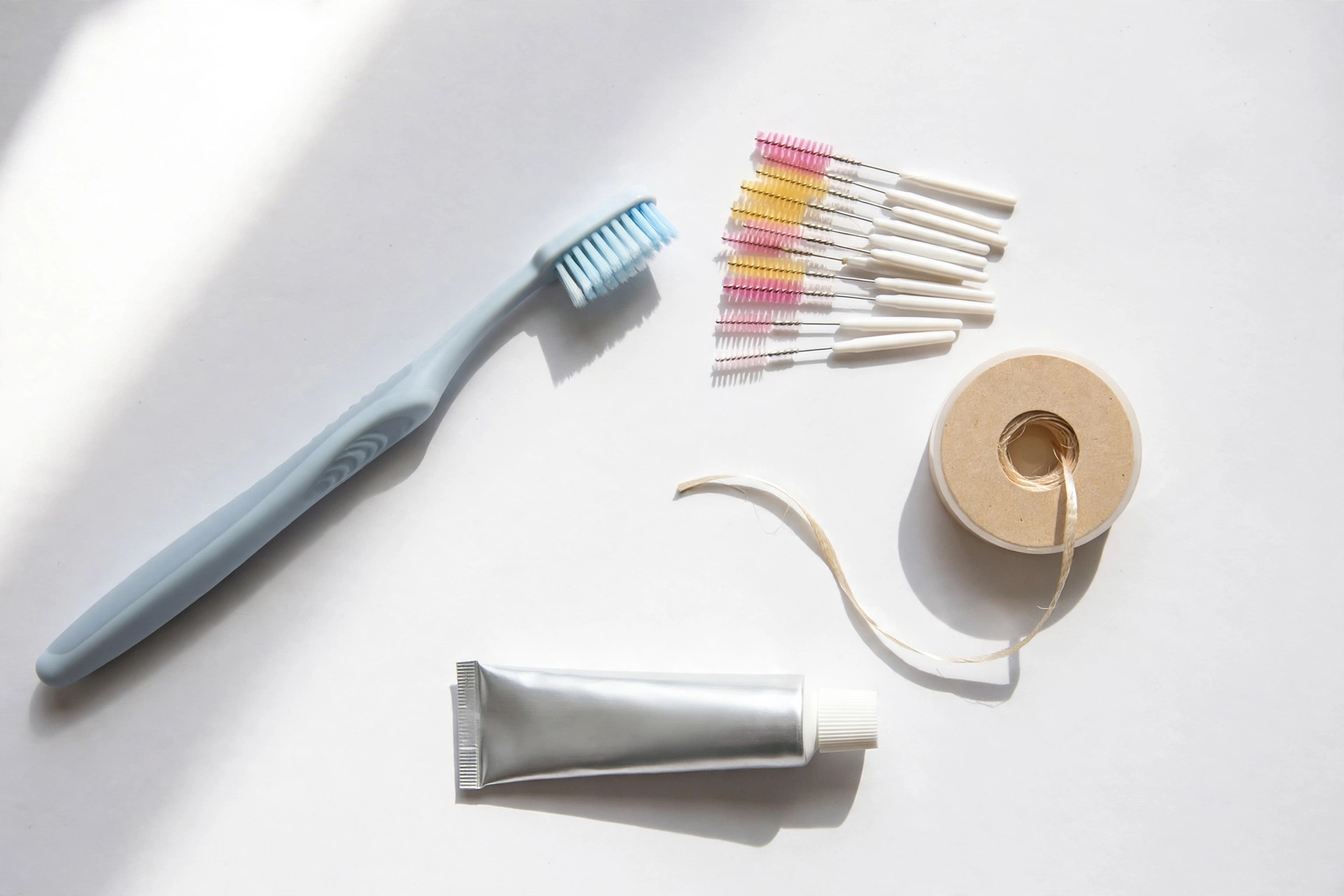
Brush twice a day, at the gumline. Use a soft-bristled brush and hold it at roughly 45 degrees, so the bristle tips touch the edge of the gum. Short, gentle strokes, one tooth at a time. Two full minutes. The gumline is the whole point — that’s where the plaque that causes gingivitis lives.
Clean between your teeth every day. A toothbrush can’t reach between teeth, and the gum between teeth is often where gingivitis starts. Floss, interdental brushes, or a water flosser — pick whichever one you’ll actually use daily.
Don’t stop when it bleeds. This is the hardest part psychologically, and the most important. Bleeding gums make people brush more gently or skip the sore areas, which leaves the plaque in place and the inflammation gets worse. Keep cleaning gently and thoroughly.
Use a fluoride toothpaste. Fluoride protects against decay, and some toothpastes with stannous fluoride also have antibacterial properties that help with gum health. Spit after brushing rather than rinsing, so the fluoride stays on your teeth longer.
Rinse wisely. An antibacterial mouthwash can help reduce plaque bacteria, but it doesn’t replace brushing and flossing. If your dentist recommends one, use it as directed.
The professional cleaning: what actually happens
If you haven’t had a cleaning in a while, this is the step people put off — and the step that makes the biggest difference. It’s straightforward and usually painless.
The hygienist or dentist uses an ultrasonic scaler — a small instrument that vibrates tartar off the tooth surface — followed by hand instruments for any stubborn spots, then a polish. The whole appointment typically takes 30 to 45 minutes. Your gums may feel a little tender afterwards, but that settles quickly.
What you get from it is a clean slate. Every trace of tartar is gone, and the tooth surfaces are smooth, so plaque has less to cling to. From that point on, your daily routine is maintaining healthy gums rather than fighting an established buildup. Most dentists recommend a cleaning every six months.
What a reversal timeline looks like
It’s helpful to know what to expect, so you don’t give up in week one.
Days 1–3: You start cleaning properly. Your gums may bleed a bit more at first, because you’re finally reaching the inflamed areas. This is normal and not a reason to stop.
Week 1–2: The bleeding should start to reduce, and gums look less red and puffy.
Week 3–4: Bleeding should be mostly gone. Gums feel firmer and look pale pink again.
After a month: If the bleeding hasn’t settled by now despite good daily cleaning, go back to the dentist. It may be that tartar needs removing, or that something else is going on — a medicine you’re taking, a health condition like diabetes, or gum disease that has progressed further than gingivitis.
Habits that help — and ones that don’t
Smoking is the biggest obstacle. It reduces blood flow to the gums, hides the bleeding that would otherwise warn you, and slows healing. Smokers are far more likely to develop gum disease, and their gingivitis is harder to reverse. Quitting is the single most effective thing a smoker can do for their gums.
Eating well helps in a general way, but no food or supplement reverses gingivitis on its own. The same is true of oil pulling, baking soda rinses, and other home remedies you’ll find online. None of them removes plaque from the gumline as effectively as a brush and floss.
Frequently asked questions
Can gingivitis be reversed completely?
Yes, if it’s caught at the gingivitis stage. The inflammation is entirely in the gum tissue, and no permanent damage has happened yet. Daily cleaning plus a professional cleaning to remove tartar usually returns the gums to normal within a few weeks. Once it progresses to periodontitis, the damage can’t be fully reversed.
Does gingivitis go away on its own?
No. It won’t get better without removing the plaque that causes it, and it tends to get worse slowly over time. The longer it goes untreated, the more likely it is to progress to periodontitis. The good news is that the treatment is just better cleaning, not anything dramatic.
Is a professional cleaning necessary to reverse gingivitis?
Usually, yes. Home cleaning can reverse the inflammation, but it can’t remove tartar — and tartar keeps the inflammation coming back. A professional cleaning removes the tartar, and then your daily routine keeps the gums healthy. Think of it as resetting the clock.
Can I reverse gingivitis with mouthwash alone?
No. Mouthwash can reduce bacteria and help as an addition, but it doesn’t physically remove plaque from the gumline. Brushing at the gumline and cleaning between your teeth are what actually remove the plaque. Mouthwash is a helper, not a replacement.
What happens if gingivitis isn’t treated?
It can progress to periodontitis, where the infection reaches the bone and tissue supporting the teeth. That causes gum recession, pockets around the teeth, and eventually tooth loss. Periodontitis needs professional treatment and some of its damage is permanent — which is why catching gingivitis early is so worthwhile.
Gingivitis sounds like a diagnosis, but it’s really an opportunity. It means your body is telling you, clearly and early, that something needs to change — and the change it needs is the simplest one in dentistry: clean the gumline, every day, and let a professional remove the tartar you can’t. A few weeks from now, your gums can be back to normal. If you’re unsure where the tartar on your own teeth stands, our guide to removing tartar at home explains what home care can and can’t do, and fluoride and cavity prevention covers why fluoride toothpaste is part of the routine.
This article is for general information only and is not a substitute for advice from your own dentist. If your gums bleed persistently, are painful or swollen, or you notice loose teeth or receding gums, book a dental appointment.