
Updated November 11, 2026
Quick answer
The morning after wisdom teeth removal brings a particular kind of hunger: you're tired of ice chips and broth, your jaw feels stiff, and you want something that actually feels like breakfast — something warm that fills you up without asking your mouth to do any real work. That's usually the moment oatmeal comes to …
The morning after wisdom teeth removal brings a particular kind of hunger: you’re tired of ice chips and broth, your jaw feels stiff, and you want something that actually feels like breakfast — something warm that fills you up without asking your mouth to do any real work.
That’s usually the moment oatmeal comes to mind, and it’s a good instinct. A bowl of warm, smooth oatmeal is one of the kindest things you can eat in those first few days. But not all oatmeal is equal after surgery — the difference between a bowl that soothes you and one that stings comes down to temperature and texture.
One note: this article is about hot, cooked oatmeal, the kind you make on the stove and eat warm from a bowl. The cold kind — the jar you leave in the fridge overnight — is a different food with different rules, covered in our guide to overnight oats after wisdom teeth removal.

The Real Question Isn’t “Can I?” — It’s “How Warm and How Smooth?”
Yes, you can eat oatmeal after wisdom teeth removal. Warm, well-cooked oatmeal is generally one of the safest foods in the first week. But that yes comes with two conditions, and they’re the whole story of this article.
The first condition is temperature. Fresh off the stove, oatmeal is hot enough to hurt a healing socket — heat increases blood flow and irritates tender tissue, and a post-surgery mouth is far more sensitive than usual. The rule is simple: lukewarm, never hot. If you can’t comfortably hold the bowl in both hands, it’s too hot. Let it sit, stir it, and test a small spoonful first.
The second condition is texture. Oatmeal earns its place on the recovery menu because, when cooked properly, it barely needs chewing at all. Instant oatmeal cooked with plenty of liquid turns soft and almost porridge-like, which is exactly what you want, and old-fashioned rolled oats get there too if you cook them a little longer than the packet suggests with extra milk or water. Steel-cut oats, on the other hand, stay chewy and nubby even after a long simmer — save those for a few weeks down the line.
A simple test: press a spoonful against the roof of your mouth. If it spreads and softens without any real effort, it’s ready; if you can feel individual oat pieces that need chewing, cook it longer and add a splash more liquid.
Why Oatmeal Works So Well After Wisdom Teeth Removal
Part of it is obvious: it’s soft, it barely needs chewing, and it slides down easily. You can eat it in small, gentle spoonfuls without the wide chewing motions that pull at sore muscles and stitches.
But there’s more to it than softness. Oatmeal is genuinely filling, in a way that a lot of early recovery foods aren’t. Broth is comforting but leaves you hungry an hour later; a bowl of oatmeal has staying power, which matters when eating feels like a chore and you don’t want to go through the whole production six times a day. For a fuller picture of how the early days usually unfold, our wisdom teeth recovery food timeline walks through what tends to work on each day.
Oatmeal is also a blank canvas, and in recovery that’s a feature, not a flaw. You can make it sweet or plain, stir in milk, a little butter, honey, or mashed banana — no chopping, no complicated recipe. Five minutes, one pot, one bowl.
Then there’s the comfort factor: after a day or two of strange, soft, colourless food, a bowl of oatmeal with honey and banana can feel like the first normal thing since the surgery. Oatmeal is also cheap and forgiving — too thick, add liquid; too thin, cook it a minute longer. Start with plain, unsweetened oats; flavoured packets often hide extra sugar and crunchy bits.
Temperature: The Detail People Get Wrong
Here’s a routine that works: cook the oatmeal, take it off the heat, and let it sit for three to five minutes, stirring once or twice to release steam and cool it evenly. Touch the outside of the bowl — if it feels warm and comfortable, it’s probably right — then test one small spoonful before eating more.
Lukewarm is the target — not cold, not steaming. Think of the temperature of a warm bath. And when you reheat leftovers, remember microwaves heat unevenly: stir thoroughly to get rid of scorching pockets, then wait before eating.
Toppings, Ranked: What Helps and What Hurts
Plain oatmeal is safe, but it gets boring fast. Toppings are where a bowl turns into something you look forward to — and where things can go wrong. The rule: if it’s soft, smooth, and dissolves easily, it’s fine. If it’s crunchy, seedy, or likely to get stuck in a socket, skip it.
Best choices — soft and socket-friendly:
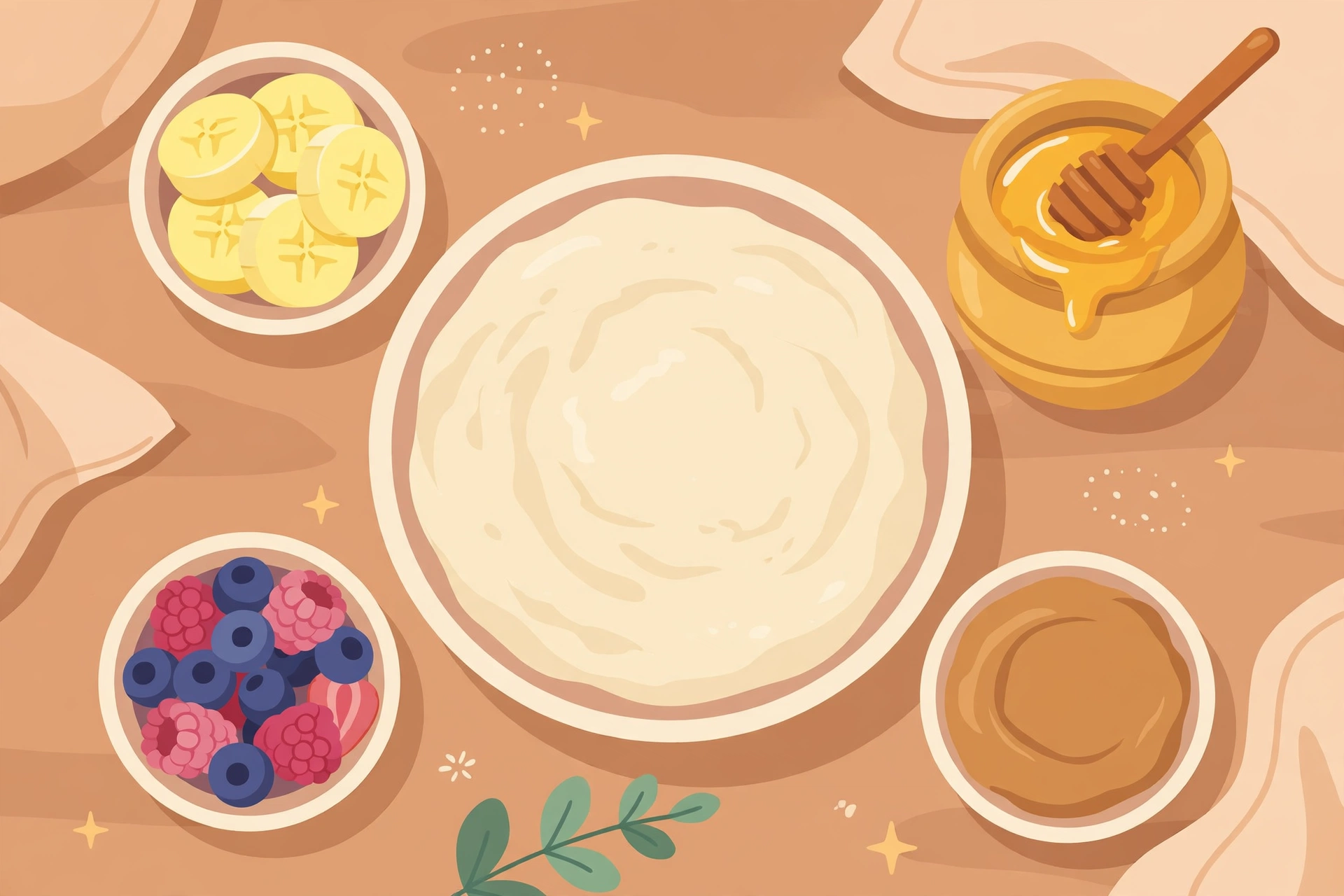
- Mashed or very ripe banana. Soft, sweet, no chewing required. Mash it in rather than slicing it on top.
- Honey or maple syrup. A drizzle adds sweetness with zero texture. Stir it in while the oatmeal is still warm.
- Smooth nut butter. Peanut or almond butter, the smooth kind, stirred in while warm. Avoid the crunchy kind — those little nut pieces are exactly what you don’t want near a healing socket.
- Soft, stewed berries. Blueberries or raspberries gently warmed and mashed until soft. Fresh, firm berries are a different story — their seeds are small, hard, and good at finding their way into places they shouldn’t be.
- A spoonful of yoghurt. Plain yoghurt stirred in cools the oatmeal slightly and adds a gentle tang.
- A little butter or a splash of cream. Simple, soft, and comforting.
Fine a little later — wait a few days: soft cooked apple or pear (cook the fruit until it’s genuinely soft first), cinnamon and vanilla for flavour without texture, and mashed avocado, which is creamy, mild, and very soft.
Avoid for now:
- Nuts, seeds, and granola. This is the big one. Chopped nuts, chia seeds, flax seeds, sunflower seeds, and granola are hard, sharp, and small — the exact combination that gets lodged in an extraction socket and causes pain.
- Dried fruit. Raisins and dried cranberries might seem soft, but they’re chewy and sticky, and they tend to cling to teeth and sockets.
- Raw, firm fruit. Crisp apple chunks, unripe banana, whole strawberries — anything you have to bite through or chew properly.
- Chocolate chips or crunchy toppings. They don’t melt smoothly, and the little hard pieces are a nuisance. Cocoa powder stirred in is fine; chips are not.
- Very acidic additions. A squeeze of lemon or a sharp citrus topping can sting tender tissue. Keep flavours gentle for the first week.
If you’re unsure about a topping, ask yourself one question: could I swallow this without chewing? If the answer is yes, it’s probably fine. If it needs real chewing, or it has hard bits that could hide in a socket, leave it out for now. For more ideas about what belongs on the plate in those first days, our list of foods to eat after wisdom teeth removal is a useful companion — oatmeal is only one of many good options.
How to Make Recovery Oatmeal (The Smooth Version)
You don’t need a special recipe — just a method that guarantees softness. This version works best in the first week: a little slower and a little wetter than usual.
You need: rolled oats or instant oats (not steel-cut), water or milk, a pinch of salt, and whatever soft topping you’ve chosen.
Step 1 — Use more liquid than usual. The packet might say one part oats to two parts liquid; for recovery oatmeal, go closer to one part oats to two and a half or three parts liquid. Extra liquid is what makes the difference between porridge and something you have to chew. Water, milk, or a mix of both all work — milk makes it creamier and more filling.
Step 2 — Cook it a little longer. Bring the liquid to a gentle simmer, stir in the oats, and cook on low heat a few extra minutes beyond the packet’s time. Stir often. You’re aiming for thick and creamy, with no visible separate oat flakes.
Step 3 — Rest, stir, and cool. Take the pot off the heat, put the lid on, and let it sit for two or three minutes while the oats absorb the last of the liquid and go properly soft. Stir well — if it looks too thick, add a splash of warm milk — then let the bowl sit until it’s lukewarm. Stir in your toppings while it’s still warm enough for them to blend in.
Step 4 — Eat slowly, with small spoonfuls. Sit upright, take small spoonfuls, and chew — if you need to chew at all — on the side away from the extraction site.
Make-ahead tip: cook a larger batch in the morning and keep the rest in the fridge. It thickens as it cools, so add a splash of milk or water when you reheat it, stir well, and let it cool to lukewarm again.
A note on instant oatmeal packets: plain ones are fine. Just read the ingredients — flavoured packets sometimes contain small crunchy pieces, extra sugar, or dried fruit. Plain instant oatmeal with your own honey and banana is a better bet.
Where Oatmeal Fits in Your Recovery Week
Oatmeal doesn’t belong to a single day — it belongs to a stretch of days. Everyone heals at a slightly different pace, so treat this as a guide and listen to your own mouth first.
| Stage | Oatmeal’s role |
|---|---|
| Day 1 | Rest and liquids. A few spoonfuls of very smooth, lukewarm oatmeal are fine if you’re up to it. |
| Days 2–3 | Oatmeal’s best days. Soft, smooth, lukewarm, with honey or mashed banana. |
| Days 4–7 | Still excellent. Try soft stewed fruit or a spoonful of yoghurt; it can be a little thicker now. |
| Week 2 | A normal breakfast again. Slightly chewier oats and more toppings are fine if nothing gets stuck or hurts. |
| Week 3+ | Eat it however you like, including steel-cut oats and granola, once your dentist is happy with your healing. |
The pattern is simple: oatmeal starts as one of the gentlest foods available and gradually becomes an ordinary breakfast again. Variety helps too — oatmeal in the morning and something savoury later in the day, like our mashed potato recipes for wisdom teeth removal, keeps any single soft food from getting boring.
Common Mistakes With Oatmeal After Wisdom Teeth Removal
Eating it too hot. You make the oatmeal, it smells wonderful, you take a big spoonful — and then you regret it. Let it cool. Every time.
Choosing the wrong oats. Steel-cut oats are delicious normally, but they stay chewy, and chewy is work. In the first week, instant oats or well-cooked rolled oats are the right call.
Adding crunchy toppings out of habit. If you normally top your oatmeal with nuts, seeds, or granola, your hand will reach for them automatically. Resist it for a week or two. Those hard little pieces are the ones most likely to end up lodged somewhere painful.
Making it too thick. Thick oatmeal needs more effort to swallow, and it can clump and stick to the extraction area. If your oatmeal stands up on the spoon, add liquid. It should be soft, creamy, and easy to swallow — almost like a thick soup.
Rinsing aggressively afterwards. Don’t rinse your mouth vigorously after eating, and don’t drink through a straw in the first days after surgery. A gentle rinse with plain water or salt water, letting it fall out of your mouth rather than spitting forcefully, is enough. If something feels stuck or painful, contact your dentist rather than trying to dig it out yourself.
Eating too much, too fast. A full bowl is a lot of food for a sore mouth, and eating quickly makes you more likely to chew on the wrong side or take a spoonful that’s too hot. Smaller portions, eaten slowly, are the way to go.

Frequently Asked Questions
Can you eat oatmeal after wisdom teeth removal?
Yes. Warm, smooth, lukewarm oatmeal is one of the safest foods after wisdom teeth removal. Cook it with extra liquid so it’s soft and creamy, let it cool to lukewarm, and stick to soft toppings like honey, mashed banana, or smooth nut butter. Avoid nuts, seeds, and granola until you’re further along.
When can I eat oatmeal after wisdom teeth removal?
You can usually try a few spoonfuls on the first day, once the numbness has worn off. Most people find days 2 to 3 the sweet spot, when the worst of the swelling has settled. If eating on day 1 feels like too much, there’s no rush — broth and liquids are enough for the first few hours.
Should oatmeal be hot or cold after wisdom teeth removal?
Lukewarm is best. Hot oatmeal can irritate the extraction site, so always let it cool for a few minutes and stir it well before eating. Cold oatmeal — like overnight oats — is a separate option with its own rules, covered in our overnight oats guide. For cooked oatmeal, aim for the temperature of a warm bath.
Is instant oatmeal OK after wisdom teeth removal?
Yes, plain instant oatmeal is fine — and often the easiest option, since it cooks quickly and goes very soft. Check the packet first: flavoured instant oatmeal sometimes contains small crunchy pieces, dried fruit, or a lot of added sugar. Plain instant oats with your own honey, banana, or smooth nut butter are a safer choice.
Can I put peanut butter in oatmeal after wisdom teeth removal?
Yes, as long as it’s the smooth kind. Smooth peanut butter melts into warm oatmeal and adds flavour with no chewing at all. Crunchy peanut butter is a different story — the little nut pieces can get stuck in the socket, so save it for later. The same goes for other nut butters.
Can oatmeal get stuck in the wisdom tooth socket?
It can, occasionally, if the oatmeal is thick or lumpy — which is why cooking it smooth matters. A small amount of soft oatmeal near the socket is usually easy to clear with a gentle rinse of plain water or salt water, letting the water fall out of your mouth rather than spitting forcefully. If food feels stuck or painful, or you notice a bad taste or smell, contact your dentist.
How long should I wait before eating oatmeal with nuts or granola?
Wait until you’re eating normally again — usually around the second or third week, and ideally after your dentist has confirmed the sockets are healing well. Nuts, seeds, and granola are the toppings most likely to get lodged in a healing socket, so there’s no benefit in rushing them back.
The Short Version
Warm, smooth, lukewarm oatmeal is one of the best things you can eat after wisdom teeth removal. Cook it soft with plenty of liquid, let it cool until it’s comfortable, and top it with things that are soft and smooth — honey, mashed banana, smooth nut butter, soft stewed fruit. Skip the crunchy toppings, the steel-cut oats, and the too-hot spoonfuls, and you’ve got a breakfast that fills you up, comforts you, and asks almost nothing of your sore jaw.
This article is for general education only and is not medical advice. If you’re unsure about what you can eat, or you notice unusual pain, swelling, bleeding, or a bad taste, contact your dentist or oral surgeon.