
Updated November 16, 2026
Quick answer
Salmon After Wisdom Teeth Removal: A Recovery Food Worth Knowing Of all the foods people ask about after wisdom teeth removal, salmon might be the most underrated. It's soft enough to eat with barely any chewing, it's packed with the exact nutrients your body needs to heal, and — cooked the right way — it's …
Salmon After Wisdom Teeth Removal: A Recovery Food Worth Knowing
Of all the foods people ask about after wisdom teeth removal, salmon might be the most underrated. It’s soft enough to eat with barely any chewing, it’s packed with the exact nutrients your body needs to heal, and — cooked the right way — it’s genuinely delicious even when your appetite is low. If you’re tired of yogurt and mashed potatoes by day three, salmon is one of the best upgrades available.
The short answer: yes, you can eat salmon after wisdom teeth removal, usually from around day 3. But the form matters enormously. A soft piece of poached salmon and a slice of raw sashimi are not the same food from your mouth’s point of view, even though they come from the same fish.
If you’ve already read our guide to eating fish after wisdom teeth removal, you know fish in general is a good recovery choice. Salmon deserves its own deeper look because it’s richer, oilier, and served in more ways than most fish — and each of those ways has a different recovery timeline.
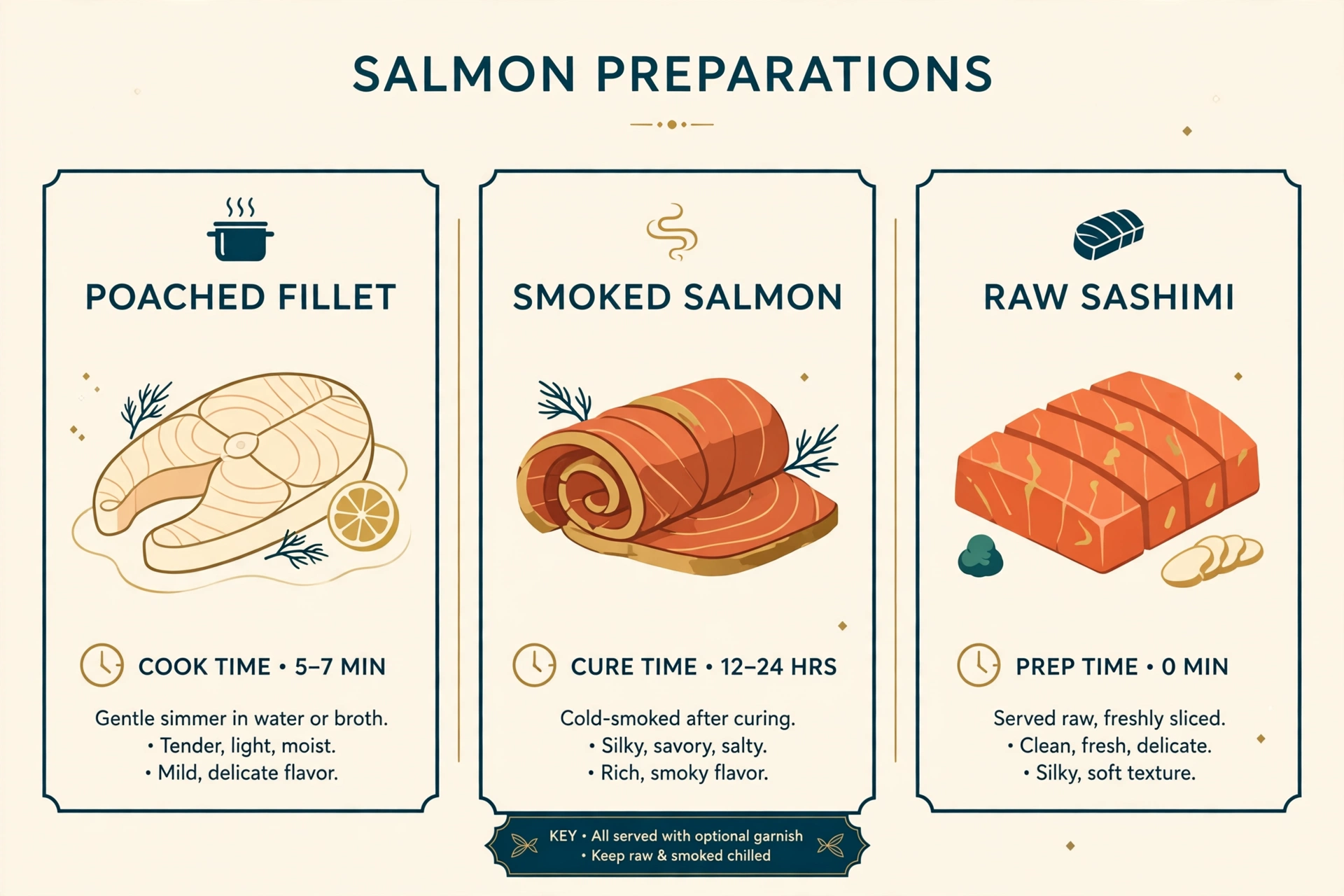
The Recipe: Simple Poached Salmon for a Healing Mouth
This is the easiest way to cook salmon during recovery. Poaching keeps the fish moist and flaky, with almost no chewing required. It takes about fifteen minutes and needs no special skill.
You need: one salmon fillet (skinless, about 150g), a small pan, water or low-salt vegetable broth, a slice of lemon, a pinch of salt, and a little dill or parsley if you like it.
How to make it:
- Pour water or broth into the pan until it’s about 2 cm deep, and add the lemon slice.
- Bring it to a gentle simmer — small bubbles, not a rolling boil.
- Slide the salmon in, skin-side down if it has skin, and cover the pan.
- Poach for 8 to 10 minutes, until the fish flakes easily with a fork and looks opaque all the way through.
- Lift it out gently, let it rest for a minute, and flake it into small pieces with a fork.
How to eat it: Serve the flaked salmon over mashed potatoes, soft rice, or steamed vegetables. The fish should fall apart with almost no pressure from your tongue — if it doesn’t, it needs another minute in the pan. Eat small bites, chew on the side away from your sockets, and rinse gently with warm salt water afterward.
Why poaching works so well: unlike frying or grilling, poaching never dries the fish out. The gentle heat keeps the flesh soft and moist, and there’s no crust, no char, and no crispy edge to catch on a socket.
Baked Salmon: The Other Great Option
If poaching isn’t your style, baking is the next best thing. Wrap a salmon fillet in foil with a little butter or olive oil, a squeeze of lemon, and some mild herbs, then bake at 180°C (350°F) for 12 to 15 minutes. The foil traps the moisture, so the fish steams in its own juices and comes out soft and flaky.
The key is not to overbake it. Salmon goes from perfect to dry in about two minutes, and dry salmon is noticeably harder to chew. Check it a minute early — if it flakes with a fork, it’s done.
Baked vs. Smoked vs. Raw: The Comparison That Matters
Salmon shows up on plates in three very different forms, and they are not interchangeable during recovery.
| Form | Texture and risk | Earliest safe day | Recovery verdict |
|---|---|---|---|
| Poached or baked salmon | Soft, moist, flakes apart | Day 3–4 | Best choice — minimal chewing, easy to digest |
| Smoked salmon (lox) | Soft but salty, served cold | Day 7–10 | Wait — salt can sting raw sockets, and cold smoked fish carries a small bacteria risk |
| Raw salmon (sashimi, sushi) | Raw, cold, firm | Day 14+ (ask your dentist) | Avoid — raw fish near open sockets is a genuine infection risk |
| Canned salmon (soft, boneless) | Very soft, flaky | Day 4–5 | Good backup — check for small bones and keep it plain |
| Grilled salmon | Firmer, charred edges | Day 8–10 | Okay later — charred bits can irritate healing tissue |
| Salmon patties (soft, pan-fried gently) | Soft, easy to cut | Day 5–6 | Good — keep the outside soft, not crispy |
Smoked salmon deserves a special note because it confuses people. It’s soft, so it seems like it should be fine — and the texture is fine. The problems are the salt, which can sting a raw socket, and the fact that it’s served cold and uncooked, so it carries a slightly higher bacteria risk. By day 7 to 10, a small amount is usually fine.
Raw salmon is the clearest no. Sashimi and sushi-grade salmon are wonderful foods, but an open extraction socket is exactly the wrong place for raw fish. Wait at least two weeks, and check with your dentist before bringing it back. Our guide to eating sushi after wisdom teeth removal covers the full sushi timeline if you want more detail.
Omega-3 and Healing: Why Salmon Is More Than Just Soft
Salmon’s real advantage isn’t just its texture — it’s what’s inside it. Salmon is one of the richest natural sources of omega-3 fatty acids, and omega-3s play a genuine role in how your body handles inflammation and repairs tissue after surgery.
After an extraction, some inflammation is normal and even necessary — it’s part of healing. But too much inflammation means more swelling and more pain. Omega-3s help your body keep that response balanced.
Salmon also brings high-quality protein for tissue repair, vitamin D, vitamin B12, and selenium — all nutrients that show up on every list of foods that support wound healing.
Mercury: Should You Worry?
It’s a fair question, and the answer is reassuring. Salmon is one of the lowest-mercury fish you can eat. Unlike large predators like swordfish or king mackerel, salmon is a relatively short-lived fish that doesn’t accumulate much mercury. Health authorities consider it safe to eat two to three times a week — and a few servings during your recovery week are well within that range.
Day by Day: When to Eat Salmon
- Days 1–2: No salmon yet. Stick to liquids and very soft foods while the sockets are fresh.
- Days 3–4: Poached or baked salmon, flaked into small pieces. This is the sweet spot for your first salmon meal.
- Days 5–6: Canned salmon and soft salmon patties join in. Keep everything flaked and small.
- Days 7–10: Smoked salmon in small amounts, and grilled salmon once the charred edges are trimmed off.
- Day 14 and beyond: Raw salmon and sashimi can come back, but only once the sockets have closed properly — and it’s worth checking with your dentist first.
The Bottom Line
Salmon is one of the best foods you can eat after wisdom teeth removal — soft, rich in omega-3 and protein, low in mercury, and easy to cook gently. Start with poached or baked salmon from day 3 or 4, flaked into small pieces. Hold off on smoked salmon until week two, and save raw salmon and sashimi for after day 14.
Frequently Asked Questions
Can I eat salmon 3 days after wisdom teeth removal?
Yes, usually. Poached or baked salmon, flaked into small pieces, is soft enough for most people by day 3 or 4.
Is salmon good for healing after wisdom teeth removal?
Yes. Salmon is rich in omega-3 fatty acids, protein, vitamin D, and selenium — all of which support tissue repair and help manage inflammation.
Can I eat smoked salmon after wisdom teeth removal?
Not in the first week. Smoked salmon is salty and served cold and uncooked, which can sting raw sockets and carries a small bacteria risk. Small amounts are usually fine from day 7 to 10 onward.
Can I eat raw salmon or sashimi after wisdom teeth removal?
No, not while the sockets are still open. Raw fish carries a higher risk of bacteria, and an open socket is vulnerable. Wait at least two weeks and check with your dentist first.
Is salmon low in mercury?
Yes. Salmon is one of the lowest-mercury fish, and eating it two to three times a week is considered safe. A few servings during your recovery week are nothing to worry about.
Can I eat canned salmon after wisdom teeth removal?
Yes, from around day 4 or 5. Canned salmon is very soft and flaky, which makes it easy to eat. Choose boneless varieties, check for any small bones, and keep it plain rather than heavily seasoned.