
Updated November 16, 2026
Quick answer
Blueberries are quietly one of the best fruits you can eat after wisdom teeth removal: small, soft, and full of the vitamins and antioxidants your body uses to heal. Unlike strawberries, they have no seeds on the outside. Unlike citrus, they are not acidic enough to sting. And unlike apples or raw carrots, they barely …
Blueberries are quietly one of the best fruits you can eat after wisdom teeth removal: small, soft, and full of the vitamins and antioxidants your body uses to heal. Unlike strawberries, they have no seeds on the outside. Unlike citrus, they are not acidic enough to sting. And unlike apples or raw carrots, they barely need chewing at all.
So why hesitate? Mostly their size: a whole blueberry can roll into a socket. Then there is the frozen-versus-fresh question, and whether the skins are a problem. The answers are reassuring — blueberries are genuinely recovery-friendly — as long as you prepare them the right way and run through a quick safety check first.
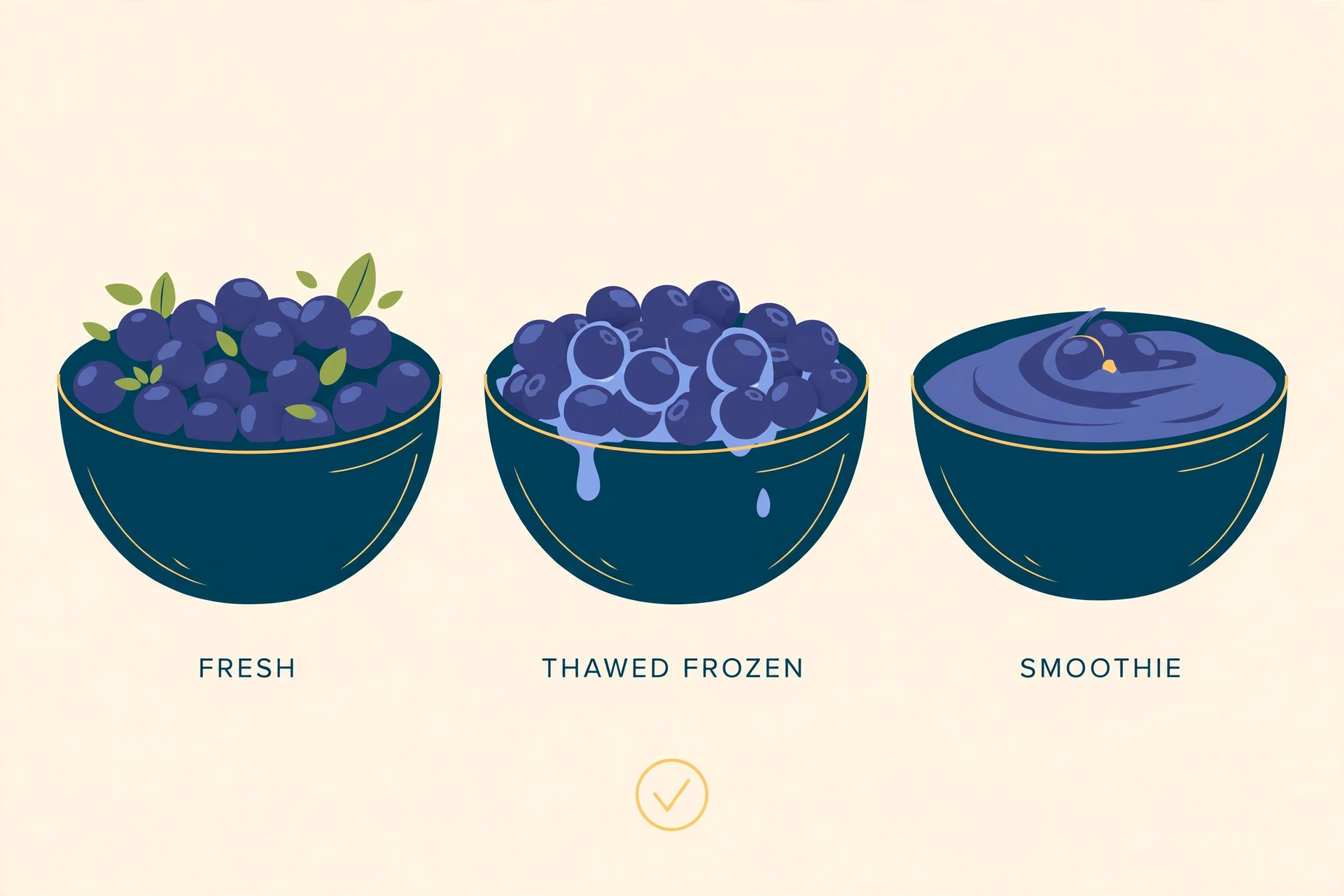
Fresh vs Frozen vs Smoothie: Which Form Is Best?
Blueberries come in three forms that matter after surgery, and they are not equal. Here is how they compare.
| Form | Texture | Chewing needed | Socket risk | Best time to try |
|---|---|---|---|---|
| Fresh blueberries | Soft, juicy, thin skin | Very little | Low — mash or halve them | Day 3–4 |
| Frozen blueberries | Hard as pebbles until thawed | None if thawed, a lot if not | Low when thawed, higher when frozen | Day 4–5, thawed only |
| Blueberry smoothie | Completely smooth, no pieces | None | Very low | Day 2–3 |
A smoothie is the safest option and the earliest one. Fresh blueberries come next, as long as you mash them or cut them in half first. Frozen blueberries are fine too — but only after they have fully thawed. Eating them frozen is a bad idea: they are rock-hard, they are very cold, and a hard frozen berry can press painfully against a tender socket.
Thawing is easy. Put frozen blueberries in a bowl, leave them at room temperature for 20 to 30 minutes, and they will soften into something very close to fresh. You can also warm them very gently in a saucepan with a splash of water for two minutes to make a warm compote — lovely over yoghurt or porridge, and completely soft.
The 5-Second Safety Checklist
Before you eat blueberries in any form, run through this quick check. It takes five seconds and it catches every common mistake.
- Are they soft? Press one between your fingers. It should squash easily. If it is firm or frozen solid, wait or thaw it.
- Are they small enough? Halve large blueberries, or mash a spoonful with a fork. Whole berries can roll into a socket.
- Is it smooth enough? If you are making a smoothie, blend for a full 60 seconds. No lumps, no skins, no surprises.
- Is it lukewarm or cool? Very cold foods can make sensitive sockets ache. Let smoothies sit for ten minutes if they came straight from the fridge.
- Am I skipping the straw? Never drink a smoothie through a straw in the first week — the suction can dislodge the blood clot and lead to dry socket.
If the answer to all five is yes, eat your blueberries with confidence. This checklist also works for most other soft fruits, so it is worth remembering beyond blueberry season.
When to Start: A Simple Timeline
Days 1–2: Stick to liquids. Even a smoothie feels like too much when your mouth is numb and swollen, and the priority is keeping the clots undisturbed. Water, broth, and thin yoghurt drinks are the right choices.
Days 3–5: Blueberry smoothies are in. This is the easiest and safest window — blend a cup of blueberries with yoghurt and milk, strain if you want to be thorough, and drink slowly from a glass. You can also try mashed fresh blueberries stirred into yoghurt. For more gentle meal ideas in this window, see our wisdom teeth recovery food timeline.
Days 6–10: Halved or mashed fresh blueberries are fine, and thawed frozen blueberries work well too. Try a small handful of halved berries with yoghurt, or warm blueberry compote over porridge. Chew gently on the side away from your extraction sites.
After day 10: Most people can eat whole blueberries normally. The skins are thin and the berries are soft, so there is very little to worry about. Keep rinsing with warm salt water after meals for another week, and avoid eating huge handfuls in one sitting — the natural sugars and mild acidity can irritate tender gums if you overdo it.
Blueberry Smoothie Recipe
This is a simple, filling smoothie that works from day 3 onwards. It takes five minutes and needs no chewing at all.
Ingredients:
- 1 cup fresh or thawed blueberries
- 1/2 cup Greek yoghurt
- 1/2 cup milk (or oat milk)
- 1/2 ripe banana
- 1 teaspoon honey (optional)
Method:
- Add the blueberries, banana, yoghurt, and milk to a blender.
- Blend on high for 60 seconds until completely smooth.
- Taste and add honey if you like it sweeter.
- Pour into a glass, let it sit for a few minutes if it feels too cold, and drink slowly. No straw.
The banana adds creaminess and calories, the yoghurt adds protein, and the blueberries bring flavour and nutrients. For an even richer version, add a spoonful of peanut butter or a scoop of protein powder — both blend in easily and turn a light snack into a small meal.
Why Blueberries Are Good for Healing
Blueberries have earned their reputation as a healing food, and it is not just marketing. They are packed with anthocyanins — the compounds that give them their deep blue colour — which have genuine anti-inflammatory effects. Less inflammation means less swelling and less pain around your extraction sites.
They are also a solid source of vitamin C, which your body needs to produce collagen — the protein that stitches wounds closed. A cup gives you about a quarter of your daily vitamin C, plus vitamin K, manganese, and fibre. That is a lot of nutrition from a fruit you barely have to chew.
One caution: blueberries are mildly acidic and naturally sweet, so they can feed oral bacteria if they linger in your mouth. Rinse gently with warm salt water about 30 minutes after eating, and keep it to one or two servings a day. For more foods that calm inflammation, check our guide to anti-inflammatory foods for wisdom teeth recovery.
Blueberries to Avoid for Now
Skip these for the first two weeks: dried blueberries (chewy, tough, and sticky), blueberry muffins and scones (hard crumbs, often nuts), blueberry jam (very high in sugar, often with seeds or skins), and blueberry-flavoured candy or cereal bars (acidic, sugary, full of hard pieces).
Fresh or frozen blueberries — prepared properly — are always the better choice. If a product has the word “blueberry” on it but the berries inside are hard, crunchy, or buried in sugar, save it for later.
FAQs
Can I eat blueberries the day after wisdom teeth removal?
Wait until day 2 or 3, when you can try a fully blended blueberry smoothie. On day 1, stick to cool liquids while the clots form. Halved or mashed fresh blueberries are fine from around day 6.
Are frozen blueberries safe after wisdom teeth removal?
Yes, but only after they have fully thawed. Frozen blueberries are hard as pebbles and very cold, which can hurt a tender socket. Thaw them at room temperature for 20 to 30 minutes, or warm them gently into a compote, and they become just as soft as fresh berries.
Do blueberry skins get stuck in wisdom teeth sockets?
The skins are very thin and usually break down easily, especially when blended or mashed. Whole berries can occasionally leave a small piece of skin behind, which is why halving or mashing is recommended in the first ten days. A gentle salt water rinse clears away anything that remains.
Can blueberries cause dry socket?
No — blueberries do not cause dry socket. The risk comes from suction, vigorous rinsing, or hard foods disturbing the blood clot. Blueberries are soft and low-risk, but never drink smoothies through a straw, and never rinse forcefully in the first few days.
How many blueberries can I eat after wisdom teeth removal?
A cup a day is a good amount — roughly a small handful per serving, once or twice a day. More than that is not harmful, but the natural sugars and mild acidity can irritate tender gums if you eat them constantly. Rinse with warm salt water after each serving.
Are blueberries better than strawberries after wisdom teeth removal?
Yes, slightly. Blueberries have no external seeds, so nothing gets trapped in a socket, and their skins are thinner. Strawberries need blending and straining in week one; blueberries can be eaten mashed or halved much sooner. Both are excellent sources of vitamin C, so enjoy whichever you prefer.