Pain at the back of the jaw that radiates toward the ear can have several causes, including an impacted wisdom tooth. Because similar symptoms can come from other dental or jaw problems, an examination is the best way to identify the cause.
Impacted wisdom teeth are one of the most common dental problems adults face. And yet, they’re also one of the most commonly ignored — partly because the symptoms can feel vague and intermittent, and partly because so many people mistake them for something else entirely.
Earache. Sinus pressure. Tension headache. TMJ. The symptoms of impacted wisdom teeth wear a lot of disguises.
Impacted wisdom teeth can cause pain, inflammation, infection, or damage to nearby teeth, although some cause no symptoms. This guide explains common signs and when evaluation may be appropriate.
This guide covers every significant symptom, what it means, how urgent it is, and exactly when you need to act. Whether you’re experiencing symptoms right now or wondering if that occasional ache at the back of your mouth is something to worry about — keep reading.

Quick Answer: What Are the Main Symptoms of Impacted Wisdom Teeth?
The most common symptoms include persistent jaw pain that may radiate to the ear or temple, swollen and tender gum tissue at the back of the mouth, difficulty opening the jaw fully, bad taste or persistent bad breath, swollen lymph nodes under the jaw, and headaches. Fully impacted teeth may cause no symptoms at all — which is why regular dental X-rays matter even when you feel fine.
What Makes a Wisdom Tooth “Impacted”?
Before we get into symptoms, a quick explanation — because understanding why the tooth causes problems clarifies what you’re experiencing.
A wisdom tooth becomes impacted when it cannot fully erupt through the gumline into its correct position. This happens because the modern human jaw has evolved to be smaller, yet we still grow the same number of teeth as our ancestors — leaving insufficient space for the last four molars.
The result: the tooth gets stuck. It may grow sideways, at an angle, or remain completely buried beneath the gum and bone.
There are four main impaction types — mesial (angled forward), distal (angled backward), vertical (upright but blocked), and horizontal (completely sideways). Each produces a slightly different symptom profile — but all share the same core issue: a tooth that can’t go where it needs to go, causing problems for the surrounding tissue.
For a comprehensive overview of impaction types, causes, and treatment options, our complete guide on impacted wisdom teeth has everything you need.
Now — let’s talk about what you’ll actually feel. If you are comparing symptoms with possible infection, read our wisdom tooth infection symptoms guide as well.

Symptom #1: Deep, Persistent Jaw Pain
This is the symptom most people associate with wisdom teeth — and for good reason. It’s the most common presenting complaint.
But the character of impacted wisdom tooth pain is often misunderstood. It’s not necessarily a sharp, obvious toothache. More commonly, it presents as:
- A deep, dull, persistent aching at the very back of the jaw
- Discomfort that worsens when chewing or biting down
- Pain that comes and goes before eventually becoming more constant
- Aching that’s worse in the morning — when inflammation has built up overnight
In my experience, patients often describe it as a “pressure” feeling at the back of the jaw rather than a classic toothache. That pressure quality is characteristic of a tooth pushing against surrounding bone and tissue with nowhere to go.
When to act: Pain that occurs regularly, is worsening over time, or is no longer responding to over-the-counter ibuprofen deserves a dental assessment.
Symptom #2: Pain That Radiates to the Ear, Temple, or Neck
Here’s where impacted wisdom teeth cause the most confusion — and the most misdiagnosis.
The nerves supplying the lower wisdom teeth are branches of the trigeminal nerve — the same nerve network that supplies the ear, jaw, and temple area. When the wisdom tooth causes inflammation, these shared nerve pathways mean pain is felt far from its actual source.
People spend months treating ear infections that aren’t there, taking migraine medication for headaches that don’t respond to it, or visiting an ENT for sinus pain that turns out to be dental in origin.
The clue? The radiating pain consistently appears alongside — or just after — back-of-jaw discomfort. If your “earache” doesn’t respond to ear drops and clears up temporarily only to return, your wisdom teeth are worth investigating.
💡 Tip Box: If you’ve been experiencing unexplained ear or jaw pain, our post on can headaches be caused by wisdom teeth explains the nerve pathway behind this phenomenon in detail — and could save you months of misdiagnosis.
Symptom #3: Swollen, Red, or Tender Gum Around the Back Teeth
When a wisdom tooth partially erupts through the gumline, it creates a gum flap — called an operculum — that sits over the partially exposed crown.
This flap creates a pocket that is almost impossible to clean. Food debris and bacteria accumulate beneath it, and the bacteria thrive in the warm, moist environment. The result is pericoronitis — inflammation and infection of the gum tissue surrounding the tooth.
Signs of pericoronitis include:
- Gum tissue at the back of the mouth appearing visibly swollen and red
- The gum feeling tender or painful when touched
- Gum that bleeds easily when you brush or eat
- A sense of pressure or fullness at the back of the jaw
Pericoronitis can range from mild (annoying and uncomfortable) to severe (with fever, spreading swelling, and systemic symptoms). Either way, it tells you that the partially erupted tooth is causing active problems.
For the full picture of what wisdom tooth infection looks and feels like — and exactly when it crosses into territory requiring urgent care — our post on wisdom tooth infection symptoms is essential reading.
Symptom #4: Difficulty Opening Your Mouth (Trismus)
Can you open your mouth as wide as normal? If not — and if this limitation is accompanied by jaw pain — it’s a meaningful symptom worth taking seriously.
Trismus (restricted mouth opening) develops when inflammation from the wisdom tooth area spreads to the muscles of mastication — the chewing muscles that surround the jaw joint. When these muscles become inflamed and swollen, they can’t stretch to their normal range.
Signs of trismus include:
- Unable to open your mouth wider than two to three fingers’ width
- Opening the mouth causes pain radiating through the jaw
- Jaw stiffness that’s worse in the morning and slightly improves with gentle movement throughout the day
- Difficulty eating anything that requires a wide bite
Trismus is significant because it doesn’t just indicate local inflammation around the tooth — it indicates the inflammation has spread into deeper tissue. Combined with other symptoms, it’s one of the clearer clinical signs that the situation needs professional attention promptly.
Symptom #5: Bad Taste or Persistent Bad Breath
Not all bad breath comes from poor oral hygiene. When it originates from a specific area — particularly the back of the mouth — and doesn’t improve with brushing, it’s telling you something.
The bacteria that colonize the pocket beneath the operculum produce volatile sulfur compounds — the same compounds responsible for the unpleasant odor associated with dental infection. The result is a persistent, localized bad taste or odor that:
- Seems to come from the back of the mouth on one side
- Doesn’t improve with thorough brushing, flossing, or mouthwash
- May be accompanied by other infection symptoms like swelling and pain
- Sometimes worsens after eating
If you or the people around you have noticed a persistent mouth odor that doesn’t respond to your normal oral hygiene routine — and you have any other back-of-jaw symptoms — this combination is a reliable indicator of infection around a wisdom tooth.
Symptom #6: Swollen Lymph Nodes Under the Jaw
Your lymph nodes are part of your immune surveillance network — and they enlarge when fighting nearby infection. Run your fingers gently along the underside of your jaw and down the sides of your neck.
If you find tender, palpable lumps — particularly on the same side as your jaw pain — your immune system is actively responding to something in the vicinity.
Lymph node involvement alongside jaw pain and gum swelling is a reliable indicator of an infection that has progressed beyond simple local inflammation. It’s not a reason to panic — but it is a reason to book a prompt dental appointment rather than waiting.
Symptom #7: Headaches — Especially on One Side
This one surprises people most.
Wisdom tooth-related headaches are more common than most people realise — and more commonly misattributed than almost any other wisdom tooth symptom.
The mechanism: inflammation and muscular tension from impacted wisdom teeth can trigger tension-type headaches and even migraines through the trigeminal nerve pathway and via the referred muscle tension in the jaw and temple region.
Wisdom tooth headaches tend to:
- Be one-sided, corresponding to the affected wisdom tooth
- Feel like pressure or tension rather than a classic migraine
- Appear or worsen alongside jaw stiffness or back-of-mouth pain
- Improve temporarily with ibuprofen but recur reliably
If you’ve been managing recurring one-sided headaches without a clear cause — particularly if they’re accompanied by any jaw symptoms — it may be worth mentioning your wisdom teeth at your next consultation.
Our dedicated post on can headaches be caused by wisdom teeth goes deep on this connection.
Symptom #8: Pain or Pressure When Biting Down
A wisdom tooth that is pushing against the roots of the adjacent second molar can cause a specific type of discomfort: pain or a strange pressure sensation when biting down on the back teeth.
This symptom is sometimes confused with a cracked tooth, a high filling, or TMJ dysfunction. But when it’s localized consistently to the back molar region and accompanied by any other wisdom tooth symptoms, the impacted tooth is the more likely culprit.
What makes this symptom particularly worth acting on quickly: the pressure causing this pain may also be causing silent root resorption of the adjacent second molar — a situation where the pressure literally dissolves the neighbouring tooth’s root structure. This is entirely painless in its early stages and only detectable on X-ray.
Early signs your wisdom teeth may already be impacting surrounding teeth are covered in detail in our post on early signs your wisdom teeth are attacking.
Symptom #9: Fever and Feeling Generally Unwell
Fever alongside dental pain shifts the picture significantly — from localized dental problem to systemic infection response.
When the body develops a fever in response to a dental infection, it means bacterial activity has overwhelmed local defenses to the point of triggering a systemic immune response. This warrants same-day dental assessment, not a wait-and-see approach.
Signs the infection may be more serious:
- 🔴 Temperature above 38°C / 100.4°F
- 🔴 Feeling genuinely unwell — fatigued, shivery, or feverish
- 🔴 Swelling spreading beyond the immediate back jaw area
- 🔴 Difficulty swallowing or opening the mouth very limited
And if you experience rapidly spreading facial swelling, difficulty breathing, or difficulty swallowing alongside dental pain — go to A&E immediately. These signs indicate infection may be spreading into the deep tissue spaces of the face and neck — a situation that can become life-threatening without prompt intervention.
Our detailed guide on wisdom tooth infection swelling — what’s normal and what’s dangerous covers exactly where the line falls.
⚠️ Warning Box: Spreading facial swelling, difficulty swallowing or breathing, and high fever alongside dental symptoms are medical emergencies. Do not wait for a routine dental appointment — go to A&E or call emergency services immediately.
Symptom #10: No Symptoms at All — The Hidden Risk
This tenth “symptom” is arguably the most important one on the list — because it’s the one most people completely miss.
Fully impacted wisdom teeth can cause significant damage with zero pain, zero swelling, and zero noticeable symptoms.
Root resorption of adjacent teeth — happening silently. Dentigerous cysts forming around the impacted crown — undetected. Bone loss progressing in the jaw — invisible without X-ray.
This is why the recommendation for regular dental check-ups including X-ray review isn’t just about cleaning. It’s about detecting what you genuinely cannot feel. A wisdom tooth that is causing zero symptoms today may be quietly destroying the adjacent molar’s root — something that becomes an expensive, complicated problem if left until it finally produces symptoms.
I always tell my readers: the absence of pain is not permission to skip your dental check-up.
When Should You See a Dentist?
Use this as your guide:
Book a routine appointment (within 1–2 weeks) if you have:
- Intermittent jaw aching that keeps returning
- Occasional gum swelling at the back of the mouth
- Mild sensitivity when biting down on back teeth
- You haven’t had a wisdom tooth X-ray in over 2 years
Book an urgent appointment (within 24–48 hours) if you have:
- Persistent pain that’s worsening rather than improving
- Visible gum swelling with bad taste or discharge
- Difficulty opening your mouth
- Swollen lymph nodes alongside jaw pain
- Any combination of multiple symptoms above
Go to A&E immediately if you have:
- Rapidly spreading facial swelling
- Fever above 38.5°C with facial swelling
- Difficulty swallowing or breathing
- Feeling severely unwell alongside dental symptoms
What Happens at the Dental Assessment?
If you’re experiencing any of the above symptoms and wondering what to expect when you finally go in — here’s a quick reassurance.
Your dentist will:
- Examine the back of your mouth visually and by feel
- Check your jaw opening range
- Palpate for lymph node swelling
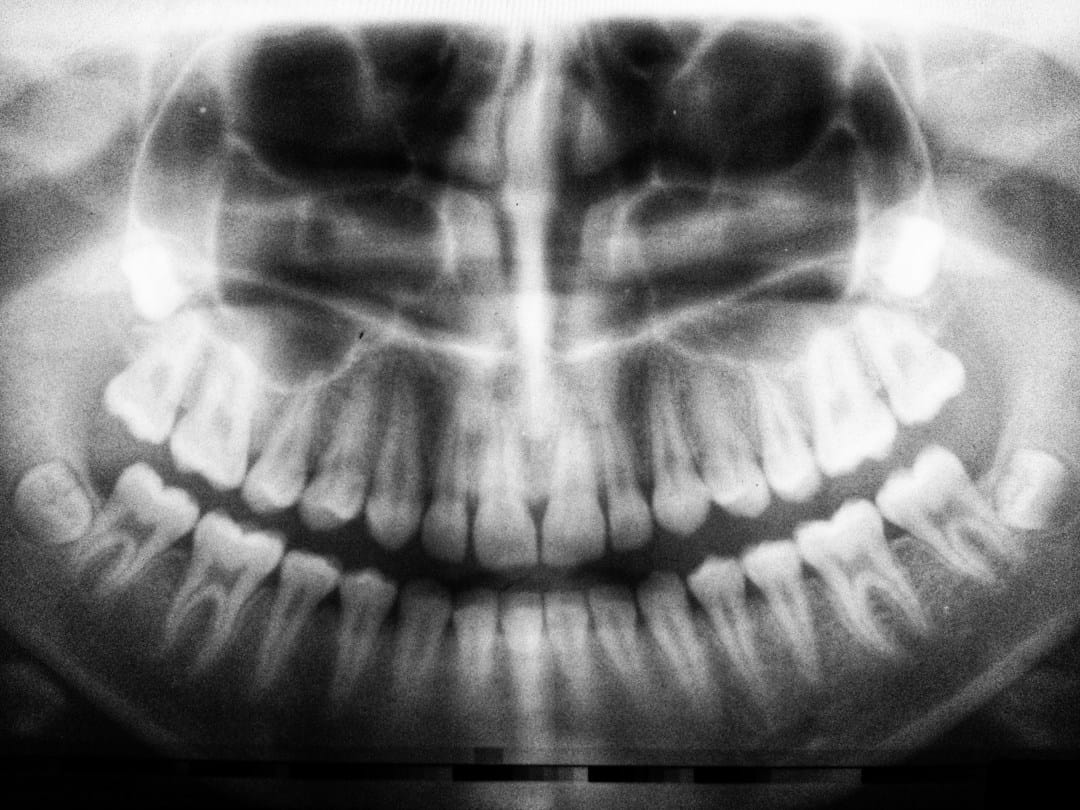
- Take a panoramic X-ray (OPG) — the single most useful diagnostic tool, showing all four wisdom teeth simultaneously
- Discuss findings and recommend monitoring, conservative management, or referral for extraction depending on what they find
The assessment itself is straightforward and generally non-invasive. The X-ray takes seconds. And the information it provides can make an enormous difference to what happens next.
If the assessment leads to a recommendation for extraction and that thought triggers significant anxiety — our guide on managing dental anxiety before wisdom tooth surgery covers every practical strategy for handling pre-procedure fear.
Self-Management While Waiting for Your Appointment
If you’re dealing with impacted wisdom tooth symptoms right now and your appointment is a few days away, these strategies genuinely help:
- Ibuprofen (400mg with food) — the most effective OTC option because it reduces inflammation, not just pain. Alternate with paracetamol for continuous coverage
- Warm salt water rinsing — ½ teaspoon salt in warm water, gentle swishing 3–4 times daily after meals
- Clove oil — applied with a cotton swab to the surrounding gum tissue for temporary topical relief. Our detailed post on clove oil for wisdom tooth pain covers the safe application method
- Soft diet — reduce mechanical stress on the back of the mouth
- Head elevation when sleeping — reduces blood pooling and throbbing at the site
For more targeted at-home relief, our guide on wisdom tooth infection home remedies covers everything safe to use while awaiting professional care.
Conclusion
The symptoms of impacted wisdom teeth range from the obvious — throbbing jaw pain and swollen gums — to the easily dismissed, like recurring headaches and vague ear discomfort.
And then there’s the silent category: fully impacted teeth that show no symptoms at all, quietly damaging the teeth beside them.
Understanding all of these — knowing which warrant monitoring, which need prompt attention, and which are genuine emergencies — is the knowledge that stops a manageable problem from becoming a complicated one.
Your wisdom teeth are trying to communicate with you. This guide helps you understand what they’re saying.
Ready to understand the bigger picture? Our complete guide on impacted wisdom teeth — symptoms, causes and treatment covers everything from diagnosis through to recovery — and our guide on early signs your wisdom teeth are attacking helps you catch problems at the earliest possible stage.
Frequently Asked Questions
\n\nFor more detail, see our guides to impacted wisdom teeth causes and treatment, possible complications, removal surgery, and wisdom tooth pain relief.
\nQ: What are the first signs that a wisdom tooth is impacted? The earliest signs of an impacted wisdom tooth include intermittent deep aching at the back of the jaw (especially when chewing), mild gum swelling or tenderness at the very back of the mouth, occasional bad taste in the back of the mouth, and sensitivity when biting down on the rear molars. These symptoms may come and go initially before becoming more persistent. Many impacted wisdom teeth produce no symptoms at all in the early stages — making regular dental X-rays the only reliable early detection method.
Q: Can impacted wisdom teeth cause ear pain? Yes — impacted wisdom teeth frequently cause referred pain to the ear, temple, and along the jaw. This occurs because the nerves supplying the lower wisdom teeth share pathways with nerves that supply the ear region (via branches of the trigeminal nerve). Wisdom tooth-related ear pain is often mistaken for an ear infection and may fail to respond to ear-specific treatments. If unexplained ear pain consistently appears alongside jaw aching or back-of-mouth tenderness, your wisdom teeth should be assessed.
Q: How do I know if my wisdom tooth is infected or just impacted? Impaction and infection can occur together. Signs of active infection alongside impaction include intense throbbing pain rather than dull aching, visible redness and swelling of the gum with possible pus or discharge, persistent bad taste or odor that doesn’t respond to oral hygiene, fever above 38°C, and swollen lymph nodes under the jaw. Pain that is progressively worsening after day three, spreading facial swelling, or difficulty swallowing are emergency signs requiring immediate professional attention.
Q: Can impacted wisdom teeth cause symptoms with no pain? Yes — fully impacted wisdom teeth can cause significant complications without producing any pain. Root resorption of adjacent teeth, cyst formation around the impacted crown, and bone loss can all progress silently and are only detectable on dental X-rays. This is one of the most important reasons for regular dental check-ups and routine X-ray monitoring — the absence of pain does not confirm the absence of a problem with impacted wisdom teeth.
Q: When should I go to A&E for wisdom tooth symptoms? Go to A&E immediately if you experience rapidly spreading facial swelling (particularly toward your eye or down your neck), difficulty swallowing, difficulty breathing, high fever (above 38.5°C / 101°F) alongside significant facial swelling, or feeling severely and acutely unwell with dental symptoms. These signs indicate infection may be spreading into deep tissue spaces of the face and neck — a potentially life-threatening situation requiring immediate hospital assessment rather than a routine dental appointment.
Looking for dental care options? Call to discuss the advertised dental service.
Call Now