
Updated November 11, 2026
Quick answer
Is your wisdom tooth cutting or rubbing against your cheek? Learn why it happens, how to relieve irritation, treat cheek sores, and when to see a dentist.
A wisdom tooth cutting into your cheek can cause soreness, swelling, and a painful sore inside your mouth. It often happens when a wisdom tooth erupts at an angle, has a sharp edge, or changes how your teeth meet when you chew. Gentle home care may ease irritation, but recurring cheek injuries need a dental examination to identify and correct the cause.
Why Is My Wisdom Tooth Cutting Into My Cheek?
Wisdom teeth develop at the very back of the mouth. If one does not have enough room to emerge normally, it may lean toward the cheek or sit in a position that repeatedly contacts the soft tissue.
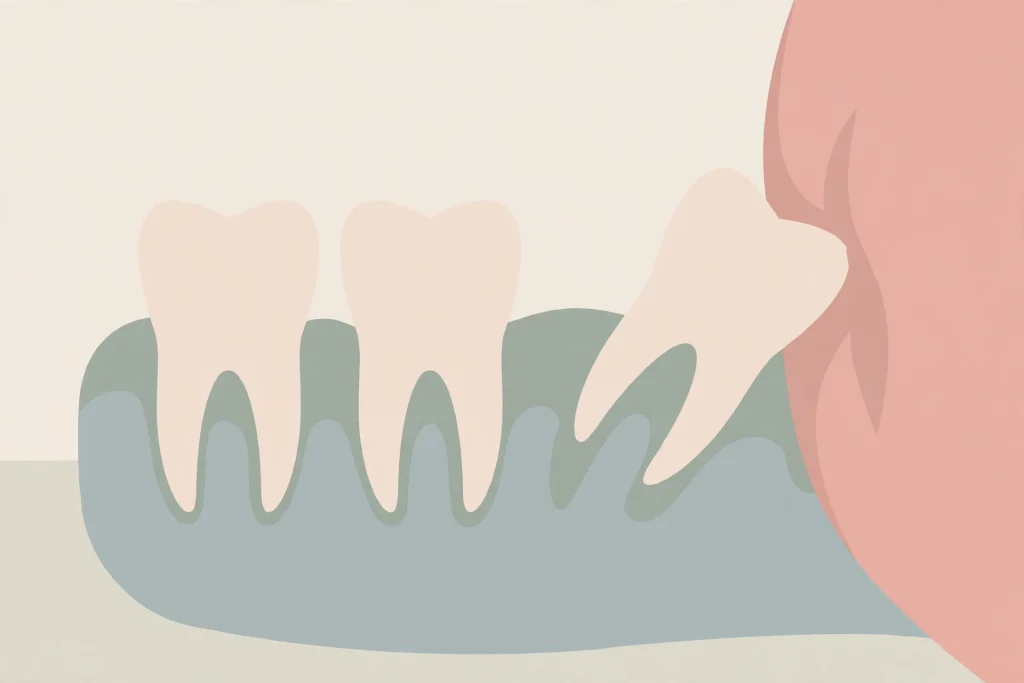
1. The wisdom tooth is growing at an angle
An angled tooth may press against the inner cheek when you talk, chew, or close your mouth. Repeated contact can cause redness, tenderness, cheek biting, or a small traumatic ulcer.
2. An impacted wisdom tooth
An impacted wisdom tooth cannot fully emerge because its path is blocked by another tooth, bone, or gum tissue. Some impacted teeth are angled toward nearby soft tissue. A dentist may recommend an examination and X-ray to assess its position.
3. A sharp or uneven tooth edge
A chipped, broken, or naturally sharp edge can scrape the cheek lining. If the same spot becomes sore repeatedly, have the tooth checked rather than trying to file or reshape it yourself.
4. Crowding or accidental cheek biting
A tooth emerging in a crowded area may change where the upper and lower teeth meet. You may catch the same area of cheek between your teeth while eating or speaking. Swelling can make the area easier to bite again.
Symptoms of a Wisdom Tooth Rubbing Against Your Cheek
Symptoms usually appear where the tooth contacts the cheek. They can include:
- Soreness or tenderness on the inside of the cheek.
- Redness, irritation, or localized swelling.
- A white or yellow-centered sore with a red edge.
- A scraping or sharp sensation when chewing or closing your mouth.
- Repeatedly biting the same area of cheek.
- Bleeding if the injured tissue is rubbed or bitten again.
A friction-related cheek ulcer is not the same as an infection around a partially erupted wisdom tooth. Pus, fever, a bad taste, worsening gum swelling, or difficulty opening your mouth may indicate infection and need prompt dental assessment.
How to Stop a Wisdom Tooth From Rubbing Against Your Cheek
These steps can reduce irritation while you arrange dental care. They do not change the position of a tooth that is growing incorrectly.

1. Rinse gently with warm salt water
Dissolve about half a teaspoon of salt in a glass of warm water. Gently rinse and spit it out. This can help keep the area clean and soothe irritated tissue. Avoid vigorous rinsing if it hurts.
2. Choose soft foods
Try yogurt, scrambled eggs, oatmeal, mashed potatoes, soft pasta, or other foods that do not scrape the sore. Avoid chips, nuts, hard crackers, very spicy foods, and acidic foods if they sting. Chew on the opposite side if comfortable.
3. Avoid repeatedly touching the sore
Do not pick at the area with your fingers or tongue, push the tooth, or place improvised materials against it. Repeated contact can delay healing.
4. Keep your mouth clean
Brush gently with a soft-bristled toothbrush and carefully clean around the wisdom tooth. Avoid scrubbing directly over an open cheek sore. Ask your dentist for advice if the area is difficult to clean.
5. Consider appropriate pain relief
An over-the-counter pain reliever such as acetaminophen (paracetamol) or ibuprofen may help if it is safe for you. Follow the package directions and ask a pharmacist or healthcare professional if you are pregnant, have a medical condition, take other medicines, or are unsure what is suitable. Do not put aspirin directly on the tooth, gum, or cheek.
Wisdom Tooth Cutting Cheek Treatment: What Can a Dentist Do?
The right treatment depends on the cause. A dentist will examine the cheek and tooth, check how your teeth meet, and may take an X-ray to assess the wisdom tooth’s position.
Smoothing a sharp edge
If a small sharp edge is responsible and the tooth is otherwise suitably positioned, a dentist may be able to smooth it. This is not appropriate for every tooth, especially an impacted or badly angled wisdom tooth.
Treating the cheek ulcer
A dentist may recommend protective measures or suitable medication to relieve discomfort while the tissue heals. If the tooth keeps rubbing the same spot, the ulcer may return until the source of friction is addressed.
Wisdom tooth removal
Extraction may be considered when a wisdom tooth is poorly positioned and repeatedly injures the cheek, causes recurring pain or inflammation, or contributes to other dental problems. Not every wisdom tooth that touches the cheek needs removal. Your dentist or oral surgeon should explain the benefits and risks and whether a less invasive option is reasonable.
Treatment for infection
Inflammation or infection around a partially erupted wisdom tooth is called pericoronitis. Treatment may include cleaning the area and advice on keeping it clean. Antibiotics are not routinely needed for every case; a clinician may prescribe them when there are signs of spreading or systemic infection. Recurrent problems may lead to a discussion about extraction.
Can a Wisdom Tooth Cause a Hole in Your Cheek?
Repeated rubbing or biting can cause a traumatic ulcer that looks like a small hole or crater. It may have a white or yellow surface with a red border and can hurt when food touches it. Other oral conditions can cause similar sores, so do not assume every cheek lesion comes from a wisdom tooth.
Most minor traumatic ulcers improve after the source of irritation is removed. Arrange a dental or medical examination if a sore lasts two weeks or longer, grows, bleeds without an obvious reason, or does not heal.
Wisdom Tooth Biting Gum vs. Wisdom Tooth Cutting Cheek
| Feature | Wisdom tooth biting gum | Wisdom tooth cutting cheek |
|---|---|---|
| Affected tissue | Gum around the tooth | Inner cheek lining |
| Possible cause | Partially erupted tooth or gum flap | Tooth position, sharp edge, or cheek biting |
| Common symptom | Swollen, tender gum | Cheek soreness or ulcer |
| Possible complication | Pericoronitis | Recurring traumatic ulcer |
A flap of gum over a partially erupted wisdom tooth can trap food and bacteria, leading to inflammation. This differs from a tooth scraping the cheek, although both problems can happen at the same time.
What If Your Wisdom Tooth Is Digging Into Your Cheek?
A tooth that feels as though it is digging into the cheek may be positioned close to the cheek lining or have an edge that presses into it. You may notice it when chewing, talking, closing your mouth, or moving your jaw. Do not file, cut, or reshape the tooth yourself. Arrange a dental examination, especially if the same area keeps getting injured.
Can Wisdom Teeth Grow Into Your Cheek?
Wisdom teeth do not normally grow through cheek tissue. However, a tooth erupting at an unusual angle may point toward the cheek and press against it. This can feel as though it is growing into the cheek. A dental examination and X-ray can help show its direction and whether it is impacted.
How Long Does a Cheek Injury From a Wisdom Tooth Take to Heal?
A minor cheek injury may start improving within several days after the repeated irritation stops. Many uncomplicated mouth ulcers heal within about one to two weeks. Healing may take longer if the tooth continues to rub or bite the same area. If the sore persists for two weeks, worsens, or keeps returning, have it examined.
When Should You See a Dentist?
Arrange a dental appointment if the tooth repeatedly rubs your cheek, causes an open sore, or makes chewing uncomfortable. Seek prompt dental advice for increasing pain or swelling, pus, an unpleasant taste, fever, swollen gums, or difficulty opening your mouth.
Seek emergency medical care if you have difficulty breathing or swallowing, rapidly spreading swelling of your face, mouth, or neck, or severe swelling that affects speaking or opening your mouth. These can be signs of a serious spreading infection.
Frequently Asked Questions
Why is my wisdom tooth rubbing against my cheek?
It may be growing at an angle, emerging without enough space, or have a sharp edge. Repeated contact can cause soreness, redness, and ulcers.
How do I stop my wisdom tooth from cutting my cheek?
Use gentle saltwater rinses, eat soft foods, avoid further irritation, and arrange a dental examination if the tooth keeps rubbing. Home care cannot correct an abnormal tooth position.
Can a wisdom tooth cause a hole in your cheek?
Repeated contact can cause a traumatic ulcer that looks like a small crater. Have a sore checked if it lasts two weeks or longer or does not heal.
Will my cheek heal if my wisdom tooth keeps rubbing against it?
It may partly heal, but repeated friction can reopen the injury. The source of irritation usually needs to be addressed for lasting healing.
Does a wisdom tooth cutting my cheek mean I need extraction?
Not always. A dentist may be able to smooth a sharp edge or recommend another treatment. Extraction may be considered if the tooth is poorly positioned and repeatedly injures the cheek.
Can an impacted wisdom tooth cut into my cheek?
Yes. An impacted tooth may be angled toward nearby soft tissue. An examination and X-ray can help determine whether its position is causing the problem.
Why does my cheek hurt when I close my mouth?
Your cheek may be caught between your teeth, or a wisdom tooth may press against it. Swollen tissue can also be easier to bite accidentally.
Can wisdom teeth cause cheek ulcers?
Yes. Repeated scraping or biting can damage the cheek lining and create a traumatic ulcer.
What should I do if my wisdom tooth is digging into my cheek?
Do not try to file or reshape it yourself. Avoid irritating foods and arrange a dental examination to determine whether adjustment or removal is appropriate.
What if my cheek seems stitched to my gum after wisdom teeth removal?
It may be swelling, healing tissue, or a stitch holding nearby tissue together. Do not pull or cut the stitch. Contact your oral surgeon if it looks unusually attached, becomes increasingly painful, or interferes with mouth movement.
Final Thoughts
A wisdom tooth cutting into your cheek can cause painful ulcers, swelling, and difficulty eating. Gentle rinses and soft foods may provide temporary relief, but they will not correct a tooth that is growing at an unusual angle. If the problem keeps returning, have the tooth examined so your dentist can recommend a treatment that addresses the cause.