
Updated November 15, 2026
Quick answer
Salad is the food many people miss most after wisdom teeth removal — fresh, crunchy, and light. Unfortunately, it's also one of the last foods to come back. Raw vegetables need real chewing, and crunchy bits can easily lodge in healing sockets. The good news: you don't have to wait forever, and some kinds of …
Salad is the food many people miss most after wisdom teeth removal — fresh, crunchy, and light. Unfortunately, it’s also one of the last foods to come back. Raw vegetables need real chewing, and crunchy bits can easily lodge in healing sockets. The good news: you don’t have to wait forever, and some kinds of salad come back sooner than others.
The Short Answer: Not in the first week. Raw salad is too crunchy and needs too much chewing for healing sockets. Most people can try very soft salads from around day 7–10 — soft lettuce, avocado, and well-cooked vegetables with a smooth dressing — and return to normal salads, including raw crunchy vegetables, from weeks 3–4. Always follow your oral surgeon’s specific instructions.
Why Salad Is Tricky After Wisdom Teeth Removal
Salad combines several problems for a healing mouth:
- Raw vegetables need real chewing. Lettuce, carrots, cucumber, and peppers all demand strong jaw movement when your jaw is still stiff and sore.
- Crunchy pieces break apart. Small hard bits — croutons, raw onion, seeds, and nuts — can lodge in the open socket and irritate it, raising the risk of infection or dry socket.
- Acidic dressings sting. Vinaigrettes and citrus dressings are acidic and can sting raw healing tissue.
- Leafy greens can stick. Large lettuce leaves can cling to the socket area and are awkward to rinse away.
- Raw food carries more bacteria. While the sockets are open wounds, raw vegetables carry a slightly higher infection risk than cooked food.
None of this means salad is banned forever. It means timing and preparation matter — a lot.
When Can You Eat Salad After Wisdom Teeth Removal?
| Stage | Salad status |
|---|---|
| Days 1–3 | No salad. Cool liquids and very soft foods only. |
| Days 4–6 | Still no salad. Soft foods are expanding, but raw vegetables are too crunchy and need too much chewing. |
| Day 7–10 | Very soft salads may be possible: soft lettuce or baby spinach, ripe avocado, and well-cooked vegetables, with a smooth mild dressing. Small pieces, chewed away from the extraction sites. |
| Days 10–14 | Soft salads are usually fine now. You can add soft cucumber (peeled, seeds removed) and soft tomato. Still avoid raw carrots, raw onion, croutons, nuts, and seeds. |
| Weeks 3–4 | Most people can eat normal salads again, including raw crunchy vegetables, as long as chewing is comfortable and there is no pain or swelling. |
Healing speed varies. Surgical or impacted extractions need more caution than simple ones. If your jaw still hurts when you open wide, wait a few more days — the salad isn’t going anywhere.
How to Eat Salad Safely the First Time
When you do try salad again, a few small changes make it much safer:
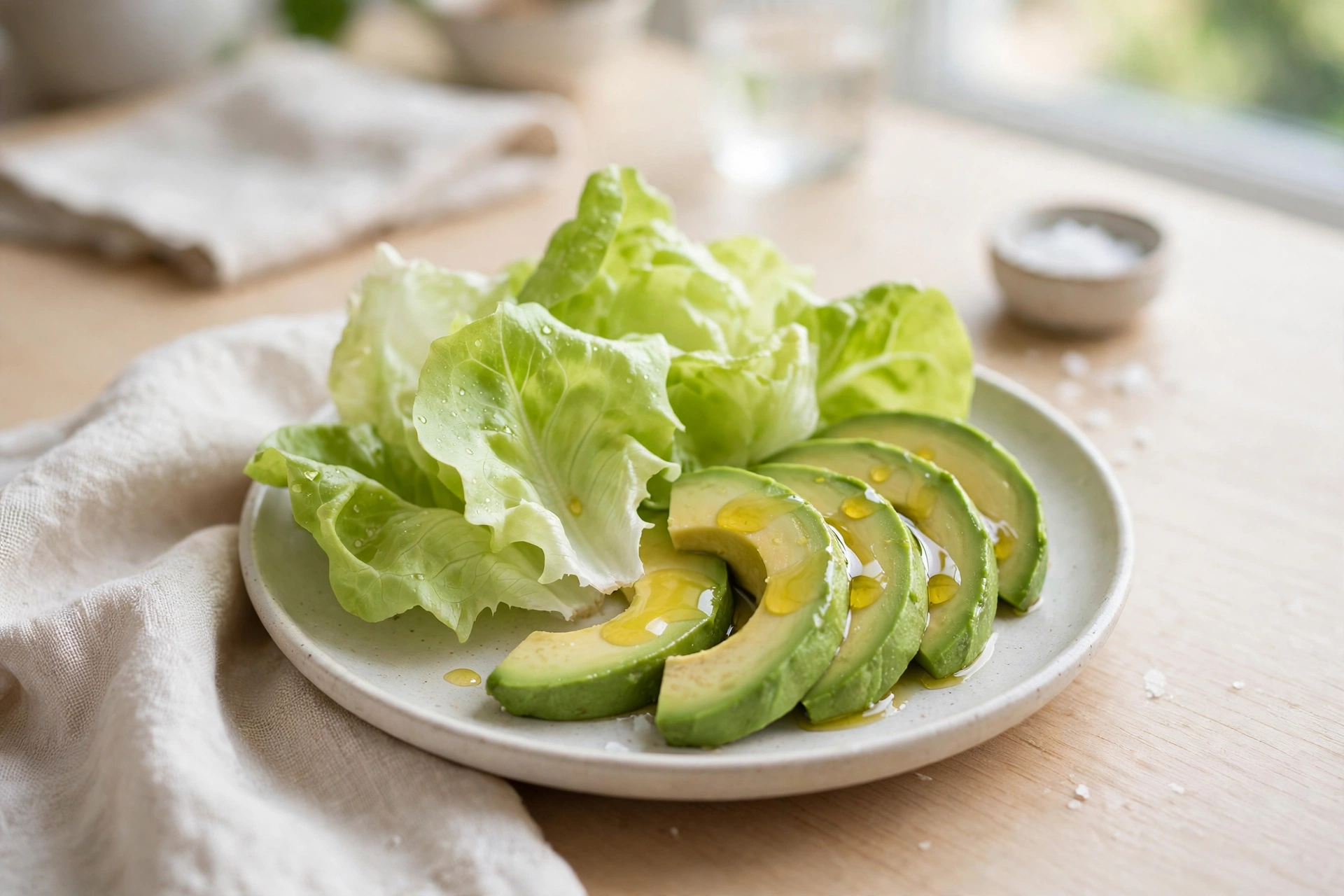
- Start with the softest leaves. Baby spinach, butter lettuce, and soft romaine hearts are far gentler than crunchy iceberg or kale.
- Cut everything small. Small pieces mean less chewing and less jaw strain. Tear lettuce into bite-size pieces rather than eating whole leaves.
- Add avocado. Ripe avocado is soft, filling, and easy to eat — it makes a soft salad feel like a real meal.
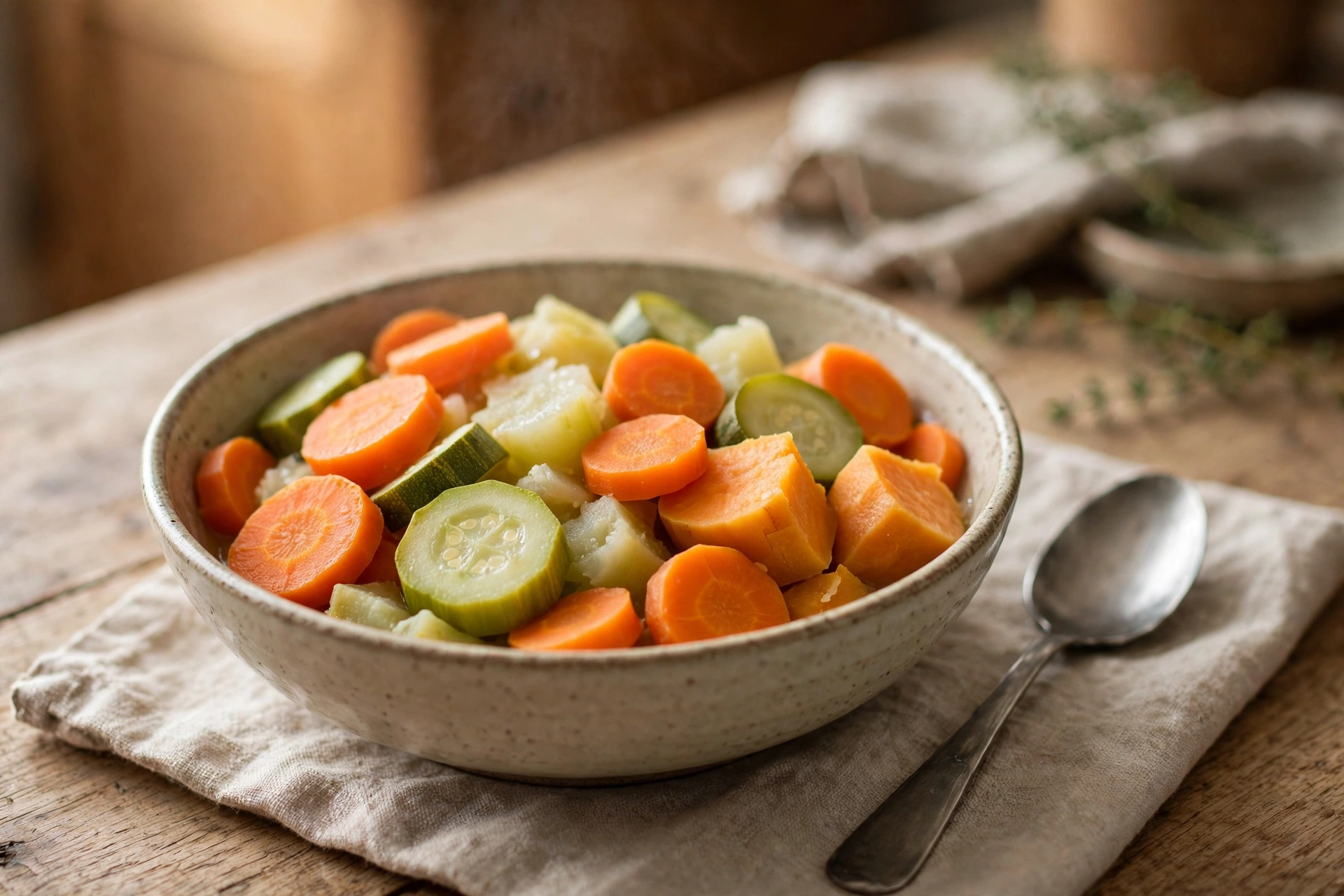
- Use cooked vegetables. Steamed carrots, soft-cooked sweet potato, and well-cooked green beans give you the salad feeling without the crunch.
- Choose a smooth, mild dressing. A little olive oil, or a smooth creamy dressing, is gentler than acidic vinaigrette. Skip lemon juice and vinegar-based dressings until week 2–3.
- Skip the crunch. No croutons, no nuts, no seeds, no raw onion, no crispy toppings — at least until weeks 3–4.
- Chew away from the extraction sites. Use the opposite side of your mouth, and chew slowly.
- Rinse gently afterwards. Rinse with warm salt water after eating to flush out any small pieces near the sockets.
What About Specific Salads?
- Caesar salad — wait until weeks 3–4. The croutons and parmesan shavings are the problem, and the dressing is acidic.
- Greek salad — the cucumber, tomato, and feta are soft enough from around day 10, but skip the raw red onion and any crusty bread.
- Coleslaw — the shredded cabbage is still crunchy and raw. Wait until weeks 3–4, and even then start with a small amount.
- Potato salad — soft, and usually fine from around day 5–7 if the potatoes are very well cooked and there are no crunchy bits like celery or onion.
- Egg salad — soft and easy, fine from around day 5 if the eggs are well mashed and there is no crunchy celery. Spread it on very soft bread with the crust removed.
- Fruit salad — soft fruits like banana, ripe melon, and peeled peach are fine from day 3–4. Avoid citrus segments and anything with seeds in the first week.
Salad Alternatives While You Wait
If the craving is really about something fresh and light, these are safer stand-ins during the first week:
- Smooth vegetable soup — blended carrot, squash, or potato soup gives you the vegetable flavours with zero chewing. Keep it lukewarm.
- Mashed avocado — soft, creamy, and full of healthy fats. Eat it with a spoon.
- Well-cooked vegetables — steamed carrots, courgette, and spinach, cooked until very tender.
- Hummus — smooth hummus eaten with a spoon is a good day-2 option. Skip the pita chips.
For the full day-by-day picture of what you can eat and when, see our wisdom teeth recovery food timeline.
Frequently Asked Questions
Q: Can you eat salad after wisdom teeth removal?
Not in the first week. Raw salad needs too much chewing and crunchy pieces can lodge in the healing sockets. Most people can try very soft salads from around day 7–10, and return to normal salads from weeks 3–4.
Q: When can I eat salad after wisdom teeth removal?
Very soft salads — soft lettuce, avocado, well-cooked vegetables — are usually possible from around day 7–10. Normal salads with raw crunchy vegetables, croutons, and nuts should wait until weeks 3–4, when the sockets have closed and chewing feels normal.
Q: Can you eat lettuce after wisdom teeth removal?
Soft lettuce like baby spinach or butter lettuce is usually fine from around day 7, cut into small pieces. Crunchy iceberg lettuce and tough kale need more chewing and are best left until weeks 3–4.
Q: Can salad cause dry socket?
Salad itself doesn’t directly cause dry socket, but eating it too early raises the risk. Vigorous chewing and crunchy pieces lodging in the socket can disturb the blood clot — and a disturbed clot is what leads to dry socket. Wait until the socket surface has started to close before trying salad.
Q: Can I eat salad dressing after wisdom teeth removal?
Smooth, mild dressings like a little olive oil or creamy dressing are usually fine from day 7. Avoid acidic dressings — vinaigrette, lemon juice, and vinegar-based dressings — until week 2–3, because acid can sting healing tissue.
Q: Is coleslaw OK after wisdom teeth removal?
Not in the first two weeks. Shredded cabbage is still raw and crunchy, and the dressing is often acidic. Wait until weeks 3–4, and start with a small amount.
Q: What vegetables can I eat after wisdom teeth removal?
In the first week, stick to well-cooked vegetables: steamed carrots, mashed sweet potato, soft-cooked courgette, and spinach cooked until very tender. Raw vegetables — including salad — should wait until the sockets have started to close, usually around day 7–10 for the softest ones.
Bottom Line
Salad is a week-two food at the earliest, not a week-one food. Wait until around day 7–10, then start with the softest version: baby spinach, avocado, well-cooked vegetables, and a smooth mild dressing. Skip the crunch, chew away from the sockets, and rinse gently afterwards. By weeks 3–4, most people are back to eating salad normally.