
Updated November 18, 2026
Quick answer
Ice after wisdom teeth removal is confusing because the answer is both yes and no. Cold is your friend after surgery — it soothes swelling and numbs soreness. But chewing a hard ice cube is one of the worst things you can do to a fresh socket. The difference is not about temperature. It is …
Ice after wisdom teeth removal is confusing because the answer is both yes and no. Cold is your friend after surgery — it soothes swelling and numbs soreness. But chewing a hard ice cube is one of the worst things you can do to a fresh socket. The difference is not about temperature. It is about what the ice does in your mouth: whether it melts gently or gets crunched between your teeth next to an open wound.
Most people ask this for one of two reasons: they are craving something cold and crunchy, or they have heard ice helps with swelling and wonder if eating it counts. This guide sorts out the safe ways to use ice from the risky ones.
Ice After Surgery: What Is Safe and What Is Not
| Way to use ice | Safe after surgery? | Why |
|---|---|---|
| Letting small ice chips melt in your mouth | Yes, from day one | Melts gently, cools the mouth, no chewing or pressure |
| Chewing hard ice cubes | No, not for at least two weeks | Hard crunching can disturb the clot and chip teeth |
| Ice pack or cold compress on the cheek | Yes, from day one | Reduces swelling from outside, nothing touches the socket |
| Crushed ice or shaved ice | Usually yes, after day one | Soft and melts fast, but let it melt — do not chew it |
| Ice lollies and popsicles | Yes, once numbness fades | Cold and soothing, but avoid biting hard pieces |
| Ice-cold drinks | Yes, in small sips | Cooling and hydrating, but very cold drinks can sting at first |
Keep this table in mind and most of the confusion disappears. Ice is fine when it melts. Ice is a problem when you crunch it. That one rule covers nearly every situation you will run into during recovery.
Why Chewing Ice Cubes Is a Bad Idea
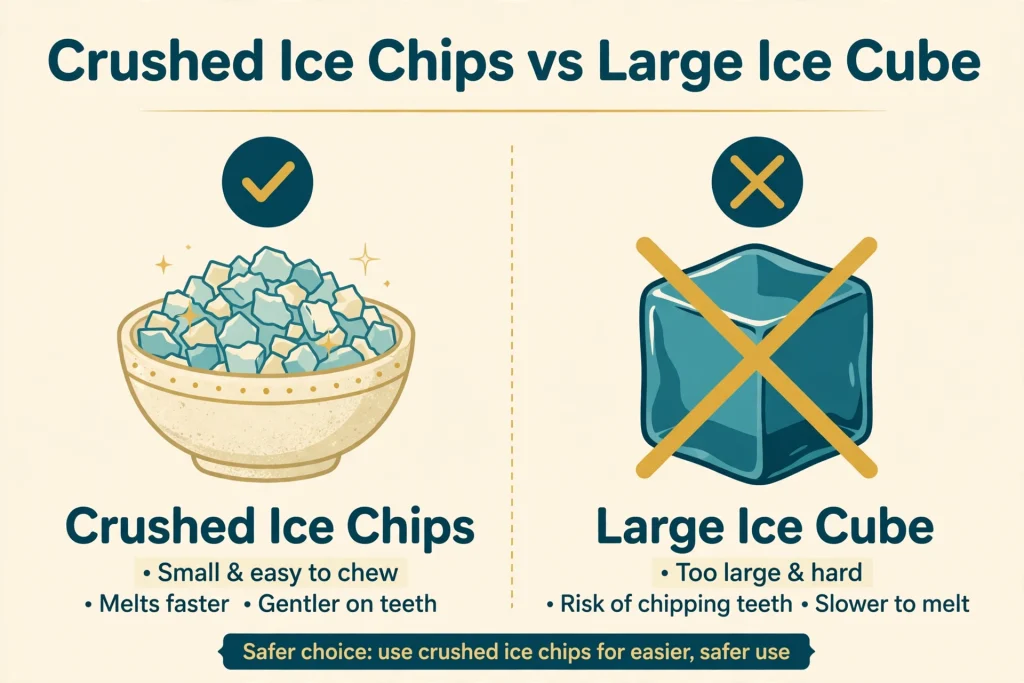
Chewing ice is hard on your mouth at the best of times, and after wisdom teeth removal it is worse for three reasons. First, the crunching itself. A hard cube caught between your teeth sends a jolt through your jaw, right where the socket is trying to heal. That pressure can disturb the blood clot forming in the socket, and a disturbed clot is the start of dry socket — the painful, slow-healing complication every dentist warns about.
Second, ice is harder than you think. Dentists see cracked and chipped teeth from ice chewing in people with perfectly healthy mouths. After surgery, the teeth next to the extraction site are tender and sensitive, and they are in no state to take that kind of force.
Third, a sharp edge or chunk of cube can press directly against the socket or get lodged near it. Food and debris in the socket are already a concern in the first week. A piece of ice wedged against raw tissue is the last thing the wound needs. The cold itself is not the problem. The crunching is.
Ice Chips Done Right
If you want the cold feeling in your mouth, ice chips are the way to get it. Take a few small chips and let them melt slowly on your tongue. Do not bite them. Do not chew them. Just let the cold water trickle down. It is soothing, it keeps you hydrated, and it gives you that cold sensation without any risk to the socket.
A few tips make it even better. Use small chips, not large cubes, so they melt fast. Keep them plain — no flavoured ice with citrus or sugary syrups in the first few days, since acid and sugar irritate a fresh wound. And stop if anything hurts. If pain when drinking or eating cold things keeps happening, check the warning signs in our guide to signs of dry socket and infection and call your dentist if anything matches.
The Ice Pack: The Best Use of Cold
Honestly, the most useful ice after wisdom teeth removal never goes in your mouth at all. A cold compress or ice pack pressed gently against the outside of your cheek is one of the best tools for the first two days. It reduces swelling and dulls the ache, without touching the socket.
The routine dentists usually suggest is simple: twenty minutes on, twenty minutes off, during waking hours for the first day or two. Wrap the pack in a thin cloth — never put ice directly on your skin. After 48 hours, swelling usually starts to go down on its own, and many people switch to a warm compress, which helps with stiffness.
What About Popsicles, Slushies, and Crushed Ice?
A popsicle or ice lolly is generally fine once the numbness has worn off — it is cold, soothing, and it melts rather than needing to be chewed. Just let it melt in your mouth instead of biting chunks off it, and skip very acidic flavours like lemon or lime for the first few days.
Crushed ice and shaved ice follow the same rule as ice chips: fine if you let it melt, a problem if you crunch it. A slushy drink is usually fine too, but drink it from a glass with small sips, never through a straw. And if you are in the mood for something cold and creamy rather than icy, our guide to ice cream after wisdom teeth removal covers which kinds are safe and when to enjoy them.
When Can You Chew Ice Again?
For most people, the honest answer is: you do not need to, and your teeth will thank you if you never go back to it. But if you love crunching ice, wait until the socket has fully closed and the soreness is completely gone — usually at least two to three weeks, and longer if your extraction was complicated. Even then, chew it gently and stop if you feel any twinge in the neighbouring teeth.
The first week is for healing, not testing. The clot needs time to become stable tissue, the gum needs time to close over the socket, and your jaw needs time to stop aching. Ice chewing works against all three. Once healing is done, the question mostly answers itself — by then, most people have lost the craving anyway.
The bottom line: ice is not the enemy — crunching it is. Let chips melt, use a cold pack on your cheek, and leave hard cubes alone until you are fully healed.
Frequently Asked Questions
Q: Can I eat ice the day I get my wisdom teeth out?
A: You can let small ice chips melt in your mouth once the numbness fades, and use an ice pack on your cheek. Do not chew ice cubes — the crunching can disturb the healing socket.
Q: Is chewing ice bad for the blood clot?
A: Yes. The pressure from crunching a hard cube can dislodge the blood clot, which can lead to dry socket. Let ice melt instead.
Q: Are ice chips safe after wisdom teeth removal?
A: Yes, as long as you let them melt slowly and do not chew them. Small chips melt fast and cool the mouth.
Q: Can I use an ice pack on my face after surgery?
A: Yes — it is one of the best things you can do for the first two days. Use it for twenty minutes at a time, wrapped in a cloth.
Q: When can I chew ice cubes again?
A: Wait at least two to three weeks, until the socket has closed and all soreness is gone. Even then, chew gently.
Q: Do popsicles count as eating ice?
A: A popsicle is fine once numbness fades, as long as you let it melt rather than biting chunks off. Avoid acidic flavours like lemon at first.