Updated November 13, 2026
Quick answer
Your wisdom teeth removal is booked, and the clinic has sent you a list of instructions. It probably mentions fasting, medications, and bringing someone with you — but it may not explain why each rule exists, or what happens if you get one wrong. This guide walks through the standard instructions before wisdom teeth removal, …
Your wisdom teeth removal is booked, and the clinic has sent you a list of instructions. It probably mentions fasting, medications, and bringing someone with you — but it may not explain why each rule exists, or what happens if you get one wrong.
This guide walks through the standard instructions before wisdom teeth removal, step by step: what to do a week before, the day before, and the morning of surgery. One important rule first: your own dentist’s instructions always come first. Clinics differ, and your medical history may change the rules for you. Use this guide to understand the instructions — not to replace them.
The Short Answer
The most common instructions before wisdom teeth removal are: do not eat or drink for 6–8 hours before sedation, tell your dentist about every medication and allergy, arrange for someone to take you home, and bring ID, your insurance details, and a list of your medications. Wear loose, comfortable clothes with short sleeves, skip jewellery and nail polish if you are having sedation, and do not smoke or drink alcohol the day before. If you are ill on the day — a cold, fever, or cough — call the clinic before you travel; they may need to reschedule.
One Week Before Surgery
Confirm the plan with your dentist. Make sure you know which teeth are coming out, what type of anaesthesia or sedation is planned, and what time to arrive. If anything is unclear, call the clinic now — not the morning of surgery.
Tell your dentist about your medical history. This is the most important step of all. Mention every medication you take (including over-the-counter medicines, supplements, and herbal remedies), every allergy (especially to medicines, latex, and anaesthetics), and any medical conditions — diabetes, heart conditions, asthma, bleeding disorders, pregnancy, or anything else. Your dentist needs this information to keep you safe.
Ask about your medications. Some medicines need adjusting before surgery — blood thinners, diabetes medication, and certain supplements are common examples. Never stop or change a medication on your own: ask your dentist or doctor exactly what to do with each one.
Arrange your escort and time off. If you are having IV sedation or general anaesthesia, you will need someone to take you home and stay with you for the first few hours. Book the time off work or school now — most people need 2–3 days. For help choosing a provider and planning the day, see our guide on how to find and choose a wisdom teeth removal provider.
Fill prescriptions early. If your dentist prescribed pain relief or antibiotics to take after surgery, collect them before the day so you are not sending someone out while you are groggy.
Stock up on soft foods and supplies. This is the shopping part of preparation — ice packs, gauze, soft foods, and a water bottle without a straw. Our wisdom teeth removal essentials checklist covers exactly what to buy and why.
The Day Before Surgery
Confirm your fasting start time. If you are having sedation, the clinic will tell you when to stop eating and drinking — usually 6–8 hours before the procedure. Work out the exact time and set a reminder. For the full rules, see our guide to whether you can eat before wisdom teeth removal and the fasting rules in eating candy before wisdom teeth surgery.
Eat a good dinner before fasting starts. Have a proper meal before the cut-off — you will not be eating again until after surgery, and a full stomach before fasting helps you feel better on the day.
Prepare your recovery space. Set up a spot at home with pillows, water, medication, tissues, and your phone charger, so you can rest the moment you get back. Lay out comfortable clothes for the morning.
Do not drink alcohol. Alcohol can interfere with sedation and anaesthesia, increase bleeding, and worsen nausea afterwards. Skip it the day before surgery.
Do not smoke. Smoking before surgery increases the risk of complications and slows healing. If you smoke, avoid it for at least 24 hours before — and ideally longer after.
Get a good night’s sleep. It is normal to feel nervous. If anxiety is keeping you awake, our guide to wisdom teeth removal anxiety has practical techniques that help.

Fasting Rules: What You Can and Cannot Have
Fasting is the instruction people get wrong most often, and it matters: food or liquid in your stomach during sedation can cause nausea or, rarely, aspiration (stomach contents entering the lungs). That is why clinics are strict about it.
| Situation | Fasting rule |
|---|---|
| IV sedation or general anaesthesia | Usually nothing to eat or drink for 6–8 hours before surgery |
| Small sips of water | Sometimes allowed up to 2 hours before — only if your clinic says so |
| Local anaesthetic only (no sedation) | Fasting usually not required — eat normally unless told otherwise |
| Chewing gum or sweets | Counts as food — stop at the same time as eating |
| Medications | Take only the ones your dentist approved, with a small sip of water if told to |
If you accidentally eat or drink during the fasting window, tell the clinic honestly when you arrive. They may delay or reschedule the procedure — which is frustrating, but far safer than going ahead.
Medications: What to Take and What to Ask About
- Take regular medications as directed unless your dentist or doctor told you otherwise. Do not skip doses on your own.
- Blood thinners (such as warfarin, apixaban, or clopidogrel) often need special instructions — your dentist will coordinate with your doctor. Never stop them without medical advice.
- Diabetes medication may need adjusting around fasting — ask your doctor for a plan.
- Supplements and herbal remedies (such as fish oil, ginkgo, or garlic supplements) can affect bleeding — tell your dentist about all of them.
- Painkillers before surgery: do not take ibuprofen, aspirin, or other medicines right before surgery unless your dentist told you to. If you are in pain before the appointment, call the clinic and ask what is safe to take.
- Bring a written list of every medication, supplement, and allergy to hand to the team on the day.
What to Wear and Bring
Wear:
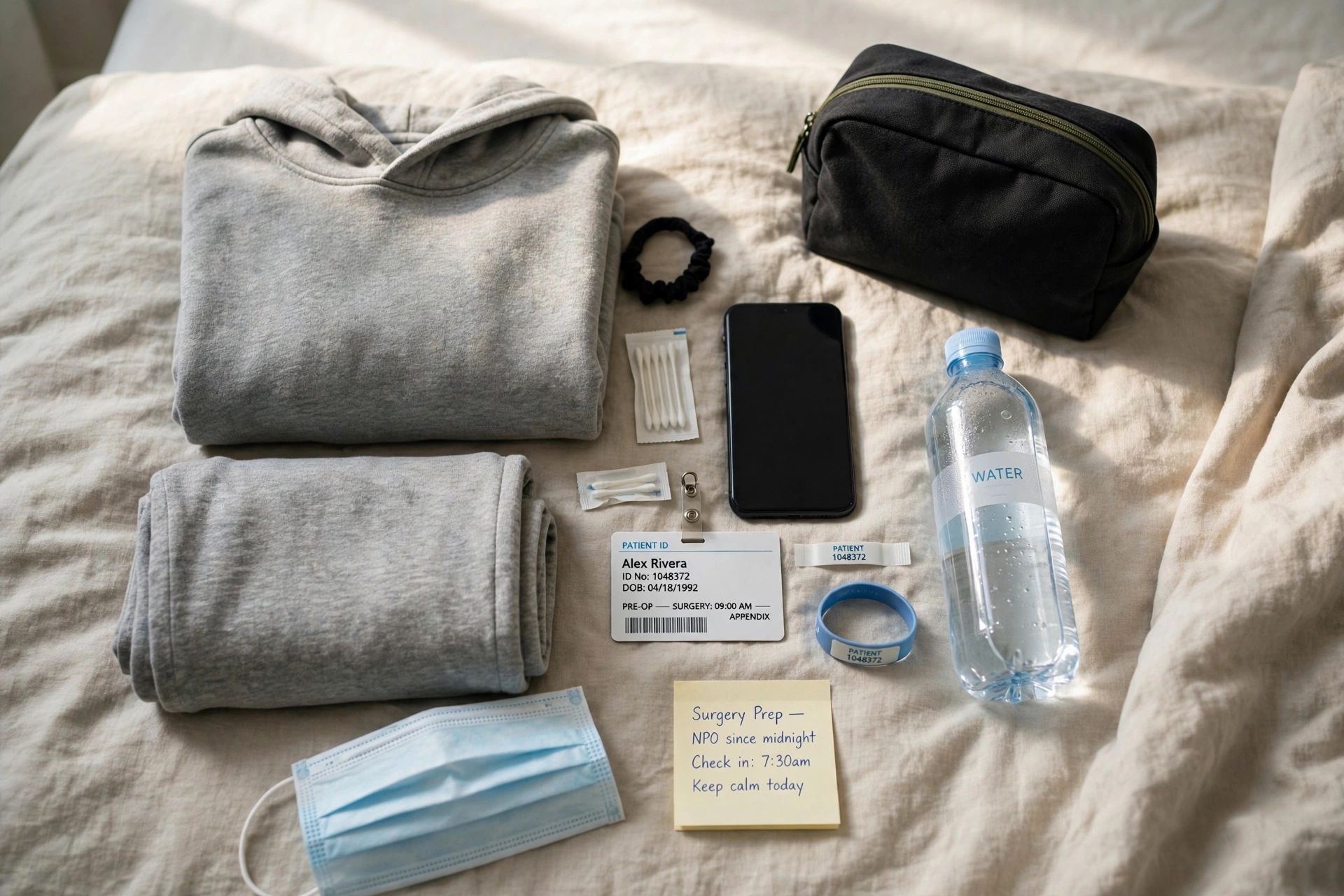
- Loose, comfortable clothes — you will be lying back in a chair for a while.
- A short-sleeved top if you are having IV sedation, so the team can reach your arm easily.
- Flat, comfortable shoes.
Do not wear (if having sedation):
- Nail polish or false nails — the team monitors your oxygen levels through your fingertip, and polish can interfere with the sensor.
- Jewellery, including rings and earrings — leave valuables at home.
- Heavy makeup or lipstick.
- Contact lenses, if the clinic asks you to remove them — bring your glasses instead.
Bring:
- Photo ID and your insurance card or payment details.
- Your written medication and allergy list.
- Your phone and charger, plus headphones for the waiting room.
- A small bag for anything the clinic gives you to take home.
The Morning of Surgery
- Brush your teeth gently in the morning — good oral hygiene before surgery is recommended. Do not swallow toothpaste or rinse vigorously.
- Do not eat or drink during the fasting window, unless your clinic specifically allowed small sips of water.
- Take only approved medications, with a small sip of water if your dentist said to.
- Shower and dress in the clothes you laid out. Skip perfume, cologne, and heavy creams.
- Arrive a little early rather than rushing — you will need time to check in, confirm your medical history, and sign consent forms.
- Bring your escort. They should stay at the clinic or nearby so they can take you home as soon as you are ready.
- Leave valuables at home. You will not need them, and the clinic cannot look after them.
For a full picture of what happens once you are in the chair, see our guides to what happens during wisdom teeth removal and how long wisdom teeth removal takes.
What If You Are Sick on Surgery Day?
If you wake up with a cold, cough, sore throat, fever, or any infection, call the clinic before you travel. Sedation and anaesthesia are riskier when you are unwell, and the team may need to reschedule. This is disappointing, but it is the safe decision — and it is common. Do not hide symptoms or take medicine to mask them; the team needs to know the truth to keep you safe.
What NOT to Do Before Wisdom Teeth Removal
- Do not eat or drink during the fasting window — even a small snack can cause a delay or cancellation.
- Do not smoke in the 24 hours before surgery.
- Do not drink alcohol the day before.
- Do not take unapproved medicines or supplements — including painkillers, herbal remedies, and vitamins — without asking first.
- Do not drive yourself to or from the appointment if you are having sedation.
- Do not wear nail polish, jewellery, or contact lenses if the clinic asked you not to.
- Do not skip telling the dentist about allergies, medications, or medical conditions — even ones that seem unrelated.
Your Pre-Surgery Checklist
| When | Do this |
|---|---|
| 1 week before | Confirm appointment, sedation type, and arrival time; tell the dentist about medications, allergies, and medical conditions; ask about each medication; arrange escort and time off; fill prescriptions; stock up on soft foods |
| Day before | Confirm fasting start time; eat a good dinner before the cut-off; prepare your recovery space; lay out clothes; no alcohol; no smoking; get a good night’s sleep |
| Morning of | Brush teeth gently; take only approved medications; shower and dress; arrive early with your escort; bring ID, insurance, and your medication list |
Frequently Asked Questions
Q: Can I eat before wisdom teeth removal?
It depends on the anaesthesia. With IV sedation or general anaesthesia, you usually must not eat or drink for 6–8 hours before surgery. With local anaesthetic only, fasting is usually not required. Always follow your own clinic’s instructions.
Q: Can I brush my teeth before wisdom teeth removal?
Yes — brush gently on the morning of surgery. It is good hygiene before the procedure. Do not swallow toothpaste and do not rinse vigorously.
Q: What medications should I stop before wisdom teeth removal?
That depends on what you take. Blood thinners, diabetes medication, and some supplements often need adjusting, but you must never stop or change a medication without your dentist’s or doctor’s advice. Tell the clinic about everything you take and ask about each one.
Q: Can I drive myself to wisdom teeth removal?
If you are having IV sedation or general anaesthesia, no — you must arrange for someone to drive you home and stay with you for the first few hours. With local anaesthetic only, driving yourself is usually fine, but check with your clinic first.
Q: What should I wear to wisdom teeth removal?
Loose, comfortable clothes and a short-sleeved top (for IV access if you are having sedation). Avoid nail polish, jewellery, heavy makeup, and contact lenses if the clinic asks you to. Bring glasses instead of contacts if needed.
Q: What happens if I eat before surgery?
Tell the clinic honestly when you arrive. They may delay or reschedule the procedure, because food in your stomach during sedation can cause nausea or, rarely, aspiration. It is frustrating, but it is far safer than going ahead.
Q: What if I have a cold on the day of surgery?
Call the clinic before you travel. A cold, cough, fever, or infection can make sedation riskier, and the team may need to reschedule. Do not hide symptoms or mask them with medicine.
This article is for general education and does not replace the specific instructions your dentist or oral surgeon gives you. If your clinic’s instructions differ from anything here, follow your clinic’s instructions.