
Updated November 12, 2026
Quick answer
Learn about long-term side effects of wisdom tooth extraction, including nerve damage, persistent numbness, taste changes, jaw problems, and rare sinus complications.
Wisdom tooth extraction is generally safe, and most people recover without lasting problems. However, some patients can experience long-term side effects, including persistent numbness, tingling, altered taste, nerve-related pain, jaw discomfort, or, rarely, sinus complications. These effects are uncommon, but risk can be higher when an impacted tooth is close to a nerve or sinus.
This guide explains which effects may persist, how they differ from normal healing, and when to contact a dentist or oral surgeon.
What Are the Long-Term Side Effects of Wisdom Tooth Extraction?
Possible long-term complications include:
- Nerve injury causing altered sensation in the lower lip, chin, gums, or tongue.
- Persistent numbness, tingling, or burning sensations.
- Changes in taste following injury to the lingual nerve or its taste fibers.
- Ongoing jaw or temporomandibular joint (TMJ) discomfort.
- Rare sinus complications after removal of an upper wisdom tooth.
- Damage to a neighboring tooth or its restoration.
- Rare weakening or fracture of the jaw in particular high-risk situations.
These complications are not typical outcomes. Most post-extraction pain, swelling, and stiffness improve as healing progresses.
1. Nerve Damage
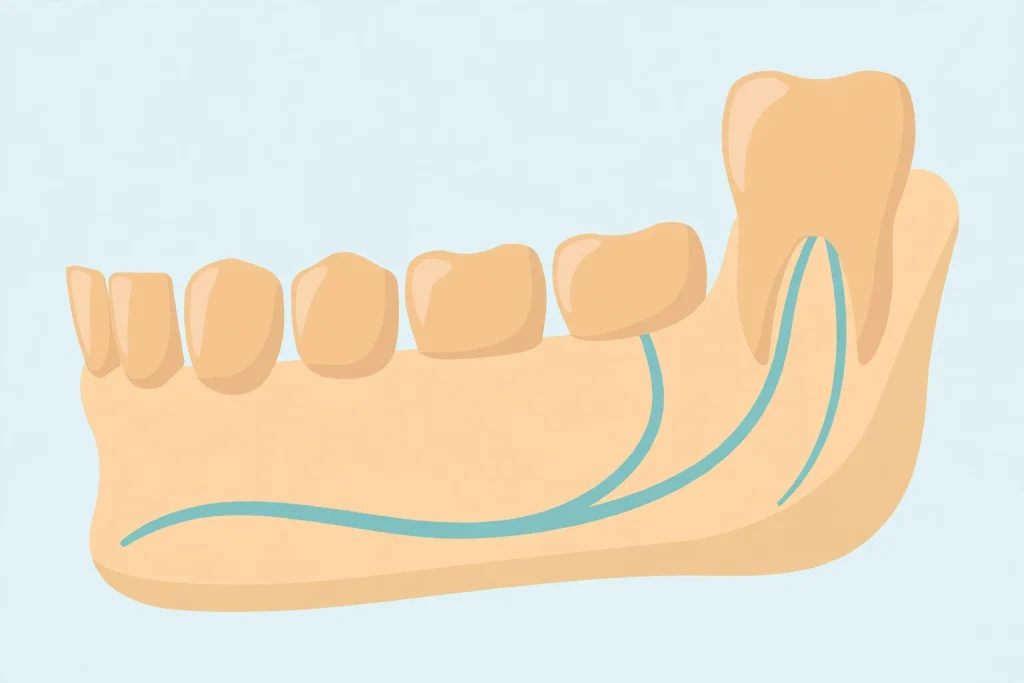
Nerve injury is an important potential complication, particularly during removal of lower wisdom teeth. Two nerves are especially relevant:
- Inferior alveolar nerve: carries sensation from the lower teeth, lower lip, and chin.
- Lingual nerve: carries general sensation from much of the front part of the tongue and taste fibers from part of the tongue.
Because these nerves can lie close to lower wisdom tooth roots, they may occasionally be bruised, stretched, compressed, or damaged during surgery. Symptoms can include numbness, tingling, burning, altered sensation, or changes in taste. Some nerve injuries improve over weeks or months; severe injuries can leave lasting changes.
2. Persistent Numbness in the Lip, Chin, or Tongue
Numbness immediately after surgery can be related to local anesthetic, swelling, or temporary nerve irritation. Numbness that continues after the anesthetic should have worn off, does not gradually improve, or worsens should be reported to the oral surgeon promptly.
| Affected area | Possible nerve involved |
|---|---|
| Lower lip or chin | Inferior alveolar nerve |
| Lower teeth or nearby gums | Inferior alveolar nerve |
| Part of the tongue | Lingual nerve |
| Taste changes | Lingual nerve taste fibers |
Altered sensation can affect eating, drinking, speaking, or awareness of accidental lip and tongue biting. A dental professional can document the affected area and decide whether specialist assessment is needed.
3. Changes in Taste
Injury to the lingual nerve can affect sensation and taste on part of the tongue. A person may notice reduced taste, a different perception of flavors, or taste changes on one side. Many nerve-related changes improve, but recovery depends on the type and severity of injury. Report persistent taste changes, especially when accompanied by tongue numbness.
4. Persistent Jaw Pain or TMJ Problems
Jaw soreness, muscle tenderness, and limited opening are common during early recovery and generally improve as inflammation settles. Some people may continue to have jaw discomfort or symptoms involving the temporomandibular joint, which connects the lower jaw to the skull.
Symptoms can include pain near the joint, discomfort when chewing, clicking or popping, muscle tenderness, or difficulty opening the mouth. Extraction does not automatically cause a chronic TMJ disorder. Pre-existing joint problems, muscle irritation, and other dental conditions can also contribute. Persistent symptoms should be assessed rather than assumed to be caused by surgery.
5. Chronic Pain or Unusual Nerve Sensations
Ordinary surgical soreness should gradually improve. Burning, shooting, electric-like pain, tingling, or sensitivity to light touch that persists may indicate nerve irritation or another problem. Other possible causes include infection, a retained root fragment, a neighboring tooth problem, or an unrelated jaw condition. A clinical examination is needed to identify the cause.
6. Sinus Problems After Upper Wisdom Tooth Extraction
Upper wisdom tooth roots can be close to the maxillary sinuses. Occasionally, removal creates an opening between the mouth and sinus, called an oroantral communication. Some small openings heal, while others need treatment. An opening that does not close may develop into an oroantral fistula.
Possible signs include fluid passing from the mouth into the nose, air passing through the extraction area, persistent drainage, or recurrent sinus symptoms. Contact your dentist or oral surgeon if these occur. Do not try to test for an opening by forcefully blowing your nose.
7. Rare Jawbone Weakening or Fracture
Some impacted wisdom teeth require removal of a small amount of surrounding bone. The bone normally heals and remodels, but a jaw fracture is a rare complication, particularly in complex cases or when other factors weaken the jaw. Severe jaw pain, a sudden change in how the teeth fit together, or difficulty moving the jaw requires prompt professional assessment.
8. Problems Involving Nearby Teeth or Supporting Tissues
The second molar sits directly in front of the wisdom tooth. During a difficult extraction, a neighboring tooth or existing filling or crown can occasionally be damaged. Gum or bone defects near the second molar, food trapping, or new tooth sensitivity may also need evaluation. Report pain when biting, persistent sensitivity, or repeated food trapping after recovery.
Long-Term Side Effects vs. Normal Recovery Symptoms
| Symptom | Typical recovery pattern | When to seek evaluation |
|---|---|---|
| Swelling | Usually improves over the first week or two | Increasing, spreading, or persistent swelling |
| Jaw stiffness | Gradually improves over days to weeks | Significant restriction that is not improving |
| Numbness | May occur temporarily after surgery | Persists, worsens, or does not begin to improve |
| Taste changes | May improve as irritated nerves recover | Ongoing or unexplained changes |
| Jaw discomfort | Usually settles as inflammation decreases | Persistent joint pain or restricted movement |
| Sinus symptoms | Usually absent | Fluid or air passing between mouth and nose |
| Extraction-site pain | Should gradually improve | Pain that worsens or returns after improving |
This is a general guide, not a diagnostic tool. Follow your surgeon’s individual post-operative instructions.
How Long Can Wisdom Tooth Extraction Side Effects Last?
| Time after extraction | What may happen |
|---|---|
| First 1–3 days | Pain, swelling, bruising, and jaw stiffness are common. |
| First 1–2 weeks | Many routine post-operative symptoms gradually improve. |
| Several weeks | Deeper tissue healing continues. |
| Weeks to months | Some temporary nerve-related symptoms may continue to improve. |
| Beyond several months | Persistent numbness, altered taste, or unusual pain needs assessment. |
| More than one year | Ongoing nerve symptoms may represent a lasting complication. |
These are broad patterns, not guaranteed deadlines. Nerve recovery can take longer than ordinary gum healing.

Who May Have a Higher Risk of Long-Term Complications?
- Impacted wisdom teeth: teeth trapped beneath gum or bone may require more complex surgery.
- Close contact with nerves: lower teeth near the inferior alveolar or lingual nerve may carry a higher nerve-injury risk.
- Complex removal: procedures involving bone removal, tooth sectioning, or difficult access have different risks from straightforward extractions.
- Upper teeth near the sinus: root position can affect the risk of sinus communication.
- Existing dental or medical conditions: jaw, bone, and other health factors can influence surgical planning and healing.
Your dentist or oral surgeon may use dental X-rays and, in selected higher-risk cases, three-dimensional imaging such as cone-beam computed tomography (CBCT) to assess the tooth’s relationship to nearby structures.
How Can You Reduce the Risk of Long-Term Side Effects?
- Discuss your individual risk. Ask whether the tooth is close to a nerve or sinus and what that means for your procedure.
- Choose an appropriately qualified professional. Ask whether your case would benefit from assessment by an oral and maxillofacial surgeon.
- Ask about alternatives when appropriate. For selected lower wisdom teeth close to the inferior alveolar nerve, a procedure called coronectomy may be considered.
- Share your medical history. Tell your dental professional about medications, previous jaw problems, and relevant health conditions.
- Follow post-operative instructions. Protect the extraction site and follow the recommended oral hygiene routine.
- Attend follow-up appointments. Report persistent numbness, taste changes, pain, or other unusual symptoms.
- Avoid smoking during recovery. Smoking can interfere with healing and increase the risk of post-operative complications.
A coronectomy removes the crown of a lower wisdom tooth while intentionally leaving the roots in place when clinically appropriate. It may reduce the risk of injury to the inferior alveolar nerve in selected cases, but it is not suitable for every patient.
When Should You Contact Your Dentist?
Contact your dentist or oral surgeon if you experience:
- Numbness that persists or does not gradually improve.
- New or worsening tingling in your tongue, lip, or chin.
- Persistent changes in taste.
- Ongoing jaw pain or difficulty opening your mouth.
- Pain that continues or returns after the initial healing period.
- Fluid passing between your mouth and nose.
- Persistent swelling, discharge, or signs of infection.
Seek urgent medical attention if you develop difficulty breathing or swallowing, or rapidly spreading swelling involving your mouth, face, or neck. Do not wait for a routine follow-up if emergency symptoms occur.
Frequently Asked Questions
Can wisdom tooth extraction cause permanent side effects?
Yes, although permanent complications are uncommon. Possible lasting effects include nerve-related numbness, altered sensation, taste changes, and, rarely, persistent jaw or sinus problems.
Can wisdom tooth removal cause permanent numbness?
It can happen if a nerve is severely injured during surgery. Numbness in the lower lip, chin, or tongue is often temporary, but some nerve injuries do not recover completely. Report persistent numbness to your oral surgeon.
Can removing wisdom teeth cause long-term jaw pain?
Persistent jaw discomfort is possible, but wisdom tooth removal does not automatically cause a chronic jaw joint disorder. Ongoing pain should be evaluated to identify its cause.
Can wisdom tooth extraction affect your taste?
Yes. Injury to the lingual nerve can affect sensation and taste in part of the tongue. Many cases improve, but lasting changes are possible in rare circumstances.
Do all wisdom teeth need to be removed?
No. Wisdom teeth that are healthy, functional, and not causing problems may not require extraction. A dentist should assess their position, health, and potential risks before recommending removal.
Final Thoughts
Most people recover from wisdom tooth extraction without permanent problems. However, long-term side effects such as nerve injury, persistent numbness, altered taste, jaw discomfort, and sinus complications are possible.
Understand your individual surgical risks before extraction and seek professional advice if unusual symptoms continue after surgery. If your wisdom teeth are not causing problems, ask your dentist whether monitoring is a reasonable option. If removal is necessary, understanding the position of your teeth and nearby nerves can help you make an informed decision.
Medical disclaimer: This article is for general educational purposes only. It does not replace an examination, diagnosis, or personalized advice from a dentist or oral and maxillofacial surgeon.
Medical References
- NHS – Wisdom tooth removal
- NHS inform – Wisdom tooth removal
- American Association of Oral and Maxillofacial Surgeons – Potential complications of wisdom teeth extractions
- British Association of Oral and Maxillofacial Surgeons – Removal of impacted wisdom teeth
- Cochrane Review – Surgical removal versus retention for asymptomatic disease-free impacted wisdom teeth