
Updated November 13, 2026
Quick answer
No, surgeons do not normally break your jaw to remove wisdom teeth. Learn why bone may be removed, how impacted teeth are extracted, and the rare risks.
No. Oral surgeons do not normally break your jaw to remove wisdom teeth. Even when a wisdom tooth is impacted, the surgeon usually makes a small opening in the gum, removes a limited amount of bone covering the tooth if needed, and may divide the tooth into smaller pieces so it can be taken out safely. Removing a little bone around a tooth is not the same as breaking the jawbone.
The wording can sound frightening, especially if you have been told that your wisdom tooth is deep in the jaw. Here is what actually happens, why bone sometimes needs to be removed, and what jaw soreness after surgery usually means.
Do they break your jaw to remove wisdom teeth?
No. Breaking or deliberately fracturing the jaw is not a routine part of wisdom tooth extraction. The goal is to create enough access to remove the tooth while preserving the surrounding jawbone and nearby structures.
For a simple extraction, the tooth may be loosened and lifted out with dental instruments. For a surgical extraction, the oral surgeon may make an incision in the gum, remove a small amount of bone that blocks access, and section the tooth into two or more pieces. The gum is then repositioned and may be closed with dissolvable stitches. These are standard surgical techniques described by the American Association of Oral and Maxillofacial Surgeons and the NHS.
Why does the surgeon sometimes remove jawbone?
Wisdom teeth sit at the back of the mouth. If a tooth is impacted, part of it may remain under the gum or inside the jawbone. The surgeon may need to remove a small amount of the bone directly covering the tooth to expose it and make a safe path for removal.
This is sometimes called bone removal or bone removal for access. It is targeted work around the tooth, not an attempt to split the jaw. How much bone, if any, is removed depends on the tooth’s position, root shape, depth, and the thickness of the surrounding bone. Read more about wisdom teeth growing sideways and how tooth position affects treatment.
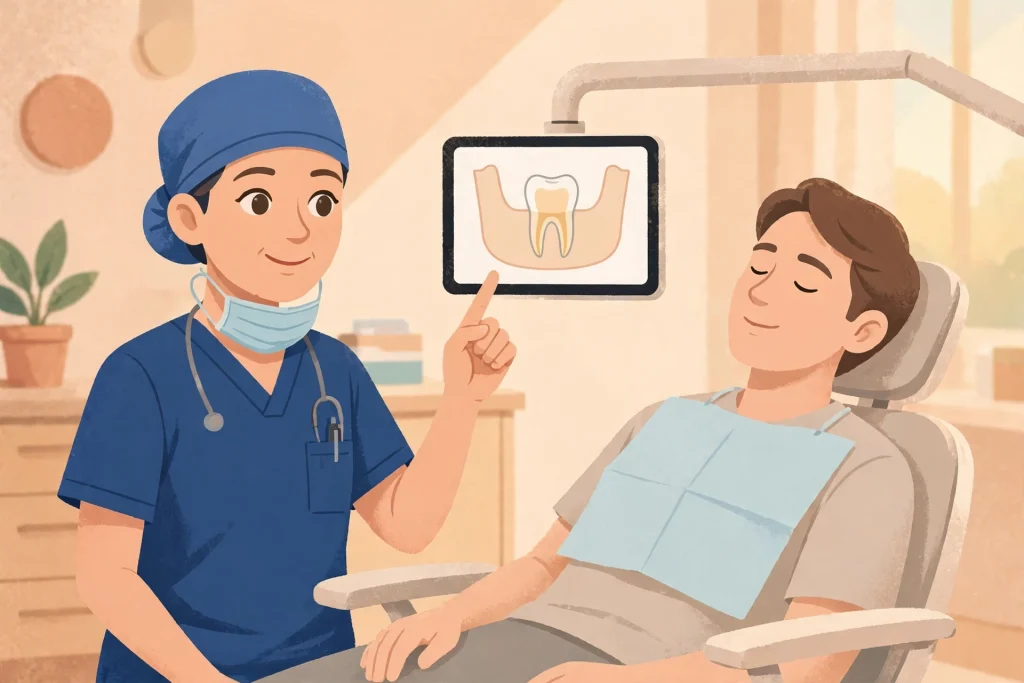
Bone removal versus breaking the jaw
| Bone removal during extraction | Jaw fracture |
|---|---|
| A controlled amount of bone is removed around the tooth to reach it. | The jawbone develops an unintended break or fracture. |
| May be part of planned surgical access for an impacted tooth. | Is a rare complication, not a routine extraction step. |
| The surgeon plans the amount and location based on imaging and the tooth’s position. | Requires assessment and treatment as an injury. |
How are impacted wisdom teeth actually removed?
The exact steps vary. Your surgeon will plan the approach after examining your mouth and reviewing dental X-rays, and sometimes other imaging when the position of the roots or nearby structures needs a closer look.
- Anesthesia or sedation: Local anesthetic numbs the area. Sedation or general anesthesia may be considered based on the complexity of the procedure, your health, and your anxiety or preferences.
- A small gum incision: If gum tissue covers the tooth, the surgeon opens it to reach the tooth and underlying area.
- Limited bone removal, if needed: A small amount of bone covering the tooth may be removed to expose it.
- Tooth sectioning, if needed: The surgeon may divide the tooth into smaller sections so it can be removed through the opening without excessive force.
- Cleaning and closure: The area is cleaned, and the gum may be closed with stitches. Gauze is often placed to help control bleeding.
You may feel pressure or movement during an extraction, but you should not feel sharp pain while the area is adequately numb. Tell the dental team immediately if you feel pain so they can pause and address it. For a step-by-step explanation, see the NHS guide to wisdom tooth removal.
Can your jaw actually break during wisdom tooth removal?
A jaw fracture is a recognized but very rare complication of wisdom tooth surgery, particularly involving a lower wisdom tooth. It is not what surgeons intend to happen. Risk can depend on factors such as the tooth’s depth and position, the amount of surrounding bone, existing jawbone weakness or disease, and the difficulty of the extraction.
Some hospital patient information leaflets specifically identify jaw fracture as a rare complication and explain that the surgeon should discuss individual risks before treatment. If your lower wisdom tooth is deeply impacted, close to important structures, or associated with a cyst or other pathology, ask your oral surgeon whether your anatomy changes the risk and whether additional imaging or a specialist setting is appropriate.
Why does your jaw feel sore or stiff after wisdom teeth removal?
Jaw soreness after extraction does not mean your jaw was broken. The muscles, gum, and tissues around the tooth can become irritated during a procedure. Keeping your mouth open for an extended period can also leave the jaw muscles feeling tired or stiff.
Common short-term effects include:
- Swelling around the cheek and jaw.
- Tenderness when chewing or opening your mouth.
- Temporary jaw stiffness or limited opening.
- Bruising or soreness near the extraction site.
Swelling and discomfort are often most noticeable during the first few days and should gradually improve. Recovery varies with the difficulty of the extraction. Follow your surgeon’s instructions about pain relief, cold packs, food, oral hygiene, and activity. You can also read our guide to possible long-term side effects of wisdom tooth extraction.

How can you lower the chance of complications?
- Tell your surgeon about medical conditions, medications, allergies, and any previous problems with anesthesia or dental surgery.
- Ask what your X-ray shows, whether the tooth is impacted, and whether bone removal or tooth sectioning is expected.
- Follow pre-operative instructions, including fasting instructions if sedation or general anesthesia is planned.
- After surgery, follow the written aftercare plan. Avoid smoking, strenuous activity, and disturbing the blood clot during the early healing period as directed.
- Attend follow-up appointments if your surgeon recommends them.
If you are deciding whether surgery is necessary, our article on when wisdom teeth may not need to be removed explains why healthy, symptom-free teeth are not automatically extracted.
When should you contact your dentist or oral surgeon?
Contact your dental team promptly if pain or swelling is severe, keeps getting worse instead of improving, or is accompanied by fever, pus, a bad taste, or feeling generally unwell. Seek urgent medical or dental care for trouble breathing or swallowing, rapidly spreading swelling, or bleeding that will not stop.
After surgery, new or worsening bite changes, marked jaw instability, or sudden severe pain after an injury also need prompt assessment. Do not assume that significant symptoms are simply part of normal healing.
Questions to ask your oral surgeon before the procedure
- Is my wisdom tooth fully erupted, partly impacted, or deeply impacted?
- Will you need to remove any bone to reach it?
- Do you expect to divide the tooth into sections?
- How close are the roots to the nerve or other nearby structures?
- What anesthesia options are appropriate for me?
- Are there any features of my case that increase the risk of jaw fracture or another complication?
- What symptoms after surgery should make me call you urgently?
Frequently asked questions
Do they break your jaw to remove impacted wisdom teeth?
No. An impacted tooth may require a gum incision, limited removal of the bone covering it, or sectioning the tooth into smaller pieces. These steps provide access without deliberately breaking the jaw.
Do they shave your jawbone when removing wisdom teeth?
Sometimes a small amount of bone is removed around an impacted tooth. This is targeted bone removal to expose the tooth, not routine reshaping or breaking of the jaw.
Can you feel them removing bone during wisdom tooth surgery?
With adequate local anesthesia, you should not feel sharp pain, although pressure, vibration, or movement may be noticeable. Tell your surgeon if you feel pain during the procedure.
How do I know if my jaw is broken after wisdom teeth removal?
Jaw soreness and stiffness are common after surgery and do not by themselves indicate a fracture. A fracture is uncommon and requires clinical assessment and imaging. Contact your surgeon promptly if you have severe or unusual pain, a new change in your bite, or symptoms that are getting worse.
Is bone removal during wisdom tooth extraction dangerous?
Bone removal is a planned technique used when needed to access an impacted tooth. Like any surgery, it has risks, which depend on your anatomy and the complexity of the extraction. Your surgeon should explain the risks and alternatives specific to your case.
Medical sources
- American Association of Oral and Maxillofacial Surgeons: Simple vs. surgical tooth removal
- NHS: Wisdom tooth removal
- Cambridge University Hospitals: Surgical removal of impacted wisdom teeth
- Mayo Clinic: Wisdom tooth extraction
Medical disclaimer: This article is for general education and does not replace an examination or advice from your dentist or oral and maxillofacial surgeon. Your individual risks and treatment plan depend on your health and the position of your tooth.