You just had your wisdom teeth out — and now you’re standing in the kitchen wondering what on earth you’re allowed to eat.
Soft foods only. No straws. Nothing too hot. But what does that actually mean in practice?
For the broader recovery plan, see our complete guide to what to eat after wisdom teeth removal.
Here’s the direct answer upfront: most people need a soft food diet for 3–7 days after wisdom teeth removal, though it can extend to 2 weeks depending on impaction severity and how quickly you heal. The goal isn’t to starve you — it’s to protect the blood clot forming in your socket while you recover.
This guide gives you a complete food list, a 3-day meal plan, and clear signs that tell you when you’re ready to move on to normal eating.
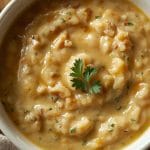 Read More: High-Protein Soup Recipes for Wisdom Teeth Recovery (Week 1)
How Many Days Do You Need a Soft Food Diet?
This is the most-asked question after extraction day — and the honest answer is: it depends.
3–5 days is the minimum for a straightforward, single tooth extraction with no complications. Pain is manageable, swelling peaks and begins to reduce, and most people feel significantly better by day 4–5.
7–10 days is more realistic for most wisdom tooth extractions — particularly lower wisdom teeth, which sit deeper in the jaw and tend to cause more swelling and discomfort than upper ones.
Up to 2 weeks is often needed after impacted wisdom tooth removal — where the tooth was buried in bone and required surgical removal rather than a simple pull. More tissue trauma means a longer recovery window.
Factors That Affect Your Timeline
- Impacted vs. erupted: Impacted extractions are more surgically involved and need more recovery time
- How many teeth were removed: Four at once versus one changes the overall discomfort level
- Your individual healing speed: Age, nutrition, and overall health all play a role
- Whether complications develop: Dry socket, for example, extends the pain phase significantly
💡 Tip Box: When in doubt, stay on soft foods a little longer than you think you need to. The surface may feel healed before the socket underneath is fully closed — and a piece of popcorn getting lodged in a healing socket is not worth the risk.
 Read More: High-Protein Soup Recipes for Wisdom Teeth Recovery (Week 1)
What Counts as a “Soft Food”?
Not everything marketed as “soft” is actually safe after a wisdom tooth extraction. Here’s how to think about it:
A true soft food after extraction means:
- Requires little to no chewing
- Won’t lodge particles in the socket
- Won’t irritate exposed gum tissue
- Can be swallowed smoothly without significant jaw movement
The key criteria:
- Smooth or mashed texture — no chunks requiring biting
- No small seeds, grains, or particles that can fall into the socket
- Not spicy, highly acidic, or excessively hot in temperature
- Doesn’t require significant jaw opening to eat
Think of it this way: if you’d need to use your back teeth to process it, it’s not ready for the first week. If it can be eaten with a spoon and requires no real chewing — you’re good.
Complete Soft Food List After Wisdom Teeth Removal
Here’s everything you can eat, organized by food group so you can mix and match without getting bored of the same three options.
Proteins
Getting enough protein during recovery is important — it’s the building block your body uses to repair tissue. This category is where most people’s soft food diets fall short.
- Scrambled eggs — soft, protein-rich, and endlessly versatile; cook until just set, not rubbery
- Greek yogurt — one of the best recovery foods available; high protein, smooth texture, cool temperature soothes swelling
- Cottage cheese — soft curd variety or blended smooth; excellent protein source
- Soft tofu — silken tofu especially; can be eaten as-is or blended into smoothies
- Hummus — smooth, protein-rich, eaten with a spoon (not with anything crunchy)
- Well-mashed lentils — cooked very soft and mashed into a smooth consistency
- Ground meat in broth — very finely ground chicken or beef in a thin broth, if soft enough to require no real chewing
- Soft flaky fish — by days 5–7; well-cooked salmon or cod that flakes apart without effort
- Protein shakes — drunk from a cup, never a straw; great for hitting protein targets when appetite is low
For protein-rich soups designed specifically for dental recovery, my high protein soup recovery guide has recipes worth bookmarking before surgery.
Carbohydrates
- Mashed potatoes — the gold standard of wisdom tooth recovery foods; add butter and milk for calories
- Mashed sweet potatoes — same principle, plus vitamin A which supports tissue healing
- Oatmeal — cooked until very soft; instant oats are easier than rolled oats in early days
- Cream of wheat / semolina porridge — smooth, easy to swallow, and comforting
- Soft pasta — well overcooked, small shapes like orzo or macaroni; avoid long strands requiring slurping
- White rice — only from days 5–7 onward, once the socket edge is more closed; small grains can lodge in the socket in the first few days
- Bread — soft white bread, crusts removed, moistened in broth or soup; not crusty or toasted
- Pancakes — soft, no crispy edges, eaten in small pieces
 Read More: 26 Healthy Foods for Wisdom Teeth Recovery: Nutrition Guide
Fruits and Vegetables
- Banana — perfectly ripe, mashed if needed; potassium helps with muscle function
- Applesauce — smooth, unsweetened if possible
- Mashed avocado — calorie-dense, soft, and full of healthy fats
- Pureed pumpkin or butternut squash — great base for soups or eaten as a warm mash
- Steamed carrots — cooked until very soft and mashable
- Smoothies — blended fruits without seeds; strain if needed and drink from a cup
- Mashed cooked spinach — soft and nutrient-dense when cooked down thoroughly
- Pureed peas — blended smooth, no whole peas that require chewing
Dairy and Desserts
- Yogurt — regular or Greek, smooth flavors only
- Ice cream — plain, soft-serve, or regular; avoid flavors with nuts, toffee, or chunky mix-ins
- Pudding — custard, chocolate, vanilla; one of the easiest recovery foods
- Jell-O — avoid red dye in the first 24 hours (hard to tell from blood)
- Milkshakes — drunk from a cup; avoid mix-ins
- Soft cheese — ricotta, cream cheese, brie without rind
- Milk — a simple way to add calories and calcium when appetite is low
For a more detailed look at why yogurt in particular is one of the best post-extraction foods, my guide on yogurt after wisdom teeth removal explains the full benefits.

Soft Foods to Avoid During Recovery
Some foods that sound soft are actually problematic after wisdom tooth removal — for reasons beyond just texture.
 Read More: Food Ideas After Tooth Extraction: Soft Foods for Recovery
Foods That Seem Soft But Aren’t Safe
Spicy foods — chili, hot sauce, spicy curries. Spice irritates the open wound tissue and can delay healing. Even if the texture is smooth, the chemical irritation is a problem.
Acidic foods — citrus juices, tomato sauce, vinegar-based dressings. Acid softens and irritates exposed gum tissue and can increase discomfort around the socket.
Rice grains (early days) — regular rice in the first 3–5 days is one of the most commonly reported socket-lodging culprits. The individual grains are exactly the right size to fall into a healing extraction socket. Wait until the socket edge is more visibly closed.
Nuts and seeds — obvious reasons; fragments lodge easily
Chips, crackers, and anything crumbly — even soft crackers crumble into sharp fragments that can irritate healing tissue
Popcorn — probably the single most common cause of late-recovery socket complications; the hulls are almost impossibly difficult to remove once lodged
Sticky candy or caramel — can pull at healing tissue and dislodge the blood clot
Alcohol — interferes with healing and can interact badly with pain medication
Hot temperature foods and drinks — not a texture issue, but heat increases blood flow and can cause renewed bleeding; lukewarm is the safe zone for the first 48 hours

Here’s a practical meal plan for the first three days — the most restrictive phase of recovery.
 Read More: Can You Eat Before Wisdom Teeth Removal? Pre- and Post-Surgery Guide
| Day 1 | Day 2 | Day 3 | |
|---|---|---|---|
| Breakfast | Greek yogurt + protein shake (cup, no straw) | Smooth oatmeal with mashed banana | Scrambled eggs + yogurt |
| Mid-Morning | Applesauce | Pudding | Protein shake (cup) |
| Lunch | Mashed potato with butter | Pureed butternut squash soup | Soft mac and cheese |
| Afternoon | Yogurt | Banana | Cottage cheese |
| Dinner | Blended lentil soup | Mashed sweet potato + soft scrambled eggs | Creamy potato soup + soft tofu |
| Evening | Pudding or ice cream | Milkshake (cup) | Yogurt |
Sample 3-Day Soft Food Diet Plan
💡 Tip Box: Prep as much of this as possible before surgery. You will not feel like cooking afterward, and having containers of mashed potato, pureed soup, and yogurt already in the fridge makes the first few days significantly less stressful.
When Can You Stop the Soft Food Diet?
This is where your body gives you the clearest signals — if you know what to look for.
Signs You’re Ready to Progress
✅ Swelling has significantly reduced — particularly around days 4–7, when you can see your facial symmetry returning to normal
✅ Pain is manageable without prescription medication — if over-the-counter pain relief is handling it, your healing is on track
✅ You can open your mouth reasonably comfortably — jaw stiffness (trismus) was present early but is noticeably easing
✅ The socket edges look visibly closed — even if a slight indentation remains, the gum tissue should be closing over the site
✅ No new pain or worsening symptoms — gradual improvement across days is the hallmark of normal healing
Signs to Stay on Soft Foods Longer
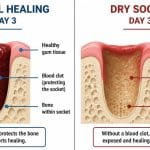
❌ Pain is not improving, or has worsened after initial improvement (this can signal dry socket — see my complete dry socket guide for what to watch for)
❌ Swelling is still significant after day 5–7
❌ Chewing anything creates discomfort in the extraction area
❌ You had an impacted extraction and your surgeon recommended a longer soft food window
For the complete picture of what healing looks like at each stage — including what the socket should actually look like day by day — my detailed guide on wisdom tooth extraction healing stages walks you through every phase.
 Read More: Dry Socket: What It Is, How to Spot It, and What to Do Immediately
How to Reintroduce Normal Foods
When you do start transitioning back, do it gradually:
- Week 2: Semi-soft foods — soft-cooked vegetables, well-cooked fish, scrambled eggs on soft toast
- Week 3: Most normal foods, still avoiding the socket-lodging risks (popcorn, nuts, seeds, sticky candy)
- Week 4+: Back to a normal diet for most people, though the full bone healing underneath continues for months
Final Tips for Surviving the Soft Food Phase
Temperature matters: Cool and room temperature foods are your friends in the first 48 hours. Cold actually helps with swelling — ice cream earns its reputation as a recovery food for a reason.
Calories matter more than perfection: It’s okay if your diet for the first few days isn’t nutritionally perfect. Getting adequate calories and fluids is the priority. Nutritional completeness becomes more important in week 2 as healing progresses.
Never use a straw: No matter how convenient — the suction can dislodge the blood clot and cause dry socket. Use a spoon or drink directly from a cup.
Protein every meal: Your body is repairing tissue and needs protein to do it. Make sure at least one protein source (eggs, yogurt, soft tofu, protein shake) appears at every meal.
For a broader look at recovery beyond food — including activity levels, oral hygiene, and what to expect week by week — my ultimate wisdom teeth recovery timeline covers everything in one place.
Conclusion
The soft food diet after wisdom teeth removal isn’t about deprivation — it’s about protecting the healing happening inside your socket while still keeping yourself nourished and comfortable.
Most people need 3–7 days of strict soft foods, with a gradual progression into semi-soft and normal eating through weeks 2 and 3. Follow the food list, stick to the meal plan as a starting point, and let your symptoms guide your timeline.
The soft food phase ends. The results — a healed, healthy mouth — are worth every bowl of mashed potato.
Frequently Asked Questions
Q: How long do you need to eat soft foods after wisdom teeth removal? Most people need a soft food diet for 3–7 days after a standard wisdom tooth extraction. For impacted extractions involving surgical removal, the soft food phase can extend to 10–14 days. Individual healing speed, the number of teeth removed, and whether complications develop all affect the exact timeline.
Q: What is the best soft food to eat after wisdom teeth removal? Greek yogurt, mashed potatoes, scrambled eggs, smooth oatmeal, and blended soups are among the best options — combining the right texture with good nutritional value. Protein-rich foods are particularly important during recovery, as protein supports tissue repair.
Q: Can I eat rice after wisdom teeth removal? Not in the first 3–5 days. Individual rice grains are exactly the right size to lodge in a healing extraction socket, causing irritation and potentially introducing bacteria. Wait until the socket edge is visibly closing — usually around days 5–7 — before introducing rice, and rinse gently with salt water after eating it.
Q: When can I eat normally after wisdom teeth removal? Most people can return to a near-normal diet by week 3, though certain high-risk foods (popcorn, nuts, seeds, sticky candy) should be avoided until the socket is fully closed — typically 3–4 weeks post-surgery. Full bone healing beneath the surface continues for several months.
Q: What happens if I eat the wrong food after wisdom teeth removal? Eating the wrong food can dislodge the blood clot (causing dry socket), introduce debris into the socket (causing infection or irritation), or mechanically irritate healing gum tissue. If you accidentally eat something problematic, rinse gently with salt water and monitor for any increase in pain over the following 24 hours.
Looking for dental care options? Call to discuss the advertised dental service.
Call Now