
Updated November 14, 2026
Quick answer
You spit into the sink, and the toothpaste foam is pink. Not red exactly — just a faint blush of colour that makes you stop and stare for a second. Your teeth don't hurt. Nothing feels wrong. So why are your gums bleeding? For most people, the answer is simpler than they fear: the gum …
You spit into the sink, and the toothpaste foam is pink. Not red exactly — just a faint blush of colour that makes you stop and stare for a second. Your teeth don’t hurt. Nothing feels wrong. So why are your gums bleeding?
For most people, the answer is simpler than they fear: the gum tissue is irritated or inflamed, usually because plaque has been sitting along the gumline for too long. A little pink in the sink is worth paying attention to rather than ignoring.
Here’s the reassuring part first: gums that bleed because of early inflammation often stop bleeding within a week or two of better cleaning. The worrying part is that bleeding that keeps going can be an early warning of gum disease. The trick is knowing which situation you are in, and what to change this week.
What bleeding gums are actually telling you
The usual chain of events is straightforward. Plaque, the sticky film of bacteria that forms on teeth every day, builds up where the tooth meets the gum. If it isn’t cleaned away, the bacteria irritate the gum tissue. The gum responds with inflammation — the earliest stage of gum disease, called gingivitis. At this stage there is no permanent damage yet, which is exactly why catching it early matters so much.
It is worth saying plainly: bleeding is not your gums telling you to stop brushing. That is the single most common mistake people make. They see blood, get nervous, and brush more gently — or skip the sore spots entirely. The plaque stays, the inflammation gets worse, and the bleeding continues.
The most common causes
Plaque buildup along the gumline. This is the big one. If you brush quickly, miss the gumline, or go a day or two without flossing, plaque gathers exactly where it does the most harm. The gum gets puffy and starts to bleed at the slightest touch.
Brushing too hard or with the wrong brush. Scrubbing with a hard-bristled brush, or pressing down like you are cleaning a pan, can injure the gum tissue directly. So can a frayed old brush head with bent bristles. The fix is a soft-bristled brush and light, short strokes.
Starting (or restarting) flossing. If you haven’t flossed in a while and you start again, expect some bleeding for the first few days. It usually means the gums were already inflamed from plaque between the teeth. If the bleeding settles within a week or two of daily flossing, that was the cause.
Gum disease that has moved past the early stage. Gingivitis is reversible. The next stage, periodontitis, is not — it involves the bone and tissue that hold teeth in place, and it needs professional treatment. Persistent bleeding, gums that are pulling away from teeth, or teeth that feel loose are signs to get checked promptly.
Hormonal changes. Pregnancy, puberty, and menopause can all make gums more sensitive to plaque and more likely to bleed. Pregnancy gingivitis is very common and usually improves after birth, but it still needs good cleaning and regular dental visits.
Medicines and health conditions. Some medicines, including blood thinners, can make gums bleed more easily. So can conditions such as diabetes, and vitamin deficiencies — particularly vitamin C. If your gums bleed a lot and your cleaning routine is already good, tell your dentist about the medicines you take.
A new brush or a recent illness. Switching to a firmer brush, or brushing more vigorously after a dental visit, can cause a few days of bleeding. A cold or flu can also leave gums a little more tender than usual.
When bleeding is normal — and when it isn’t
A small amount of bleeding that starts when you begin flossing again, or when you switch to a proper brushing technique after years of light brushing, is fairly common. It should fade steadily over one to two weeks as the inflammation settles.
Book a dental appointment sooner rather than later if any of these apply:
- The bleeding has continued for more than two weeks despite daily brushing and flossing
- Your gums are swollen, red, or sore, and they bleed without being touched
- Your gums are receding, or your teeth look longer than they used to
- You notice persistent bad breath, a bad taste, or pus between the teeth and gums
- A tooth feels loose, or your bite feels different
- Bleeding starts after you begin a new medicine
None of these automatically means something serious is wrong. They are simply the signs that the problem has gone beyond what home care can fix, and a dentist needs to take a look. That visit is usually straightforward — a check of the gums and a cleaning.
What to do this week: a simple fix routine
The goal is not to attack your gums. It is to clean the plaque away from the gumline, gently and consistently, every single day. Here’s a routine that works for most people:
Switch to a soft brush. If your brush is medium or hard, replace it. Soft bristles clean the gumline without tearing the tissue. Replace the brush (or brush head) every three months, or sooner if the bristles splay.
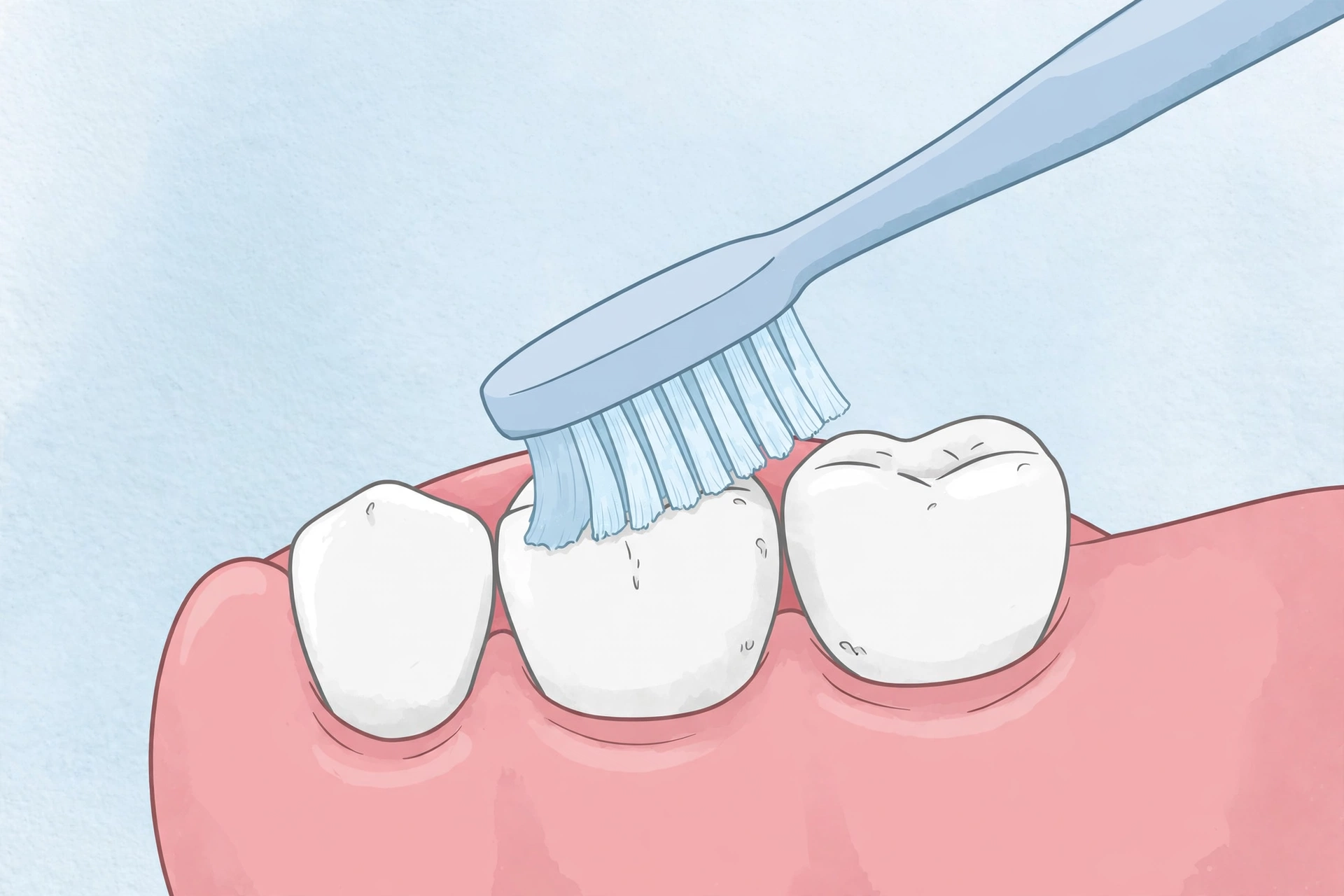
Angle the bristles toward the gumline. Hold the brush at roughly 45 degrees so the tips of the bristles just slip under the edge of the gum. Use short, gentle strokes — about the width of one tooth at a time. Two minutes, twice a day.
Clean between your teeth daily. A brush can’t reach between teeth, where much of the plaque that causes bleeding hides. Floss or interdental brushes both work; if floss hurts, try interdental brushes.
Give it two weeks. Bleeding from early inflammation usually improves noticeably within a week and settles within two. Keep a simple mental note: is there less pink in the sink than last week? If yes, you are on the right track.
Mistakes that make bleeding worse
The first is the one already mentioned: brushing less because you see blood. Gentle but thorough cleaning is the treatment, not the cause.
The second is scrubbing harder to “get rid of” the plaque faster. Hard pressure damages gum tissue and can wear away enamel at the neck of the tooth over time. Light pressure, done properly, removes plaque just as well.
The third is reaching for a strong mouthwash and assuming it replaces brushing and flossing. Mouthwash can help, but it doesn’t remove plaque from the gumline. Nothing replaces the physical cleaning.
Frequently asked questions
Is it normal for gums to bleed when brushing?
Occasional light bleeding when you start flossing again, or when your gums are already inflamed, is common. But bleeding is not a normal feature of healthy gums. If it happens regularly, it means the gums are irritated — usually by plaque. Persistent bleeding should be checked by a dentist.
Should I stop brushing if my gums bleed?
No. Stopping lets plaque build up further, which makes the inflammation and the bleeding worse. Keep brushing twice a day with a soft brush and clean between your teeth. If bleeding continues beyond two weeks of good cleaning, see a dentist.
How long does it take for bleeding gums to stop?
If the cause is early gum inflammation, most people notice improvement within a week and the bleeding usually settles within two weeks of daily brushing and flossing. If there is no improvement after two weeks, book a dental visit.
Can a hard toothbrush cause bleeding gums?
Yes. Hard bristles and heavy pressure can injure gum tissue directly and wear down the tooth surface over time. A soft-bristled brush with light pressure cleans just as effectively and is much kinder to the gums.
What toothpaste is best for bleeding gums?
A standard fluoride toothpaste is a good choice, and some formulas are made specifically for gum health — they often contain stannous fluoride, which has antibacterial properties. The toothpaste matters less than the technique, though. Thorough, gentle cleaning at the gumline is what makes the difference.
A little pink in the sink is your gums asking for help, not sounding an alarm. In most cases the answer is unglamorous: a soft brush, the right angle, daily cleaning between the teeth, and two weeks of consistency. If that doesn’t settle it, let a dentist take a look — early gum problems are far easier to fix than late ones. It also helps to know how tartar buildup feeds gum inflammation, and to get comfortable with cleaning between tight teeth, where bleeding often starts.
This article is for general information only and is not a substitute for advice from your own dentist. If your gums bleed persistently, are painful or swollen, or you notice loose teeth, book a dental appointment.