
Updated November 14, 2026
Quick answer
Stand in any pharmacy's dental aisle and you'll face the same question: a cheap manual brush, or an electric one that costs twenty times as much? The box promises whiter teeth, healthier gums, and a dentist-clean feeling. The manual brush promises… nothing, really. It just sits there. So which one actually cleans better? The honest …
Stand in any pharmacy’s dental aisle and you’ll face the same question: a cheap manual brush, or an electric one that costs twenty times as much? The box promises whiter teeth, healthier gums, and a dentist-clean feeling. The manual brush promises… nothing, really. It just sits there.
So which one actually cleans better? The honest answer is that both can keep your teeth healthy — but they don’t do it in the same way, and for a lot of people the electric brush has a real edge. Not because of magic. Because of human nature.
How each one works
A manual toothbrush cleans by you moving it. You provide the motion, the pressure, and the timing. Done well — two minutes, gentle circles, the bristles angled at the gumline — it removes plaque effectively. The catch is the “done well” part. Most of us brush for about 45 seconds, press too hard, and rush past the back teeth.
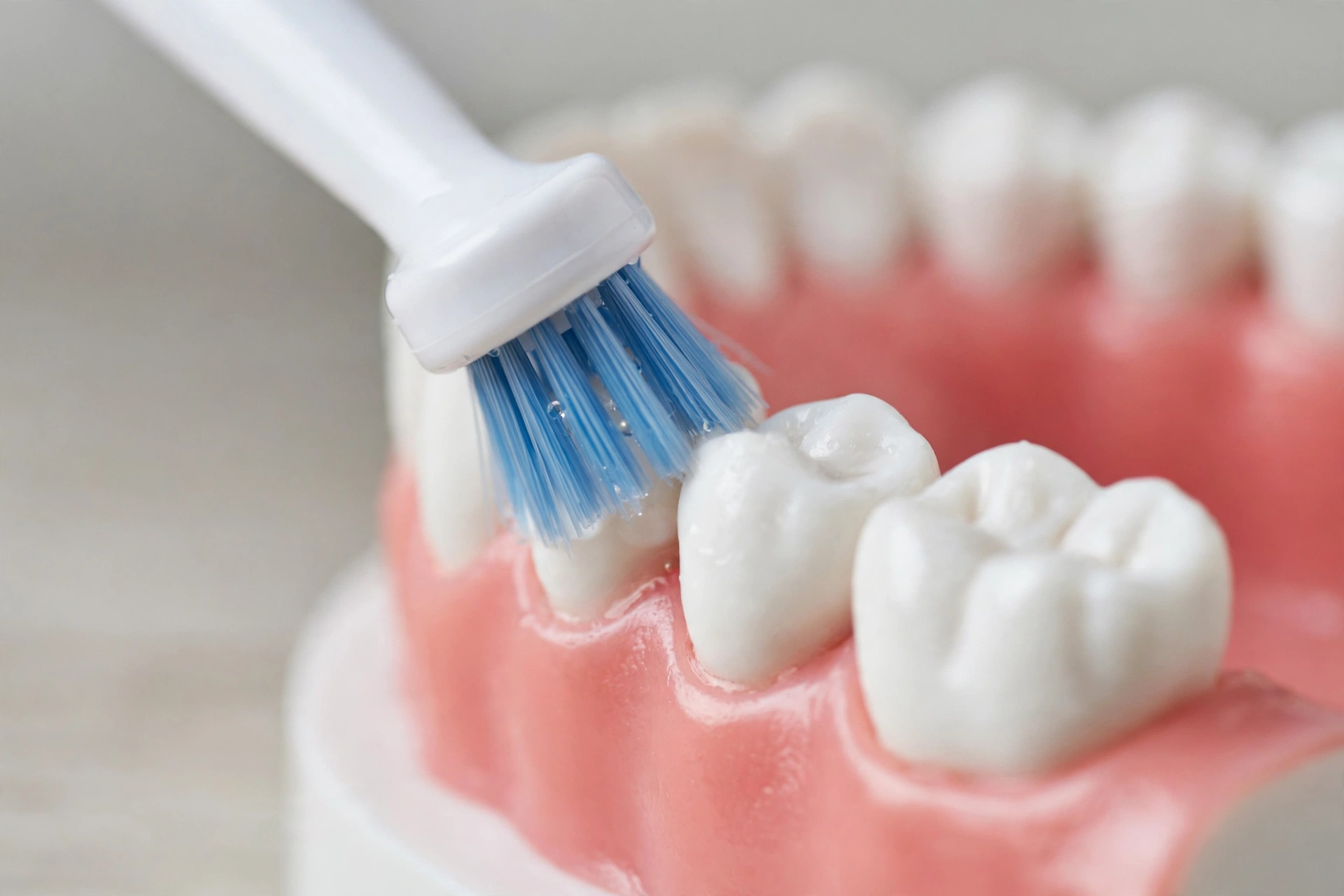
An electric toothbrush moves the bristles for you. Oscillating-rotating brushes have a small round head that spins back and forth, scrubbing one tooth at a time. Sonic brushes have a longer head that vibrates very fast. Both do hundreds or thousands of movements a minute — far more than your hand can manage.
That difference in motion is the whole story. With a manual brush, cleaning quality depends entirely on your technique that day. With an electric brush, the brush supplies consistent motion, and your job shrinks to guiding it slowly from tooth to tooth.
The head-to-head: plaque removal
This is the question most people actually mean when they ask which cleans better, and the research gives a fairly clear answer. Large reviews of clinical studies have found that electric toothbrushes — particularly oscillating-rotating ones — remove more plaque than manual brushes, and reduce gum inflammation more over time.
The gap isn’t enormous. It’s not that a manual brush can’t clean your teeth; it’s that, in real life, the electric brush does the job more consistently. The built-in timer is a big part of it. Many electric brushes buzz every 30 seconds to remind you to move to the next section of your mouth, and signal at two minutes. Most manual brushers have no idea how long they’ve been brushing — and they almost always overestimate.
Gum health and pressure
Here’s where electric brushes quietly win a second time. Most of them have a pressure sensor. Press too hard and the brush flashes a light, slows down, or buzzes at you. That’s genuinely useful, because pressing hard is one of the most common brushing mistakes. Heavy pressure doesn’t clean better — it wears away enamel, pushes gums back, and makes teeth sensitive over time.
Ease of use: who benefits most
For some people, the electric brush isn’t a luxury — it’s the difference between brushing properly and not brushing properly at all. That includes:
- People with limited hand movement. Arthritis, a wrist injury, or any condition that makes gripping and moving a brush tiring or painful. An electric brush needs only to be held and guided.
- People with braces. Brackets and wires create dozens of hiding places for plaque. A small round electric head reaches around brackets more easily than a manual brush, and many orthodontists recommend one.
- Children and teenagers. The timer and the novelty help, though supervision still matters — an electric brush is not a substitute for checking that a child actually brushes.
- Anyone who rushes. If you know you brush for 45 seconds and skip the inside of your lower teeth, the timer and the consistent motion do a lot of the work for you.
For everyone else, ease is still a factor. An electric brush is simply less effort, and less effort means you’re more likely to do it properly every time.
Cost, hassle, and the environment
This is where the manual brush fights back. A manual brush costs very little, needs no charging, never runs out of battery on holiday, and works perfectly in a hotel room with no socket. Replacement heads for electric brushes cost more than a whole manual brush, and the handle itself will eventually need replacing.
Electric brushes also need charging, and they add a small amount of electronic waste. If you travel a lot or you like things simple, those are real drawbacks. Some hold a charge for weeks, which helps, but it’s still one more thing to pack and remember.
Which should you choose?
Here’s a simple way to decide:
Choose electric if: your gums bleed, you press too hard, you rush, you wear braces, your hands ache when you brush, or your dentist has told you your cleaning needs improving. The pressure sensor and timer alone justify it for most of these cases.
Choose manual if: your technique is already good and your dentist is happy with your gum health, you travel constantly, you’re on a tight budget, or you simply prefer it and use it properly. A manual brush used well beats an electric brush used badly — technique still matters more than technology.
Either way, the rules don’t change: soft bristles, two minutes twice a day, brush at the gumline, and clean between your teeth daily. No brush — electric or manual — reaches between teeth on its own. If you only take one thing from this article, take that.
If you switch to electric, give yourself a week to get used to it. Start on the gentlest mode, let the brush rest lightly on each tooth for a few seconds instead of scrubbing, and don’t be surprised if your gums bleed a little at first — that usually means they were already inflamed, and it should settle within a week or two.
Frequently asked questions
Do dentists recommend electric toothbrushes?
Most do, particularly for people with gum problems, braces, or poor technique. The research supports a modest advantage in plaque removal and gum health. But no dentist will tell you a manual brush can’t work — it absolutely can, if used properly.
Is an electric toothbrush better for receding gums?
It can be, mainly because of the pressure sensor. Most gum recession from brushing is caused by pressing too hard with a manual brush over many years. An electric brush that warns you about pressure helps prevent that. Use it gently, though — the brush does the work.
Can an electric toothbrush damage your teeth?
Used correctly, no. Used with heavy pressure, any brush can wear enamel and irritate gums over time. Let the electric brush glide across the teeth with light pressure, and replace the head when the bristles splay.
How often should I replace an electric toothbrush head?
About every three months, the same as a manual brush. Replace it sooner if the bristles are bent or splayed — worn bristles clean less well and can be harsh on gums.
Is a sonic or oscillating toothbrush better?
Both clean well, and the differences between them are smaller than the difference between either and a manual brush. Oscillating-rotating heads have slightly stronger evidence for plaque removal; sonic brushes are often described as gentler. Try one and see which feels better.
Do I still need to floss if I use an electric toothbrush?
Yes. No toothbrush reaches between teeth, electric or not. Floss, interdental brushes, or a water flosser are still needed daily. Our guide to cleaning between tight teeth explains which tool suits which gap, and the best home cleaning tools roundup covers the wider toolkit beyond the brush itself.
The bottom line is less dramatic than the marketing suggests, and more useful. An electric toothbrush cleans a little better for most people, mostly because it compensates for the ways real humans actually brush: too fast, too hard, and too briefly. A manual brush in careful hands does the job fine. Pick the one you’ll use properly, twice a day, and spend the money you save — or spend — on the habit, not the hype.
This article is for general information only and is not a substitute for advice from your own dentist. If you have gum pain, persistent bleeding, or teeth that feel loose, book a dental appointment.