
Updated November 11, 2026
Quick answer
Can an impacted wisdom tooth cause neck pain? Learn how dental inflammation may contribute to jaw and neck discomfort, what may help, and when to seek care.
Yes, an impacted wisdom tooth can sometimes be associated with neck discomfort, but neck pain is not one of the most typical symptoms. The connection is more likely when the tooth becomes inflamed or infected. In that situation, nearby lymph nodes in the neck may become swollen and tender, or pain around the jaw may make nearby muscles feel uncomfortable.
A wisdom tooth that is trapped beneath the gum may cause no symptoms at all. If you have neck pain along with pain near the back of your mouth, jaw swelling, a bad taste, or difficulty opening your mouth, arrange a dental examination. Neck pain can also have causes unrelated to your teeth, so it should not automatically be blamed on a wisdom tooth.
How Can an Impacted Wisdom Tooth Cause Neck Pain?
An impacted wisdom tooth is a third molar that does not have enough room to erupt normally or remains partly or completely trapped beneath the gum. It can become a source of inflammation or infection. These are some ways a wisdom tooth problem may be associated with neck discomfort.
1. Infection around a partially erupted wisdom tooth
A partially erupted wisdom tooth can leave a small gum flap around the tooth. Food particles and bacteria may collect underneath it, causing a condition called pericoronitis. Symptoms can include pain and swelling around the back molar, tender gum tissue, an unpleasant taste, pain when chewing, and difficulty opening the mouth.
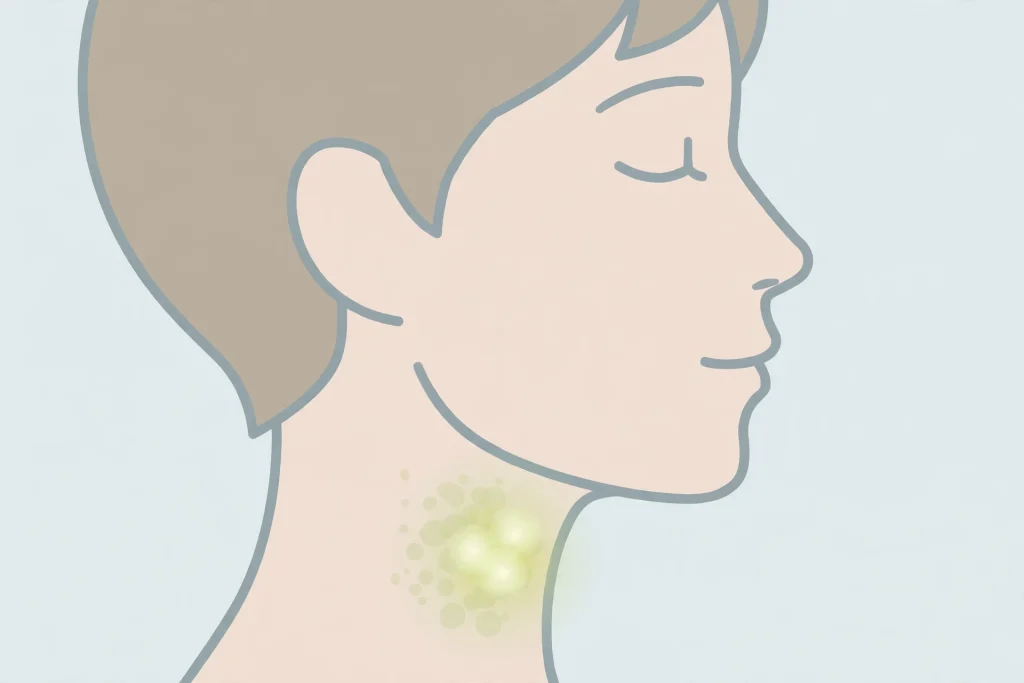
An infection around a wisdom tooth can also cause nearby lymph nodes to become enlarged or tender. These glands may be felt beneath the jaw or along the side of the neck. Swollen neck glands are a possible sign of infection, not proof that the wisdom tooth is the cause.
2. Dental pain that spreads beyond the jaw
Pain from a wisdom tooth or the surrounding tissues may sometimes be felt in nearby areas rather than only at the tooth. This is known as referred pain. Discomfort may be noticed around the back of the jaw, ear, side of the face, temple, or upper neck. However, neck pain alone does not establish that a wisdom tooth is responsible.
3. Jaw muscle tension and stiffness
Pain around an impacted wisdom tooth may cause you to chew differently, avoid opening your mouth fully, or hold your jaw tensely. These changes may contribute to discomfort around the jaw and nearby muscles. Some people describe this as jaw stiffness or soreness extending toward the upper neck. Other jaw conditions can cause similar symptoms.
4. A dental abscess or spreading infection
An untreated dental infection can sometimes develop into an abscess. Possible symptoms include tooth or gum pain, facial or jaw swelling, fever, difficulty opening the mouth, and swollen glands in the neck. In serious cases, infection can spread into deeper tissues of the head and neck. Difficulty breathing or swallowing requires emergency medical care.
What Does Wisdom Tooth-Related Neck Pain Feel Like?
The sensation varies depending on what is happening around the tooth. Some people notice tenderness beneath the jaw, while others experience discomfort near the side of the neck.
| What you notice | Possible explanation |
|---|---|
| Tender lump beneath the jaw | A nearby lymph node may be swollen |
| Jaw pain with upper-neck soreness | Local inflammation or muscle tension may contribute |
| Pain near the back molar with a bad taste | Possible gum infection around a partially erupted tooth |
| Neck tenderness with fever and facial swelling | Possible spreading dental infection; seek prompt care |
| Neck pain without dental symptoms | Another cause may be more likely |
These patterns are clues, not a way to diagnose the cause at home.
Other Symptoms That May Occur With an Impacted Wisdom Tooth
Neck discomfort is more concerning when it occurs with other symptoms of a wisdom tooth problem. Watch for:
- Pain or pressure behind the last molar
- Red, swollen, or tender gums
- Pain when biting or chewing
- Swelling around the jaw or cheek
- Difficulty opening your mouth
- Bad breath or an unpleasant taste
- Pus or drainage near the tooth
- Swollen or tender lymph nodes
- Fever or feeling generally unwell
Some impacted wisdom teeth cause no noticeable symptoms. A dental examination and X-ray can help determine their position and whether they are contributing to a problem. Learn more about symptoms of impacted wisdom teeth and possible complications of impacted wisdom teeth.
How to Relieve Neck Pain Associated With Wisdom Teeth
The right treatment depends on whether discomfort comes from gum inflammation, infection, jaw muscle tension, or another condition. Home care may provide temporary comfort, but it cannot remove an impacted tooth or cure a dental abscess.

1. Arrange a dental examination
If you have wisdom tooth pain together with neck tenderness, swelling, or other signs of infection, contact a dentist promptly. The dentist may examine the gums, check how widely you can open your mouth, look for signs of infection, and take dental X-rays if needed.
2. Keep the area clean
Gently brush your teeth and clean around the affected area without injuring swollen gum tissue. If you can rinse comfortably, warm salt water may help soothe irritated gums. A commonly used rinse is about half a teaspoon of salt in one cup (8 ounces) of warm water. Swish gently and spit it out.
3. Choose soft foods
If chewing makes the area hurt, choose foods that require little effort, such as yogurt, scrambled eggs, mashed potatoes, soft pasta, or lukewarm soup. Avoid very hard or crunchy foods that may irritate the area or become trapped around the tooth.
4. Use pain relief safely
An over-the-counter pain reliever may help with temporary discomfort if it is safe for you. Follow the package directions and ask a pharmacist or healthcare professional if you are unsure whether a medicine is suitable, especially if you have other medical conditions, take other medicines, or are pregnant. Pain medicine does not treat the cause of a dental infection. See our guide to wisdom teeth pain relief options.
5. Avoid pressing or massaging a swollen area
Do not squeeze gum swelling, try to drain pus, or repeatedly press a tender lump in your neck. These actions will not treat the underlying cause and may irritate the area further.
When Should You See a Dentist or Doctor?
Contact a dentist promptly if you have wisdom tooth pain with neck tenderness or a swollen gland, swollen or painful gums, persistent jaw pain, pus or a bad taste around the tooth, difficulty chewing or opening your mouth, fever, or feeling unwell.
Seek emergency medical care immediately if you have difficulty breathing, swallowing, or speaking; rapidly increasing swelling in your mouth, face, or neck; or severe difficulty opening your mouth. These can be warning signs of a serious spreading infection.
Can Neck Pain Be Caused by Something Other Than Wisdom Teeth?
Yes. Neck pain is common and can have many causes unrelated to dental health, including muscle strain or poor posture, sleeping in an uncomfortable position, cervical spine or joint problems, viral illnesses, swollen lymph nodes due to infections elsewhere, and other dental problems.
If your neck pain continues, worsens, or occurs without clear wisdom tooth symptoms, speak with a healthcare professional rather than assuming the tooth is responsible. Jaw-related discomfort can also have other causes; read about wisdom teeth and TMJ symptoms.
How Do Dentists Treat an Impacted Wisdom Tooth That Is Causing Problems?
Treatment depends on the tooth’s position, the symptoms, and whether there is evidence of disease or infection. A dentist or oral surgeon may recommend:
- Cleaning and local treatment: The area around a partially erupted tooth may need professional cleaning.
- Treatment of infection: An abscess may need drainage and treatment of its source. Antibiotics are used when clinically appropriate, but they do not replace necessary dental treatment.
- Monitoring: An impacted tooth without symptoms or evidence of disease may sometimes be monitored rather than removed immediately.
- Wisdom tooth removal: Extraction may be recommended when the tooth is causing repeated infection, damage, or other problems.
An examination and appropriate imaging help the dental professional decide which approach is suitable. Not every impacted wisdom tooth needs to be removed.
Frequently Asked Questions
Can impacted wisdom teeth cause neck pain?
They can be associated with neck discomfort, particularly when inflammation or infection causes swollen lymph nodes or pain around the jaw. Neck pain alone is not enough to identify an impacted wisdom tooth as the cause.
Can wisdom teeth cause neck pain on one side?
Discomfort may occur on the same side as an affected wisdom tooth, especially if nearby gum tissue is inflamed or lymph nodes become tender. One-sided neck pain can also have many other causes.
Can wisdom teeth cause a stiff neck?
Wisdom tooth problems may contribute to jaw stiffness and discomfort around nearby muscles. A genuinely stiff neck, especially with fever, severe headache, confusion, or sensitivity to light, should not be assumed to be dental and needs urgent medical assessment.
Can an infected wisdom tooth cause swollen lymph nodes in the neck?
Yes. Infection around a wisdom tooth can cause nearby lymph nodes to become enlarged or tender. Swollen neck glands together with dental pain, fever, or facial swelling should be assessed promptly.
Does neck pain mean my wisdom tooth is infected?
No. Neck pain by itself does not establish that a wisdom tooth is infected. Gum swelling, pus, a bad taste, fever, jaw swelling, and difficulty opening the mouth make a dental infection more concerning.
Will neck pain go away after wisdom tooth removal?
If the neck discomfort is genuinely related to the wisdom tooth problem, treating the underlying cause may help it improve. Recovery varies, and neck pain may persist if it has another cause. Your dentist or oral surgeon can advise what to expect.
Should I remove an impacted wisdom tooth if I have neck pain?
Not based on neck pain alone. A dentist should assess the tooth, gums, symptoms, and X-rays before recommending removal. Some impacted teeth can be monitored, while others need treatment because they are causing disease or damage.
Conclusion
An impacted wisdom tooth can sometimes be associated with neck pain, particularly when infection, swollen lymph nodes, or nearby muscle discomfort is involved. But neck pain is not a reliable sign of an impacted wisdom tooth by itself.
If you have neck discomfort alongside wisdom tooth pain, gum swelling, fever, or a bad taste, arrange a dental assessment. If swelling affects your breathing or swallowing, seek emergency care immediately.