
Updated November 15, 2026
Quick answer
Learn the first signs of wisdom teeth coming in, including gum tenderness, swelling, jaw pressure, and when symptoms need a dentist’s attention.
The first signs of wisdom teeth coming in are often tenderness or pressure behind your last molars, mildly swollen gums, and sometimes a small white edge of a new tooth. Some people notice very little, while others develop soreness, jaw discomfort, or gum inflammation. These symptoms do not confirm that a wisdom tooth is erupting—an examination and, when needed, a dental X-ray can show what is happening.
Wisdom teeth are the third molars at the very back of the mouth. They commonly begin to appear between ages 17 and 25, although timing varies and some never erupt through the gums. The American Association of Oral and Maxillofacial Surgeons (AAOMS) notes that symptoms can include gum tenderness, redness, swelling, jaw pain, bad breath, and difficulty opening the mouth.
7 Early Signs of Wisdom Teeth Coming In
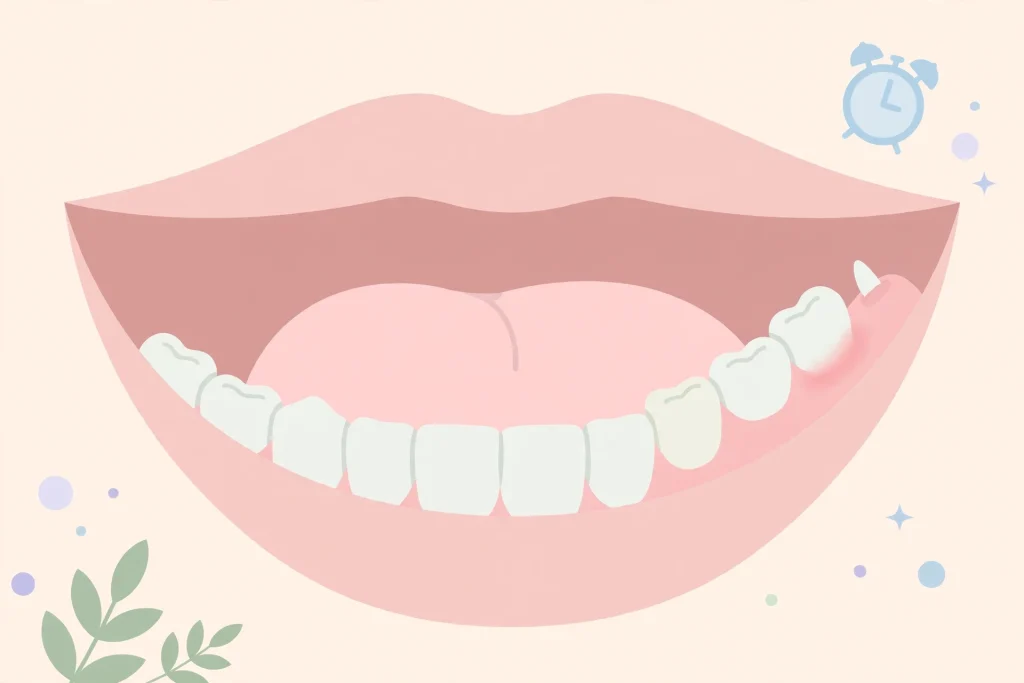
1. Tenderness behind your last molars
A dull, tender, or slightly sore feeling behind the last molar is one of the earliest clues. The gum may feel sensitive when you brush, floss, or touch the area with your tongue. Tenderness can come and go as the tooth moves toward the surface.
2. Swollen or red gum tissue at the back of your mouth
The gum behind the second molar may look puffy, red, or irritated. If part of the wisdom tooth has emerged, a flap of gum can partly cover it. Food and bacteria can collect beneath this flap, sometimes causing inflammation called pericoronitis. Increasing swelling, pus, or worsening pain should be assessed by a dentist.
3. Pressure or a dull ache in the back of the jaw
You may feel pressure near the back of your upper or lower jaw. It can be difficult to tell whether the sensation is coming from the gum, the tooth, or nearby jaw muscles. Persistent or worsening jaw pain should not automatically be blamed on normal eruption.
4. A small white tip appearing through the gum
If the tooth is erupting, you may see or feel a hard, white edge just behind the last molar. This is a more direct sign that a tooth has reached the gum surface. Do not poke, scrape, or try to pull the gum away to expose it.
5. Discomfort when chewing near the back teeth
Chewing may feel uncomfortable if the gum around a partially erupted tooth is swollen or if food becomes trapped in the area. Pain when biting can also have other causes, including a cavity or infection in a neighboring molar, so a dental check is important if it continues.
6. Mild jaw stiffness or difficulty opening wide
Some people notice tightness or discomfort when opening their mouth. Stiffness can occur with inflammation around a wisdom tooth, but it is not a symptom to ignore when it is new, worsening, or accompanied by swelling or fever.
7. Bad breath or an unpleasant taste
A partially erupted wisdom tooth can create a pocket that is difficult to clean. Trapped food and bacteria may cause persistent bad breath or a bad taste. A foul taste together with gum swelling, discharge, or pain can indicate infection and needs prompt dental assessment.
When Do Wisdom Teeth Usually Start Coming In?
Wisdom teeth commonly erupt between ages 17 and 25, but there is no exact age that applies to everyone. One tooth may appear before another, and some wisdom teeth remain under the gum or bone for life. Others may be absent altogether.
Not seeing a tooth does not prove that it is not developing. A dentist can assess the area and use an X-ray when appropriate to check the tooth’s position, direction, and relationship to nearby structures.
Normal Eruption or an Impacted Wisdom Tooth?
A wisdom tooth is considered impacted when it cannot fully emerge into the mouth, often because there is not enough room or it is angled against another tooth. An impacted tooth may cause symptoms, but it can also remain silent. Pain alone cannot tell you whether a tooth is impacted.
| Possible normal eruption | Possible problem that needs assessment |
|---|---|
| Mild, short-lived gum tenderness | Persistent or worsening pain |
| A tooth gradually appearing behind the last molar | Gum repeatedly swelling around a partly erupted tooth |
| No fever, pus, or spreading swelling | Bad taste with discharge, fever, or facial swelling |
| You can open your mouth and swallow normally | Increasing difficulty opening your mouth or swallowing |
These differences are general clues, not a way to diagnose yourself. For more detail, read our guide to symptoms of impacted wisdom teeth and our explanation of wisdom teeth growing sideways.
What Can You Do if Your Wisdom Teeth Are Coming In?
- Keep the area clean: Brush gently with a soft-bristled toothbrush, including around the last molar. Do not force the brush under gum tissue.
- Rinse gently: If the gum is irritated, a gentle warm salt-water rinse may help keep the area clean. Do not rinse forcefully.
- Choose comfortable foods: If chewing is sore, choose softer foods temporarily and avoid anything that repeatedly irritates the gum.
- Use pain medicine carefully: If you can safely take an over-the-counter pain reliever, follow its label directions and check with a pharmacist or clinician if you have medical conditions, take other medicines, or are unsure what is safe for you.
- Arrange a dental examination: A dentist can check whether the tooth has enough room, whether the gum is infected, and whether monitoring or treatment is appropriate.

For additional background, see our guide to whether you can let your wisdom teeth grow in and our practical advice on wisdom teeth pain home remedies.
When Should You See a Dentist?
Book a dental appointment if you have pain, recurring swelling, bleeding or tender gum tissue behind the last molar, persistent bad breath, or trouble cleaning the area. A dentist may recommend an examination and X-rays to determine whether the tooth is erupting normally, impacted, decayed, or affecting the neighboring molar.
Seek urgent dental care for worsening pain, pus, fever, or swelling of the face or jaw. Get emergency medical help if swelling makes it difficult to breathe or swallow, or if it is spreading rapidly. Do not wait for a routine appointment when breathing or swallowing is affected.
Wisdom teeth do not always need to be removed. Healthy, fully erupted teeth that are functional and can be cleaned may be monitored. The decision depends on the tooth’s position, health, symptoms, and risk to nearby teeth—not simply on age or the fact that it is a wisdom tooth.
Frequently Asked Questions
What is the first sign of wisdom teeth coming in?
One of the earliest signs is tenderness or pressure in the gum behind your last molar. Some people notice mild swelling or a small hard, white edge as the tooth begins to emerge.
Can wisdom teeth come in without pain?
Yes. Some wisdom teeth erupt with little or no discomfort, and some remain impacted without obvious symptoms. Regular dental examinations help identify problems that may not be painful.
How long does it take for wisdom teeth to come in?
There is no standard timeline. Eruption can happen gradually over months, may pause, or may never occur if the tooth is impacted or does not have enough room. Your dentist can assess progress with an examination and X-rays when needed.
Can you feel wisdom teeth coming in before you see them?
Possibly. Gum tenderness, pressure, or mild soreness behind the last molar can occur before a tooth is visible. These sensations are not specific to wisdom teeth, so persistent symptoms should be checked.
Do swollen gums always mean a wisdom tooth is coming in?
No. Swollen gums can have several causes, including plaque-related gum inflammation, food trapped under the gum, or infection around a partially erupted wisdom tooth. A dentist can identify the cause.
Should I get my wisdom teeth removed as soon as I feel them?
Not necessarily. Symptoms should prompt an examination, but removal is not automatic. Your dentist will consider the tooth’s position, whether it is healthy and cleanable, and whether it is causing or likely to cause damage or disease.
Key Takeaway
The first signs of wisdom teeth coming in may include tenderness behind the last molars, swollen gums, jaw pressure, or a visible white tooth tip. Mild symptoms can occur during eruption, but persistent pain, recurring swelling, bad taste with discharge, fever, or difficulty opening your mouth need dental attention. An examination is the best way to know what is happening and whether treatment is needed.
Sources
- American Association of Oral and Maxillofacial Surgeons: Wisdom Teeth Symptoms
- American Dental Association: Wisdom Teeth
- Mayo Clinic: Impacted Wisdom Teeth—Symptoms and Causes
Editorial note: This article is for general education and is not a substitute for an examination or personalized advice from a dentist.