
Updated November 15, 2026
Quick answer
Can you let your wisdom teeth grow in without removing them? Learn when it's safe to keep them, signs of problems, and when removal may be necessary.
Yes, you can let your wisdom teeth grow in, and you do not automatically need to have them removed. If your wisdom teeth emerge fully, sit in a healthy position, work comfortably with the other teeth, and can be cleaned properly, a dentist may recommend keeping them with regular monitoring.
However, wisdom teeth do not always have enough room to grow normally. Some remain impacted, emerge only partly, become difficult to clean, or contribute to decay and gum infection. Whether to keep or remove them depends on their position, condition, symptoms, and dental examination—not simply on whether they have erupted.
Can You Keep Your Wisdom Teeth Instead of Removing Them?
Yes. You may be able to keep your wisdom teeth if they are healthy, functional, properly positioned, and accessible for brushing and flossing. A dentist may recommend monitoring rather than extraction when there is no disease or other clinical reason for removal.
- The teeth have erupted fully through the gums.
- They are positioned upright and do not damage neighboring teeth.
- There is no untreated decay or gum disease.
- They do not cause repeated pain or infection.
- You can clean around them effectively.
Keeping wisdom teeth still requires routine dental checkups. Problems can develop without obvious pain, so do not rely on symptoms alone to judge whether a tooth is healthy.
When Do Wisdom Teeth Stop Growing?
Wisdom teeth usually emerge between ages 17 and 25, although timing varies and some erupt later. Tooth development and eruption are not exactly the same: a tooth can finish developing while remaining partly or completely trapped beneath the gum or jawbone.
There is no single age when every person’s wisdom teeth stop developing. A dental examination and, when appropriate, an X-ray can show whether the teeth have erupted, their position, and whether there are signs of disease. If you are weighing the timing, learn the best age to remove wisdom teeth.
How Are Wisdom Teeth Supposed to Grow In?
Ideally, a wisdom tooth emerges upright behind the second molar, has enough room in the jaw, and fits comfortably with the opposing teeth. It should be possible to brush and floss around it without persistent gum inflammation.
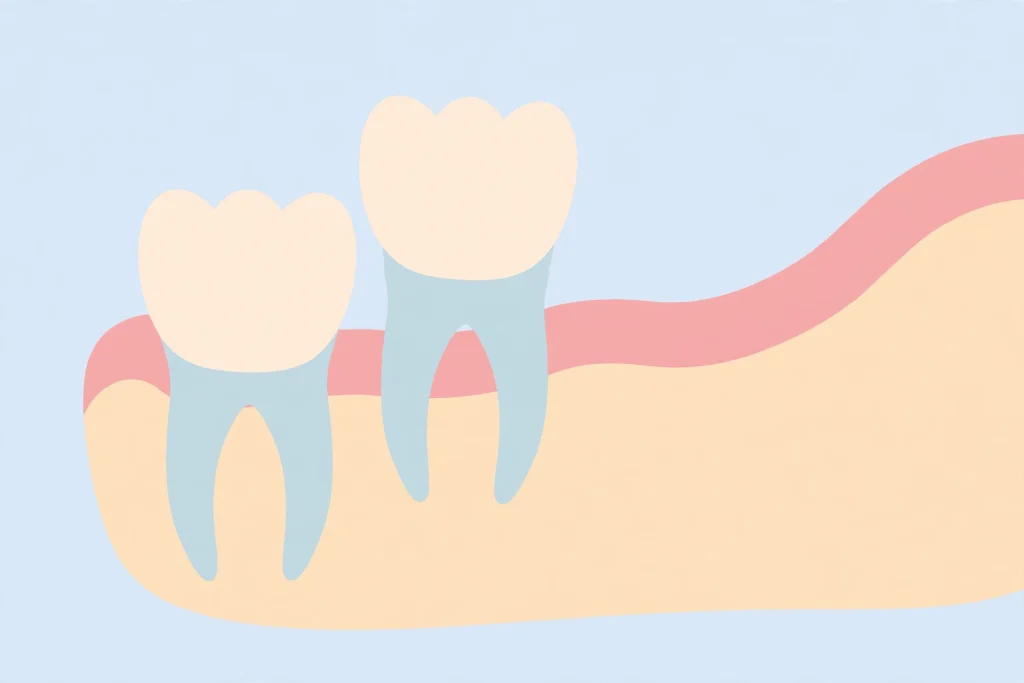
Wisdom teeth can also grow in different positions:
- Fully erupted: The entire crown has emerged through the gum.
- Partially erupted: Some of the crown is visible, while gum tissue still covers part of the tooth.
- Impacted: The tooth is unable to erupt fully because of its position or an obstruction.
- Angled or horizontal: The tooth points toward another tooth or grows in an unusual direction.
An impacted tooth does not always require immediate removal, but it should be assessed. Learn more about symptoms of impacted wisdom teeth and wisdom teeth that may affect a neighboring tooth root.
Signs Your Wisdom Teeth Need to Come Out
Some findings may indicate that a wisdom tooth needs treatment or possibly extraction. They do not prove by themselves that removal is necessary; a dentist must identify the cause.
- Repeated pain or swelling: Ongoing or recurring symptoms around the back molars deserve an examination.
- Repeated gum infection: A flap of gum over a partly erupted tooth can trap food and bacteria, sometimes causing pericoronitis.
- Tooth decay: A cavity may develop in the wisdom tooth or the neighboring second molar.
- Damage to an adjacent tooth: An impacted or poorly positioned wisdom tooth may contribute to decay or damage around the second molar.
- Gum disease or difficult cleaning: Persistent inflammation or an area that cannot be kept clean may need treatment.
- Cyst or other pathology: Dental imaging may reveal an abnormality around an impacted tooth.
Bad breath, an unpleasant taste, jaw discomfort, or difficulty opening the mouth can also occur with dental problems, but these symptoms have several possible causes and need proper assessment.
What Happens If You Do Not Remove Your Wisdom Teeth?
If the teeth are healthy and well positioned, leaving them in place may cause no problems. If a tooth is impacted, partly erupted, decayed, or difficult to clean, possible complications include:
1. Cavities and tooth decay
Wisdom teeth sit at the back of the mouth, where brushing and flossing can be difficult. Plaque may build up and cause decay in the wisdom tooth or the second molar beside it. Read more about wisdom tooth cavities and treatment options.
2. Gum infection (pericoronitis)
When part of a wisdom tooth remains covered by gum, food and bacteria can collect beneath the gum flap. This can cause pain, redness, swelling, and an unpleasant taste. Repeated episodes should be assessed by a dentist.
3. Problems affecting the neighboring molar
A wisdom tooth growing at an angle can make the area beside the second molar difficult to clean and may contribute to decay or other damage. Your dentist can assess this area clinically and with imaging when indicated.
4. Cysts or other abnormalities
Less commonly, an impacted wisdom tooth may be associated with a cyst or another abnormal change. Dental imaging can help identify these findings.
These complications are possible, not inevitable. Leaving a healthy wisdom tooth in place does not automatically cause infection, crowding, or damage.
Can Wisdom Teeth Cause Cavities?
Yes. Wisdom teeth can develop cavities like other teeth. Their position can make them harder to reach with a toothbrush or floss, allowing plaque to accumulate. Decay may affect the chewing surface, the area near the gumline, or the contact point between the wisdom tooth and the second molar.
If a cavity is small and the tooth can be restored and maintained, a dentist may recommend a filling. Extraction may be considered when decay is extensive, the tooth cannot be restored predictably, or other problems are present.
How to Know When to Remove Wisdom Teeth
The decision should be based on the condition and position of each tooth, symptoms, examination findings, and relevant X-rays—not age alone or a blanket rule that all wisdom teeth should be removed.
| Finding | What a dentist may recommend |
|---|---|
| Healthy, fully erupted, easy-to-clean tooth | Keep it and monitor during routine visits |
| Small cavity in a restorable tooth | Consider a filling or other restorative treatment |
| Repeated infection around a partly erupted tooth | Assess the cause and discuss treatment, including possible removal |
| Decay that cannot be restored | Extraction may be recommended |
| Damage to the neighboring molar or cystic change | Further evaluation and treatment; removal may be appropriate |
| Impacted tooth without detected disease | Individualized clinical and radiographic monitoring may be appropriate |
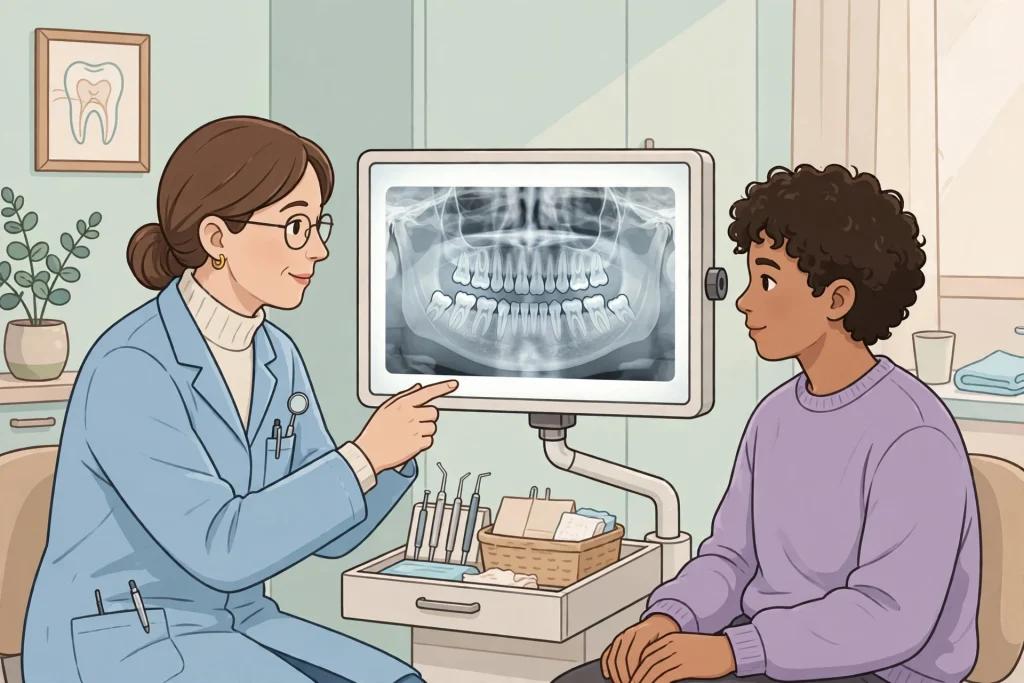
Your dentist or oral surgeon can explain the benefits and risks of monitoring versus extraction for your particular situation. For more context, see the benefits and reasons for wisdom teeth removal.
How to Keep Your Wisdom Teeth Healthy
- Brush twice a day with fluoride toothpaste, reaching the back molars carefully.
- Clean between the teeth daily with floss or another tool recommended by your dental professional.
- Attend regular dental checkups so the teeth and surrounding gums can be examined.
- Follow your dentist’s advice about whether and when dental X-rays are needed.
- Arrange an examination if you develop pain, swelling, bleeding, a bad taste, or difficulty chewing.
Can Wisdom Teeth Kill You?
A healthy wisdom tooth is not normally life-threatening. However, a dental infection can sometimes spread into surrounding tissues and become a serious medical emergency. Do not ignore rapidly worsening swelling, fever with feeling very unwell, or signs that an infection is spreading.
Seek emergency medical care immediately if you have difficulty breathing or swallowing, or rapidly spreading swelling of the face, jaw, or neck. For other suspected wisdom tooth infections, contact a dentist promptly. Read more about the risks of a wisdom tooth infection.
Frequently Asked Questions
Is it okay to keep your wisdom teeth for life?
Yes, some people keep their wisdom teeth throughout life. This is generally reasonable when the teeth remain healthy, functional, properly positioned, and easy to clean, with ongoing dental monitoring.
Do wisdom teeth need to be removed if they do not hurt?
No. Pain alone does not determine whether removal is needed. Some healthy teeth can be monitored, while decay or other disease can sometimes develop without pain. A dental examination is important.
Can fully grown wisdom teeth still cause problems?
Yes. A fully erupted tooth can still develop cavities, gum disease, or other problems. Being fully grown does not guarantee that it is healthy.
Can wisdom teeth grow in after age 25?
Although most wisdom teeth erupt during the late teens and twenties, timing varies and some may emerge later. A dentist can assess a tooth that appears to be erupting at an older age. Wisdom teeth in your 30s can still cause problems, so keep having them checked at any age.
How do I know if my wisdom teeth are growing normally?
Teeth that emerge upright, fit comfortably, and can be cleaned without persistent gum problems may be growing normally. Only a dental examination, with imaging when indicated, can confirm their position and health.
Final Takeaway
You do not have to remove your wisdom teeth simply because they are growing in. If they emerge fully, are healthy and functional, and can be cleaned effectively, keeping them with regular dental monitoring may be appropriate. Impacted, infected, decayed, or damaging teeth may need treatment or extraction. Ask your dentist to assess the position and condition of each wisdom tooth before making a decision.
Medical References
- Cleveland Clinic: Wisdom Teeth
- NICE: Guidance on wisdom teeth removal
- British Journal of General Practice: Problems with erupting wisdom teeth
This article is for general educational purposes and does not replace an examination or advice from your dentist or other qualified healthcare professional.