
Updated November 9, 2026
Quick answer
You brush twice a day, you floss, and your teeth still don't feel as smooth and bright as they do right after a dental cleaning. That smooth feeling is polishing — and while you can't fully replicate a hygienist's polish at home, you can safely get much of the way there. This guide explains what …
You brush twice a day, you floss, and your teeth still don’t feel as smooth and bright as they do right after a dental cleaning. That smooth feeling is polishing — and while you can’t fully replicate a hygienist’s polish at home, you can safely get much of the way there.
This guide explains what tooth polishing actually is, which at-home methods are safe, which popular hacks damage your enamel, how often to polish, and when to leave it to a professional.
Short answer: The safest way to polish teeth at home is daily brushing with a whitening toothpaste (mild abrasives like hydrated silica), plus a gentle baking soda paste once a week at most. Never use charcoal, lemon, vinegar, or harsh scrubbing — and remember, polishing removes surface stains only; it cannot remove tartar or change your teeth’s natural colour.
What Is Tooth Polishing, Exactly?
Polishing is the smoothing of your tooth surfaces to remove surface stains and plaque, leaving enamel feeling smooth and looking brighter. It is the final step of a professional dental cleaning: after the hygienist scales away tartar, they polish with a slow-speed handpiece, a soft rubber cup, and a gritty polishing paste (prophy paste).
Polishing is not the same as whitening or cleaning:
- Cleaning (brushing and flossing) removes plaque and food daily.
- Polishing removes surface stains and smooths the enamel so plaque sticks less easily.
- Whitening changes the colour of the tooth itself, usually with peroxide-based gels or strips.
That distinction matters, because many at-home “polishing” hacks promise whitening results they cannot deliver — and some damage enamel trying.
What polishing can do
- Remove surface stains from coffee, tea, red wine, and tobacco
- Remove soft plaque that brushing missed
- Make teeth feel smooth and look brighter
- Make it slightly harder for new plaque to stick, because smooth enamel collects less buildup
What polishing cannot do
- Remove tartar (calculus) — once plaque hardens, only scaling instruments remove it
- Change your teeth’s natural shade — that needs whitening, not polishing
- Fix stains inside the tooth (from medication, injury, or fluorosis)
- Replace a professional cleaning
Is It Safe to Polish Your Teeth at Home?
Yes — when you use gentle methods and keep the frequency low. The risk is abrasion: enamel is the hardest substance in your body, but it does not grow back. Every abrasive removes a tiny amount of enamel along with the stain. Done gently and occasionally, that loss is negligible. Done aggressively or daily with a harsh abrasive, it adds up to sensitivity, thinning enamel, and yellow-looking teeth (as the darker dentin underneath shows through).
Dentists measure abrasiveness with the RDA scale (Relative Dentin Abrasivity). The ADA considers toothpastes with an RDA of 250 or below safe for daily use. For reference, plain baking soda has an RDA of about 7 — very gentle — while some charcoal powders score far higher and vary wildly between brands.
The rules for safe at-home polishing:
- Use soft bristles only. Medium or hard brushes plus an abrasive paste is the fastest way to wear enamel and gums.
- Use light pressure. Let the paste do the work; pressing harder does not polish better.
- Keep it occasional. A gentle polish once a week is plenty for most people.
- Always finish with fluoride. After polishing, brush with a fluoride toothpaste (or use it as your polishing paste) to help remineralise the enamel surface.
- Stop if it hurts. Sensitivity, bleeding gums, or a gritty feeling that doesn’t go away means you are overdoing it — see your dentist.
5 Safe Ways to Polish Teeth at Home
1. Whitening toothpaste (daily — the easiest method)
Whitening toothpastes don’t bleach your teeth. They contain mild polishing agents — usually hydrated silica or calcium carbonate — that gently scrub away surface stains as you brush. Look for one with the ADA Seal of Acceptance, which means its abrasiveness has been tested and it contains fluoride.
- Use it like a normal toothpaste, twice a day.
- It works slowly — expect visible improvement over 2–4 weeks, not overnight.
- It is the safest daily polishing method because the abrasives are designed for everyday use.
2. Baking soda paste (once a week at most)
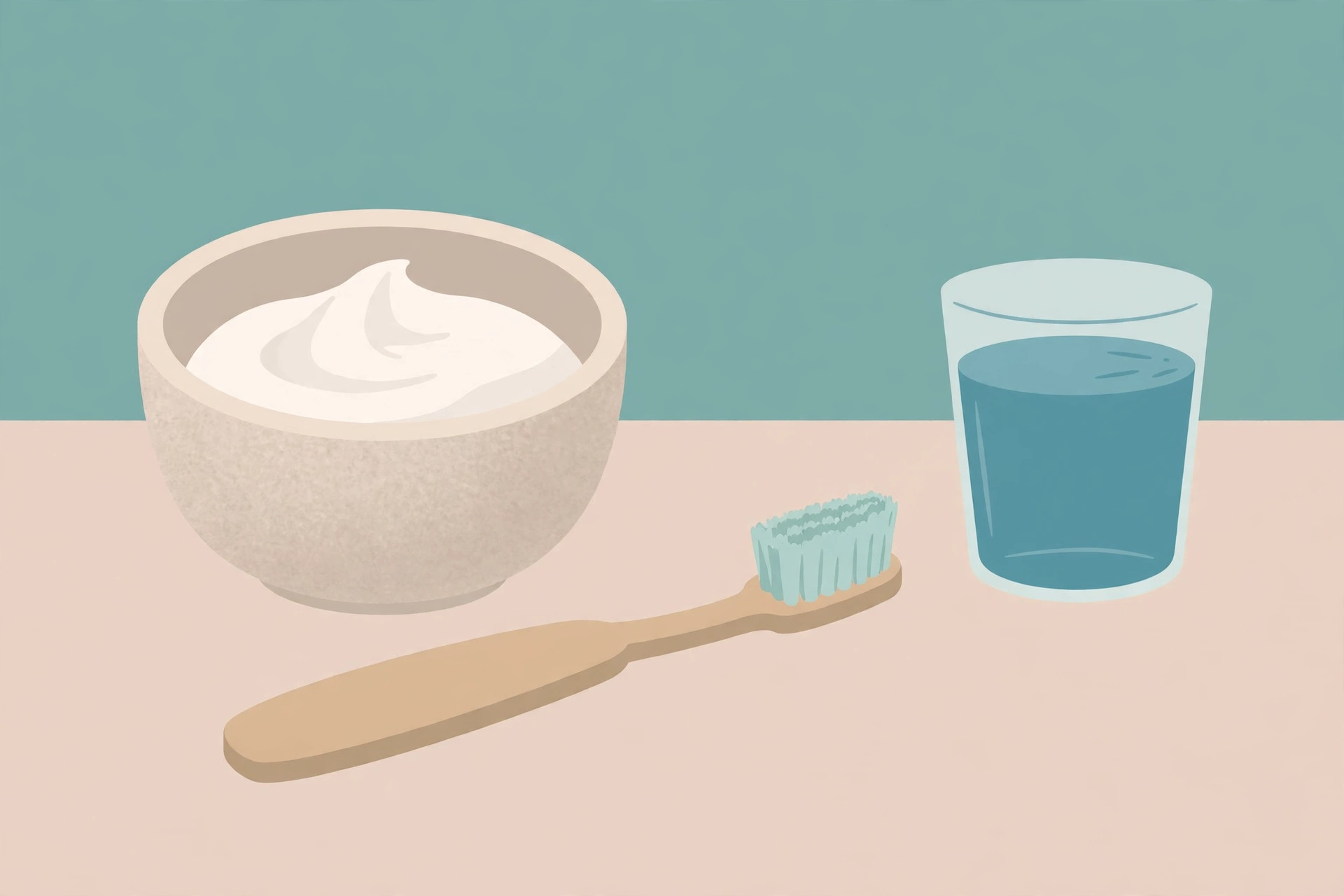
Baking soda (sodium bicarbonate) is a mild abrasive with a very low RDA of around 7, and it also neutralises acids in your mouth. It is one of the few home remedies dentists generally consider safe — in moderation.
How to do it:
- Mix about half a teaspoon of baking soda with a few drops of water to make a thick paste.
- Apply it to a soft toothbrush.
- Brush gently for about one minute, using small circular motions. Don’t scrub hard.
- Rinse thoroughly with water.
- Brush again with your regular fluoride toothpaste.
Frequency: Once a week at most. More often than that, even a gentle abrasive starts to add up — and baking soda contains no fluoride, so it should never replace your normal toothpaste.
3. Electric toothbrush with a polishing mode (daily)
Oscillating-rotating and sonic electric toothbrushes remove more plaque than manual brushing, and many have a polishing or whitening mode that uses higher-frequency vibration to buff the tooth surface. Used with a whitening toothpaste, this is an effective daily polishing routine.
- Use a soft brush head and let the brush do the work — don’t press.
- Replace the head every 3 months, or sooner if bristles splay.
- The built-in 2-minute timer helps you cover every tooth evenly, including the back molars.
4. At-home polishing kits (occasional)
At-home polishing kits usually contain a mild polishing paste and a soft brush or a rubber-cup attachment for an electric toothbrush. They mimic the professional rubber-cup method in a gentler form.
- Choose a kit from a known dental brand, and check that the paste contains fluoride.
- Follow the instructions exactly — these kits are designed for occasional use, not daily.
- Avoid no-name kits with unknown abrasives; if the paste feels very gritty between your fingers, don’t use it.
5. A proper polishing routine (putting it together)
A simple weekly routine:
- Floss first — cleaning between your teeth removes debris so the polish reaches the whole surface. Our guide to cleaning between tight teeth covers the technique in detail.
- Brush with fluoride toothpaste for two minutes.
- Polish once a week — either with a baking soda paste or a polishing kit, using gentle circular motions for about a minute.
- Rinse and finish with fluoride toothpaste — spit, don’t rinse with water, so the fluoride stays on your teeth.
Methods to Avoid: Popular Hacks That Damage Enamel
Some of the most-shared “natural polishing” methods are the worst for your teeth.
| Method | Why people try it | Why to avoid it |
|---|---|---|
| Activated charcoal | “Detoxes” and whitens | Highly abrasive and unregulated — RDA varies wildly; can wear enamel and stain gums and fillings |
| Lemon juice or vinegar | Acid “dissolves” stains | Acid directly erodes enamel; the damage is permanent and makes teeth more yellow over time |
| Strawberries (mashed) | Malic acid “whitens” | The acid erodes enamel; any whitening effect is tiny and not worth the damage |
| Baking soda + lemon | Combines two “natural” cleaners | Baking soda is gentle, but adding acid cancels that out — the mixture is far more erosive |
| Hard-bristle scrubbing | “More pressure = cleaner” | Wears enamel and pushes gums back; soft bristles with light pressure clean better |
| DIY polishing with salt, sand, or ash | Old traditional remedies | Extremely abrasive — can scratch enamel badly in a single use |
| Over-polishing (daily abrasive pastes) | Wanting faster results | Enamel loss is cumulative and irreversible; once a week is the limit for abrasive pastes |
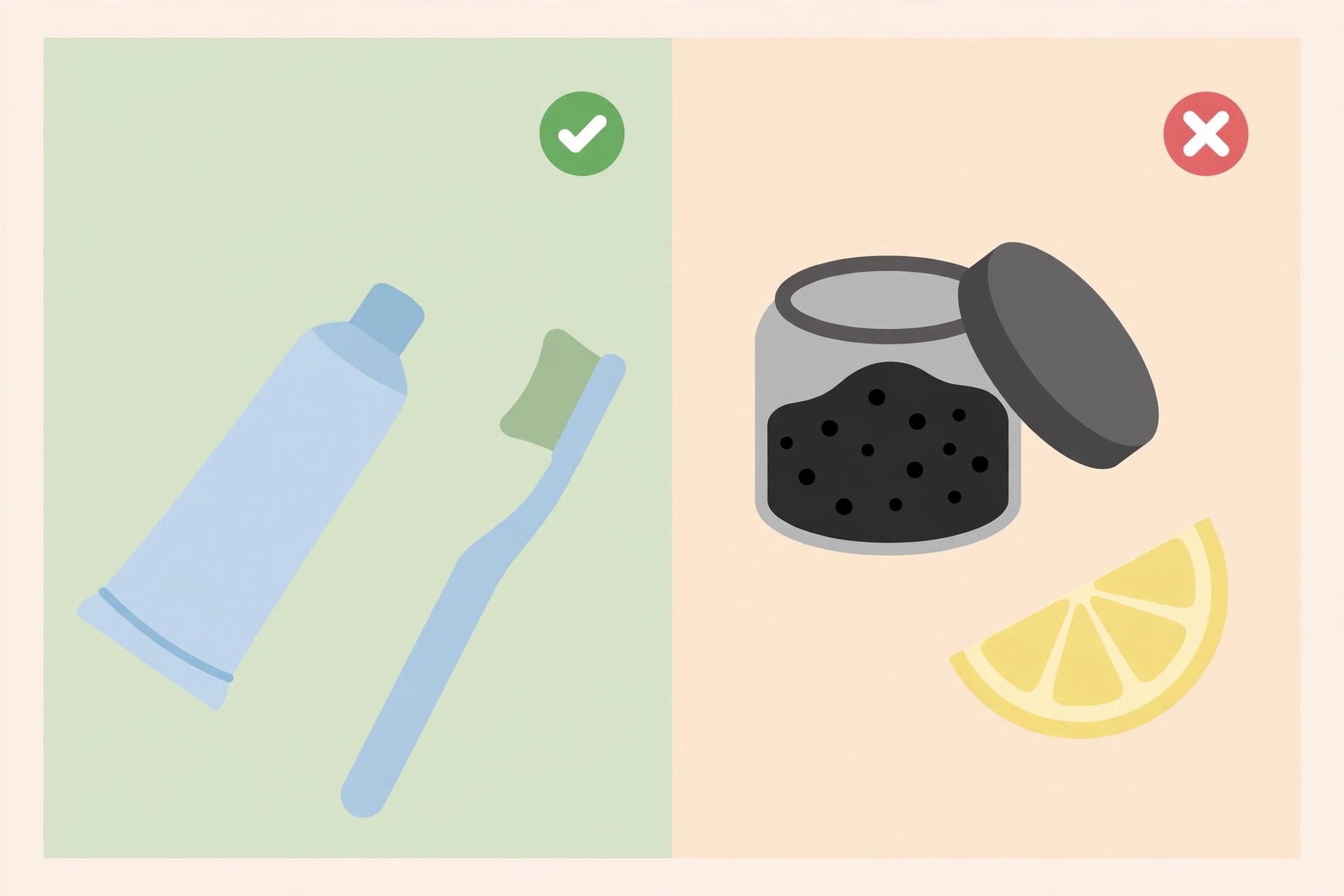
A note on charcoal in particular: it is marketed heavily, but dental associations have warned that there is no good evidence it whitens teeth, and its abrasiveness is unpredictable. It can also get trapped in gum pockets and around fillings, causing dark staining that is hard to remove. Skip it.
How Often Should You Polish Your Teeth?
| Method | How often |
|---|---|
| Whitening toothpaste (ADA-approved) | Twice daily, as your normal toothpaste |
| Baking soda paste | Once a week at most |
| Electric toothbrush polishing mode | Daily, with light pressure |
| At-home polishing kit | Every 1–2 weeks, per the kit’s instructions |
| Activated charcoal / acids / harsh abrasives | Never |
| Professional polishing (hygienist) | Every 6 months, at your regular cleaning |
If your teeth feel rough or look stained again within days of polishing, the cause is usually diet (coffee, tea, red wine, smoking) or plaque buildup — not a need for more polishing. Address the cause: rinse with water after coffee or tea, and keep up daily brushing and flossing.
Polishing With Sensitive Teeth, Braces, Veneers, or After Wisdom Teeth Removal
Sensitive teeth: Skip abrasive pastes entirely. Use a desensitising toothpaste and a soft brush, and let your dentist polish your teeth at your checkup. Polishing can temporarily increase sensitivity, so be extra gentle.
Braces: Don’t use abrasive pastes around brackets — they can wear the enamel around the bracket and leave marks when the braces come off. Stick to a soft brush, fluoride toothpaste, and interdental cleaning. Your orthodontist can polish safely at adjustment visits.
Veneers, crowns, and fillings: Porcelain veneers and composite fillings scratch more easily than enamel. Abrasive pastes can dull their surface. Use a non-abrasive toothpaste and let your dentist polish restorations with the right instruments.
After wisdom teeth removal: Do not polish, scrub, or use any paste near the extraction site while it heals. For the first week, follow your surgeon’s instructions — usually gentle salt-water rinses only. Polishing the rest of your teeth is fine once you can open your mouth comfortably, but keep the brush and paste away from the socket. If food gets trapped in the socket after about a week, your surgeon may recommend a curved-tip syringe — our guide on when to use a syringe after wisdom teeth removal explains how.
Professional Polishing: What Happens at the Dentist
At your regular cleaning (usually every 6 months), the hygienist scales away tartar first, then polishes with a rubber cup and prophy paste. The paste comes in different grits — coarse for heavy stain, fine for a smooth finish. The whole polishing step takes a few minutes and leaves your teeth feeling noticeably smooth.
Professional polishing is worth it because:
- The hygienist can safely remove stains you can’t reach, especially on the back molars
- They use the right grit for your enamel and your restorations
- They can spot early problems — cavities between teeth, gum disease, worn enamel — while they work
If you have heavy staining from coffee, tea, or smoking, or tartar buildup you can feel with your tongue, no amount of at-home polishing will fix it. Book a cleaning. Our guide to cleaning your teeth at home explains what a professional cleaning does that home care can’t.
6 Mistakes to Avoid When Polishing Teeth at Home
- Polishing every day with an abrasive paste. Enamel loss is cumulative. Whitening toothpaste is fine daily; baking soda and polishing pastes are not.
- Pressing hard. Pressure doesn’t polish better — it wears enamel and gums. Light pressure, soft bristles.
- Using charcoal, lemon, or vinegar. Acids and harsh abrasives erode enamel permanently.
- Skipping fluoride. Polishing without fluoride leaves enamel unprotected. Always finish with a fluoride toothpaste.
- Polishing instead of cleaning. Polishing removes stains, not plaque and tartar. Brush and floss daily first — polishing is the finishing step, not the routine.
- Polishing a healing extraction socket. After wisdom teeth removal, keep all pastes and brushes away from the socket until your surgeon says it’s safe.
Frequently Asked Questions
Can I polish my teeth at home instead of going to the dentist?
No — at-home polishing is maintenance between visits, not a replacement. Only a hygienist can remove tartar, polish safely around restorations, and check for cavities and gum disease. Keep your 6-monthly cleanings and polish gently at home in between.
Is baking soda safe for polishing teeth?
Yes, in moderation. Baking soda has a very low RDA (around 7), so it is one of the gentlest abrasives. Use it as a paste once a week at most, brush gently for about a minute, rinse, and follow with fluoride toothpaste. Don’t use it daily and don’t use it as your only toothpaste — it has no fluoride.
Does polishing teeth whiten them?
Polishing removes surface stains, so teeth look brighter — but it doesn’t change your teeth’s natural colour. If your teeth are stained on the surface (coffee, tea, smoking), polishing helps a lot. If the discolouration is inside the tooth, only whitening treatments change it.
Is activated charcoal safe for polishing teeth?
No, dentists generally advise against it. Charcoal powders are highly abrasive, their abrasiveness varies between brands, and there is no good evidence they whiten teeth. They can wear enamel, irritate gums, and stain fillings. Skip charcoal entirely.
How often should I polish my teeth at home?
Whitening toothpaste: daily, as normal. Baking soda paste: once a week at most. Polishing kits: every 1–2 weeks. Professional polishing: every 6 months at your cleaning. If your teeth are sensitive, polish less often and ask your dentist.
Can I polish my teeth with an electric toothbrush?
Yes — an electric toothbrush with a polishing mode, used with a whitening toothpaste and light pressure, is one of the safest daily polishing methods. Use a soft brush head and let the brush do the work.
Why do my teeth feel rough again a few days after polishing?
Plaque reforms within hours, and surface stains return with coffee, tea, red wine, and smoking. Roughness that returns quickly usually means plaque buildup, not a need for more polishing. Keep up daily brushing and flossing, rinse with water after staining drinks, and get a professional cleaning if tartar has formed.
The Bottom Line
Polishing your teeth at home is safe when you keep it gentle and occasional: a whitening toothpaste every day, a baking soda paste once a week at most, and a soft brush with light pressure. Skip charcoal, acids, and harsh scrubbing — enamel doesn’t grow back. And remember what polishing can’t do: it won’t remove tartar, fix stains inside the tooth, or replace your 6-monthly professional cleaning.
Smooth, bright teeth come from the boring basics done well — brush, floss, polish gently, and see your hygienist regularly.
Sources
- American Dental Association — Toothpastes, whitening, and the RDA abrasivity scale (ADA)
- NHS — How to keep your teeth clean and care for your gums
- Cleveland Clinic — Teeth polishing: what it is and when you need it
This article is for general information only and is not a substitute for advice from your own dentist. If you have sensitive teeth, gum disease, veneers, or a healing extraction site, ask your dentist before trying any polishing method.