
Updated November 9, 2026
Quick answer
Your back teeth do most of your chewing, collect the most plaque, and get the least attention. They are the furthest from your toothbrush, the hardest to see in the mirror, and the easiest to rush past — which is exactly why cavities and gum disease start there more often than anywhere else in your …
Your back teeth do most of your chewing, collect the most plaque, and get the least attention. They are the furthest from your toothbrush, the hardest to see in the mirror, and the easiest to rush past — which is exactly why cavities and gum disease start there more often than anywhere else in your mouth.
This guide covers how to actually reach and clean your back teeth properly: the right brush and angle for your molars, how to clean the back of your last tooth, how to floss around wisdom teeth, which tools help you reach, and what to do when a back tooth hurts or traps food.
Short answer: Use a small-headed, soft-bristled brush, angle it at 45 degrees to the gumline, and clean all five surfaces of each molar — outer, inner, chewing, front, and the back of the last tooth. Floss behind your last molar daily, and use a floss pick or water flosser if your fingers can’t reach. Two minutes, twice a day, with the back teeth getting the same attention as the front.
Why Your Back Teeth Are the Hardest to Keep Clean
Back teeth — your premolars and molars, including wisdom teeth — face four problems front teeth don’t:
- Distance. They sit at the very back of your mouth, where a standard toothbrush head barely fits and your fingers can’t easily reach.
- Grooves. Molar chewing surfaces have deep pits and fissures where food and bacteria pack in. Toothbrush bristles are often too thick to reach into them.
- Tight contacts. The contacts between molars are usually the tightest in your mouth, so plaque hides between them where you can’t see it.
- Less saliva flow. Saliva washes and protects your teeth, but it reaches the back molars less effectively than the front teeth — and at night, when saliva flow drops, the back teeth are the most vulnerable.
The result: molars get more cavities than any other teeth, and gum disease around the back molars is one of the most common findings at dental checkups. Wisdom teeth make it worse — a partially erupted wisdom tooth creates a gum flap that traps food and bacteria, and an impacted one can press against the molar in front of it, creating a spot no brush or floss can clean.
The fix isn’t complicated. It’s about technique and the right tools — and about giving the back of your mouth the same two minutes the front gets.
The Right Tools for Reaching Your Back Teeth
A regular brush and floss can work, but the right tools make it much easier — and you’re more likely to do it every day if it’s easy.
| Tool | What it does for back teeth | Best for |
|---|---|---|
| Small-head soft toothbrush | Fits behind the last molar; soft bristles won’t hurt gums | Everyday brushing of all molar surfaces |
| Single-tuft (end-tuft) brush | One tiny tuft of bristles that reaches the back of the last molar and around wisdom teeth | The back surface of the last tooth, gum flaps, implants |
| Electric toothbrush (small round head) | Oscillating head cleans grooves and gumline with less effort | Anyone who rushes brushing; great for molars |
| Floss picks | Handle gives you reach your fingers can’t | Flossing back molars, especially lower ones |
| Waxed or glide floss | Slides through tight molar contacts without shredding | Flossing between molars and behind the last molar |
| Water flosser | Flushes food and plaque from around back molars and gum flaps | Braces, bridges, partially erupted wisdom teeth, sensitive gums |
| Interdental brush (smallest size) | Cleans between molars where there is a gap | Wider molar gaps, gum recession, bridges |
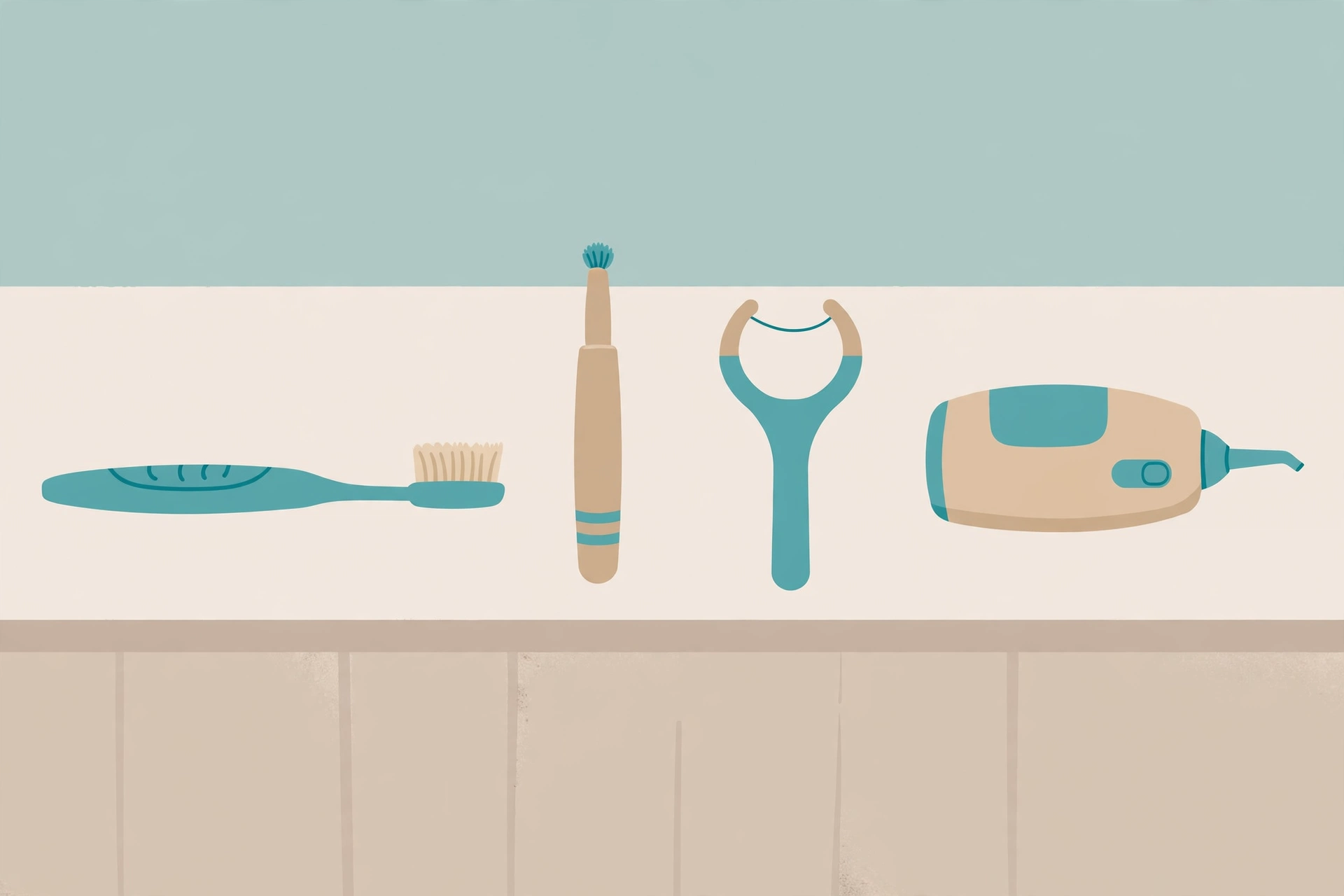
If you buy one extra thing, make it a small-headed brush. Most adults use a brush head that is too big for the back of their mouth. A compact head — or a children’s size head — reaches the last molar far more easily. And a single-tuft brush costs very little and solves the single hardest spot: the back of your last tooth.
How to Brush Your Back Teeth: Step by Step
Step 1: Start at the back
Most people brush their front teeth first and run out of patience by the time they reach the back. Reverse it: start with the back molars on each side, while you still have energy and focus. Brush the chewing surfaces first, then the outer and inner surfaces.
Step 2: Angle the brush at 45 degrees
Hold the brush at a 45-degree angle to the gumline — the Modified Bass technique that dental schools teach. This lets the bristle tips reach slightly under the gum edge, where plaque collects around molars. Use small, gentle circular motions, about one tooth-width at a time. Don’t scrub side to side — that misses the gumline and wears enamel.
Step 3: Clean the chewing surfaces
Molar chewing surfaces have deep grooves. Brush them with short back-and-forth strokes, pressing just enough for the bristles to reach into the grooves. Spend extra time here — this is where food packs in and cavities start.
Step 4: Clean the inner surfaces
The tongue-side surfaces of your lower molars and the palate-side of your upper molars are the most skipped surfaces in the mouth. Tilt the brush vertically and use the tip of the brush to clean them with short up-and-down strokes. Open wide and pull your cheek aside with your free hand so you can see what you’re doing.
Step 5: Don’t forget the back of the last tooth
Every molar has five surfaces — and the back of your last molar is a surface too. It faces the back of your mouth, so a normal brush head can’t reach it straight on. Turn the brush vertically, or use a single-tuft brush, and scrub the back surface of the last molar with small strokes. This surface collects plaque and is almost never cleaned — it’s also the surface that sits next to a wisdom tooth or a healing socket.
Step 6: Brush for a full two minutes
Two minutes, twice a day. Use the built-in timer on an electric brush, or count: 30 seconds per quadrant (upper right, upper left, lower left, lower right). Most people brush for under a minute — and the back teeth lose most of that time.
Step 7: Spit, don’t rinse
After brushing, spit out the excess toothpaste but don’t rinse with water. The fluoride left on your teeth keeps working for minutes afterward — including on the back molars, where it matters most. Our full routine guide explains the order and timing in detail: How to Clean Your Teeth at Home.
How to Floss Your Back Teeth (Including Wisdom Teeth)
Flossing the back teeth is where most people give up — but the contacts between molars are exactly where cavities between teeth begin. Our guide to cleaning between tight teeth covers the C-shape technique in detail; here is the back-teeth version.
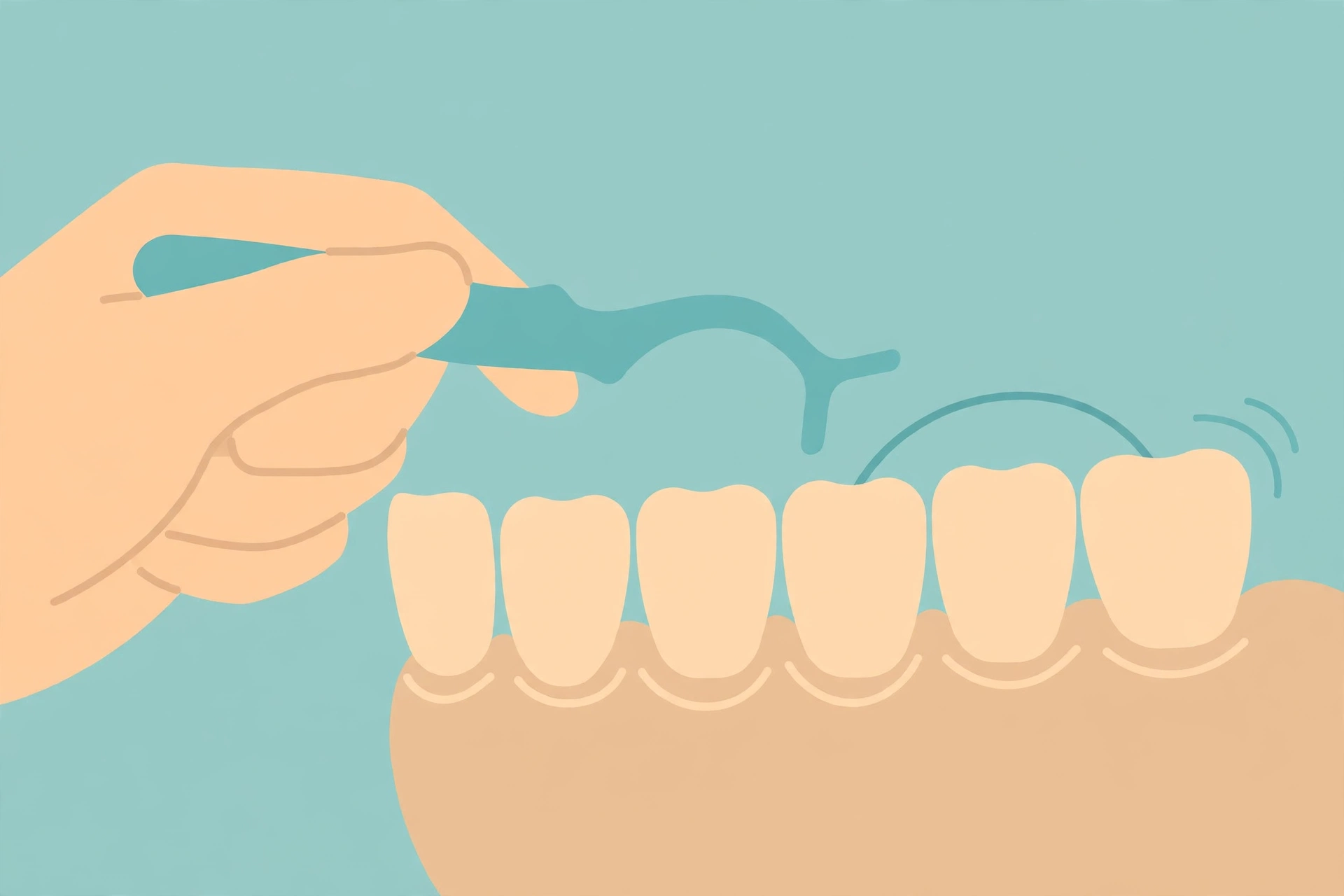
Use a floss pick if your fingers can’t reach
String floss works, but wrapping it around your fingers leaves you with short fingers at the back of your mouth. A floss pick’s handle gives you the extra reach, and you can angle it behind the last molar. The trade-off: the floss span is short and frays faster, so use picks for the back teeth and string floss for the front if you like — or use a fresh pick for each side.
Curve the floss around each molar
Ease the floss between two molars with a gentle back-and-forth motion — never snap it down onto the gum. Curve it into a C-shape against one molar, slide it up and down just below the gumline, then do the neighbouring tooth. Every gap has two surfaces.
Floss behind your last molar
This is the step almost everyone skips. After your last gap, wrap the floss around the back of your last molar — or your wisdom tooth — and slide it up and down. Food and plaque collect on that back surface, and it is the hardest spot to reach with a brush. A single-tuft brush can also clean this surface if floss is difficult.
Wisdom teeth: extra care
- Fully erupted wisdom teeth: treat them like any other molar — brush all five surfaces and floss both contacts.
- Partially erupted wisdom teeth: a flap of gum (operculum) often covers part of the tooth, trapping food underneath. Floss gently around the flap, angle the brush to clean under its edge, and rinse with warm salt water after eating. If the area keeps getting sore or swollen, see your dentist — it may be pericoronitis. Our guide to the first signs of wisdom teeth coming in explains what to watch for.
- Impacted wisdom teeth: if floss won’t pass between the wisdom tooth and the molar in front of it, don’t force it. Ask your dentist — a cavity forming in that hidden contact is a common reason for removal.
- After removal: do not floss, brush, or poke the socket. Follow your surgeon’s instructions — usually gentle salt-water rinses only for the first week. After about a week, a curved-tip irrigation syringe can flush food from the socket — our guide on when to use a syringe after wisdom teeth removal covers the timing.
Rinsing: The Finishing Step for Back Teeth
Rinsing matters more for back teeth than front teeth, because your brush and floss can’t reach every groove and pocket back there.
- Water after eating: a quick rinse with plain water after meals washes away loose food from molar grooves — especially useful after sticky or sugary foods.
- Fluoride mouthwash: used once a day (ideally at a different time from brushing, so you don’t rinse away toothpaste fluoride), it helps remineralise molar enamel and reaches the grooves your brush misses.
- Warm salt water: after eating, or if a wisdom tooth area feels sore, a warm salt-water rinse (half a teaspoon of salt in a glass of warm water) soothes the gum and flushes debris from around the back molars.
- Antibacterial mouthwash: if your dentist recommends it for gum disease around the molars, use it as directed — usually short-term, as long-term use can stain teeth.
5 Mistakes That Leave Back Teeth Dirty
- Brushing the front teeth first and rushing the back. Start at the back, while you still have patience.
- Using a brush head that’s too big. A compact or small head reaches the last molar; a big one can’t.
- Scrubbing hard side to side. This misses the gumline and wears enamel. Small circles at 45 degrees clean better.
- Skipping the back of the last tooth. It has a surface too — and it’s the most neglected one in the mouth.
- Only flossing the front teeth. The molar contacts are where cavities between teeth start. Floss the back gaps and behind the last molar every day.
Signs Your Back Teeth Need Attention
Back teeth problems develop silently because you can’t see them. See your dentist promptly if you notice:
- Food always getting stuck in the same spot — a gap, a rough filling edge, or a cavity may be trapping it
- Pain when biting or chewing on one side — a cracked molar, a cavity, or a wisdom tooth pressing on its neighbour
- A bad taste or smell from the back of your mouth — food or plaque trapped around a molar or under a gum flap. Our guide to bad breath after tooth extraction covers breath problems after surgery, but a persistent bad taste from one back tooth also deserves a check
- Sensitivity to cold, sweet, or pressure in a back tooth — early decay in a molar groove or between molars. Our guide to cavity teeth explains how decay develops and how it is caught early
- Bleeding gums around the back molars — gum disease often starts there; bleeding that continues after 1–2 weeks of daily cleaning needs a dental visit
- A wisdom tooth area that keeps swelling — possible pericoronitis, an infection of the gum flap over a partially erupted tooth
Frequently Asked Questions
How do I reach my very back teeth with a toothbrush?
Use a small-headed brush and open wide. Pull your cheek aside with your free hand, tilt the brush vertically for the back surface of the last molar, and use a single-tuft brush for the spots a normal head can’t reach. An electric toothbrush with a small round head also helps.
Why do my back teeth always feel dirty even after brushing?
Molar grooves trap plaque and food that bristles can’t fully reach, and the back teeth get less saliva protection. Try brushing the chewing surfaces with short strokes, flossing behind the last molar, and rinsing with water after meals. If they still feel rough, you may have tartar buildup that only a hygienist can remove.
Should I floss behind my last molar?
Yes — every day. Wrap the floss around the back of the last molar (or wisdom tooth) and slide it up and down. Food and plaque collect there, and it’s the surface most people never clean. A floss pick makes it much easier to reach.
What is the best toothbrush for back teeth?
A soft-bristled brush with a small, compact head. Soft bristles protect your gums; a small head fits behind the last molar. Electric brushes with small round heads are also excellent for molars. Replace the head every 3 months.
How do I clean around a partially erupted wisdom tooth?
Brush gently around the gum flap with a soft, small-headed brush, floss the contacts on either side, and rinse with warm salt water after eating. Don’t poke under the flap with anything sharp. If it keeps swelling or hurting, see your dentist — it may be infected.
Can I use a water flosser for my back teeth?
Yes — a water flosser is especially useful for back teeth. Aim the tip at the gumline and pause 2 seconds at each gap, including behind the last molar. Use it after flossing, not instead of it: floss scrapes plaque off, water flushes debris away.
Why do cavities start in back teeth most often?
Back teeth have deep grooves, tight contacts, and are hardest to reach — so plaque sits there longest. They also get less saliva washing. The combination makes molars the most cavity-prone teeth in the mouth, which is why reaching them properly matters so much.
The Bottom Line
Your back teeth do the hardest work and get the least attention — and they pay for it with more cavities and gum disease than any other teeth. Fix it with three habits: start brushing at the back with a small-headed soft brush, clean all five surfaces of each molar including the back of the last tooth, and floss behind your last molar every day. Add a single-tuft brush or floss picks if reach is a problem, and rinse after meals.
Two minutes, twice a day — with the back teeth first, not last.
Sources
- American Dental Association — Brushing, flossing, and cleaning between teeth (ADA)
- NHS — How to keep your teeth clean and care for your gums
- Oral-B / American Association of Oral and Maxillofacial Surgeons — Wisdom teeth care and cleaning guidance
This article is for general information only and is not a substitute for advice from your own dentist. If you have pain, swelling, or a back tooth you cannot clean, book a dental appointment.