
Updated November 9, 2026
Quick answer
Find out when to start using an irrigation syringe after wisdom teeth removal, how to flush sockets safely, how often to irrigate, and when to stop.
Most people should wait until about day 5–7 after wisdom teeth removal before using an irrigation syringe, but the right start day is the one your oral surgeon gave you. Some practices begin on day 3 or 5, while others tell patients to wait a full week. Do not start early just because you see food in the socket: the healing blood clot and new tissue need time to stabilize.
A syringe is different from a gentle salt-water mouth rinse. Many surgeons allow gentle rinsing after the first 24 hours, but delay direct socket irrigation for several more days. If you were not given a syringe or specific instructions, call your surgeon before putting a syringe tip near the extraction site.
When Should You Start Using a Syringe After Wisdom Teeth Removal?
A common recommendation is to begin using the curved-tip irrigation syringe on day 5 to day 7, provided your surgeon instructed you to use one. The timing varies with the extraction, socket location, stitches, and the surgeon’s technique. Some written protocols begin on day 3 or day 5; others specify day 7.
- Day 0 (surgery day): Do not rinse, swish, spit forcefully, or irrigate unless your surgeon gives you a different instruction.
- After 24 hours: Many surgeons allow gentle warm salt-water rinses. Let the water move gently; do not vigorously swish.
- Days 3–4: Some surgeons permit syringe irrigation during this period, but many ask patients to wait. Follow your own written instructions.
- Days 5–7: A common time to start the syringe when it has been prescribed or provided for your sockets.
- After the first week: Continue only as directed, often after meals while food is still collecting in the sockets.
These are examples of different clinical protocols, not a schedule to choose for yourself. The American Association of Oral and Maxillofacial Surgeons (AAOMS) emphasizes following your surgeon’s postoperative instructions. For examples of how protocols differ, one oral surgery practice begins on day 3, another recommends day 5, and Virginia Oral & Facial Surgery recommends day 5–7. These examples explain why your own surgeon’s instructions matter.
Why You Should Not Use the Syringe Too Early
After an extraction, a blood clot forms inside the socket. This clot protects the underlying bone and helps the wound heal. During the early healing period, inserting a tip or directing a stream of water into the socket too soon may disturb the clot or delicate healing tissue.
If the clot is lost or breaks down prematurely, you may develop dry socket, which can cause significant pain. This is why a gentle mouth rinse and direct syringe irrigation should not be treated as the same thing.
Seeing a hole, a little food, or a white or yellowish layer does not automatically mean you should start irrigating. Healing tissue can look pale, and the socket naturally remains open while it fills in. Do not probe it with a finger, toothpick, cotton swab, or syringe before you have been told to begin.
How to Clean Wisdom Teeth Holes With a Syringe
Once your surgeon says it is time, a curved-tip plastic irrigation syringe can help flush food particles from an extraction socket, particularly lower wisdom tooth sockets, where debris can collect. Use the technique your practice demonstrated, because instructions about where to position the tip differ.
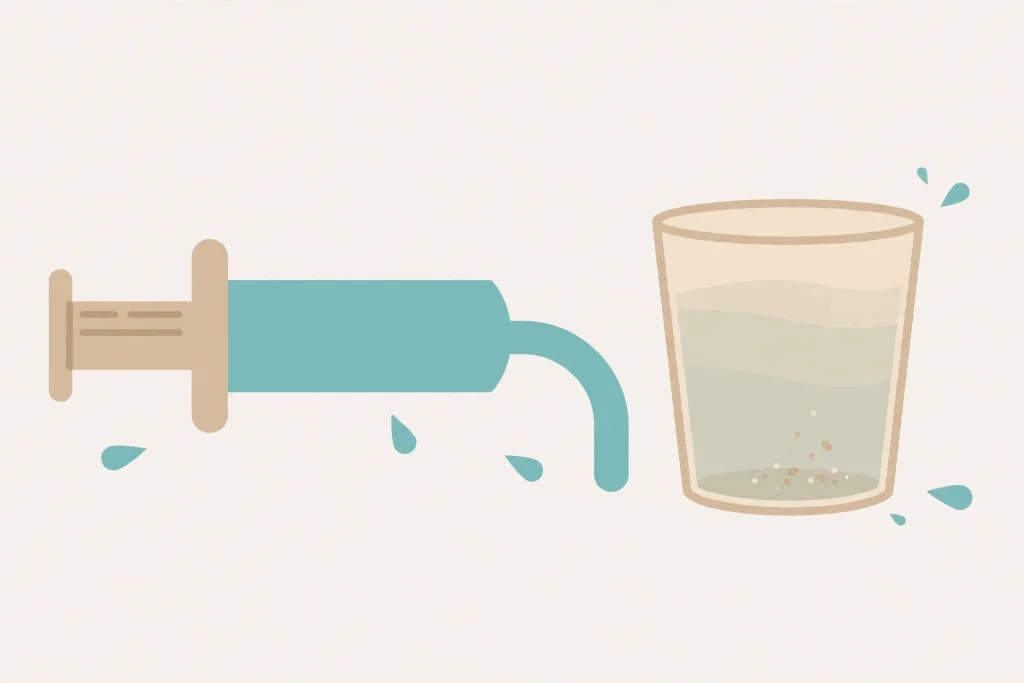
- Wash your hands. Use a clean syringe and a clean cup. Keep the syringe in a clean place between uses.
- Prepare the solution. Use lukewarm tap water or warm salt water if that is what your surgeon recommends. A common salt-water mixture is ½ teaspoon of salt in 8 ounces (1 cup) of warm water. Do not use hot water.
- Fill the syringe. Draw up the solution without touching the tip to an unclean surface.
- Use a mirror and good lighting. Gently pull your cheek aside so you can see the extraction area. Do not stretch or pull on stitches.
- Position the curved tip as instructed. Some surgeons teach patients to place the tip just inside the socket; others instruct them to aim at the opening without inserting it. Never force the tip into the gum or push against resistance.
- Flush gently. Slowly press the plunger so a controlled stream of solution moves through the area. Do not use force or high pressure.
- Repeat only as needed. If food debris remains visible, repeat gently according to your surgeon’s instructions. Stop if you experience sharp pain or persistent bleeding.
- Clean the syringe. Rinse it with clean water, allow it to dry, and store it in a clean place. Follow the practice’s instructions for how often to replace it.
Important: Do not copy a video that shows someone pushing the syringe deeply into a socket if your own surgeon has not taught you to do that. The correct placement depends on the wound and the surgeon’s protocol. The goal is gentle flushing,not scraping, probing, or forcing water into tissue.
How Often Should You Irrigate Wisdom Teeth Sockets?
Many oral surgery instructions recommend irrigating after meals, commonly two to four times a day, once irrigation has been approved. Other practices give a different frequency. Follow the schedule on your discharge sheet rather than increasing the number of flushes to make the socket look perfectly clean.
Food particles may continue to collect for a while because the socket takes time to fill with new tissue. A small amount of debris that comes out during irrigation is expected. Do not keep flushing repeatedly if the water is already running clear or the area becomes sore.
When Can You Stop Using the Wisdom Teeth Syringe?
You can usually stop when your surgeon says irrigation is no longer needed and food is no longer getting trapped in the socket. This may take a couple of weeks or longer, depending on how large the socket is and how it is healing. Some people need to irrigate for several weeks.
Do not stop solely because the gum looks closed from the outside, and do not continue indefinitely without a reason. At a follow-up visit, your surgeon can check whether the socket is filling in normally and whether you still need to flush it.
What If You Were Not Given an Irrigation Syringe?
Not every patient needs one. Some surgeons recommend gentle salt-water rinses and careful brushing instead; others provide a curved-tip syringe for lower extraction sites. Do not substitute a needle syringe, a water flosser, or a high-pressure oral irrigator unless your dental team specifically approves it.
If food repeatedly gets trapped, you cannot clean the area comfortably, or you are unsure whether your socket needs irrigation, contact the surgeon who performed the extraction. They can tell you whether a syringe is appropriate and show you how to use it safely.
Salt-Water Rinsing vs. Syringe Irrigation
| Care method | What it does | Typical timing |
|---|---|---|
| Gentle salt-water rinse | Moves fluid around the mouth and helps keep the area clean without directly targeting the socket. | Often starts 24 hours after surgery, if the surgeon allows it. |
| Curved-tip irrigation syringe | Directs a controlled stream into or toward the socket to remove trapped food debris. | Often day 5–7, but some surgeons start earlier or later. |
| Water flosser | Uses a powered stream with adjustable pressure; it is not the same as a post-extraction syringe. | Avoid directing it at a healing socket unless your surgeon specifically clears it. |
For a more complete day-by-day oral care routine, see our guide to cleaning your mouth after wisdom teeth removal. You can also read about when you can rinse after an extraction and what a wisdom tooth socket may look like when flushed.
What Should You Put in a Wisdom Teeth Water Syringe?
Use the liquid specified by your surgeon. Many practices recommend lukewarm plain water or a mild warm salt-water solution. If you were prescribed a rinse such as chlorhexidine, do not put it in the syringe unless your surgeon specifically tells you to. Avoid hydrogen peroxide, alcohol-based mouthwash, essential oils, or homemade mixtures unless your dental team has approved them.
Do not use very hot or very cold liquid. Warm or room-temperature solution is generally more comfortable. Never add medication or antiseptic to the syringe based on advice from an online video.
Is It Normal to See Food, Blood, or White Tissue in the Hole?
Some food debris may come out when you first irrigate, and a small amount of pink fluid or brief spotting can happen. A pale or whitish layer can also be part of normal healing tissue; it is not automatically pus. Do not scrape the socket to remove anything that looks white.
Contact your oral surgeon if you notice worsening pain after initial improvement, persistent or increasing bleeding, pus-like drainage, fever, worsening swelling, or a bad taste or odor that does not improve. Severe pain that radiates toward the ear or jaw can be a sign of dry socket and needs dental assessment. Seek urgent medical care for trouble breathing or swallowing, rapidly spreading swelling, or feeling seriously unwell.
Read our guide to signs of infection after wisdom teeth removal if you are unsure which symptoms need attention.
Can You Drink Cranberry Juice After Wisdom Teeth Removal?
You can generally drink cranberry juice when you are able to tolerate liquids, but it is acidic and may sting an irritated surgical area. Choose water or a non-acidic drink if cranberry juice causes discomfort. Drink from a cup,do not use a straw during the period your surgeon tells you to avoid suction. Do not swish juice around the sockets, and follow your post-operative diet instructions.
Frequently Asked Questions
When can I use a syringe after wisdom teeth removal?
Many surgeons recommend starting around day 5–7, but some protocols begin on day 3 or day 5, and others wait a week. Start only on the day your own surgeon specified.
Do you have to use the syringe after wisdom teeth removal?
No. A syringe is not required for every patient. Use one if your surgeon provided it or specifically recommended it for your extraction sites. Gentle rinsing and careful oral hygiene may be sufficient for some people.
When do I start irrigating wisdom teeth sockets?
Start when your oral surgeon tells you to. Day 5–7 is common, but the recommended timing varies by procedure and practice. Do not irrigate the socket on surgery day or start early without approval.
How do I clean a wisdom tooth hole without a syringe?
After the first 24 hours, many surgeons allow gentle warm salt-water rinses. Brush the other teeth carefully and avoid poking the socket. If debris is stuck or you cannot clean the area, ask your surgeon whether you need an irrigation syringe.
Can I use a syringe on the first three days?
Do not do so unless your surgeon specifically instructed you to. The early clot is important for healing, and direct irrigation may disturb it. Some practices start on day 3, but that does not make day 3 appropriate for every patient.
How long should I keep flushing the sockets?
Continue for as long as your surgeon recommends or while food continues to collect and your surgeon has advised irrigation. This can be a few weeks. Ask at your follow-up appointment when to stop.
Can I use a water flosser instead of the syringe?
Do not aim a powered water flosser at a healing socket unless your oral surgeon clears it. Its pressure and tip are different from a curved-tip irrigation syringe.
What if the syringe causes pain or bleeding?
Stop rather than forcing the tip or increasing pressure. A little spotting may occur, but ongoing bleeding, sharp pain, or pain that gets worse should be discussed with your surgeon.
The Bottom Line
For many patients, the right time to begin using a wisdom teeth irrigation syringe is around day 5–7, but your oral surgeon’s instructions take priority because protocols vary. Gentle salt-water rinsing may begin earlier,often after 24 hours,but that is not permission to flush directly into the socket. Once cleared, use lukewarm water or the solution your surgeon recommends, apply gentle pressure, and stop if the process hurts. If you were not shown how or when to irrigate, call your surgeon before starting.
Medical note: This article provides general educational information and is not a substitute for personalized postoperative instructions, diagnosis, or treatment from your dentist or oral surgeon.